

Introduction
After having a lunch, you push the plate aside, and you feel perfectly fine.
After twenty or thirty minutes, you start experiencing a usual burning sensation from your upper abdomen to your chest. Of course, you blame the spicy curry for this issue. The following day, this problem occurs after a very plain sandwich. A few days later, the problem reappears after you eat fish fry with rice.
So, at that moment, your first thought is:
"Why do I experience heartburn when I am eating healthy?"
And here begins many misconception about acid reflux.
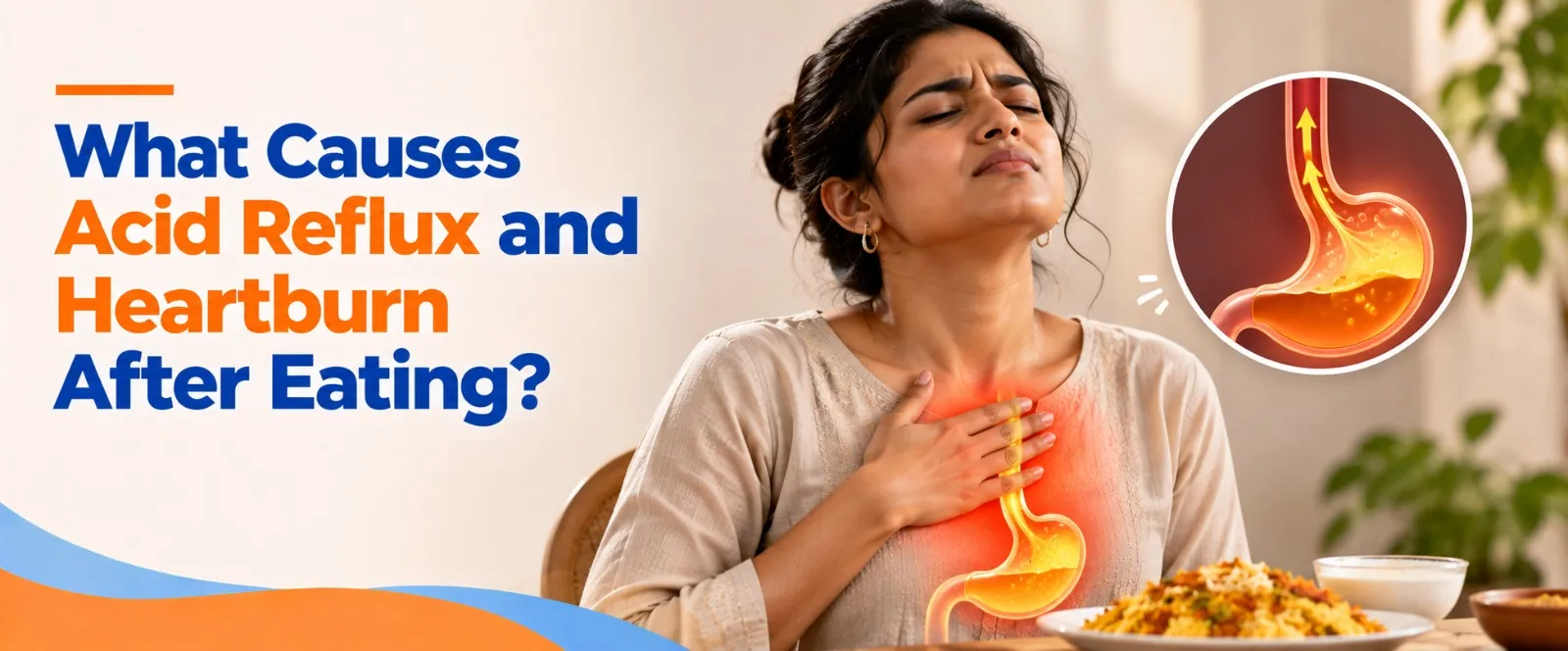
From our early childhood, we believe that heartburn is a condition, which occurs due to our bad eating habits because we eat spicy, oily or unhealthy food. However, sometimes, this is just a part of a big picture. In fact, the causes of acid reflux after eating depend on the mechanism of the work of your digestive system after each meal, but not necessarily the food itself.
Your stomach position, the strength of your lower oesophageal sphincter, digestive hormones, the size of your meal, your body weight, the level of stress, and your stomach emptying speed all affect this process.
Is Acid Reflux the Same as Heartburn?
They are used mistakenly, although they differ medically.
Acid reflux is the backward flow of stomach contents into the oesophagus.
Heartburn is the burning feeling you get due to irritation of the lining of the oesophagus by this reflux action.
Consider the following analogy.
When rain gets into your home, the rain is the cause of the problem. A wet floor is the symptom. Likewise, acid reflux is the event while heartburn is just one of its most common symptoms.
There are individuals who do not have heartburn at all; instead they have a tendency to clear their throat, a sore throat, chronic cough, asthma, posterior laryngitis , non cardiac chest pain, halitosis, or the feeling of being choked in the throat. (1)Such a condition, referred to as silent reflux, can easily be mistaken for allergy or recurrent infections of the throat.
Your Body Has Its Own Anti-Reflux System
With your stomach containing acid capable of breaking down food substances, it’s amazing that you do not have a case of reflux every time you eat.
Yes thanks to the wonderful system your body uses for protection. One of the first protective barriers is the Lower Oesophageal Sphincter (LES). It is a muscle ring present at the point where the oesophagus and stomach meet. Most descriptions refer to it as a valve. A more appropriate analogy would be a security guard. This security guard opens when you swallow and closes immediately. Once the sphincter is closed, it ensures there are no contents moving from the stomach back up the oesophagus.
However, the LES doesn’t function alone.
The diaphragm is also another protective barrier as it has muscles that surround the lower oesophagus. Whenever you are upright, gravity works to ensure the contents of the stomach stay put. The saliva also acts as a barrier as every time you swallow, a small amount of reflux is washed back to the stomach.
These systems are rarely thought of since they always run in the background.
Heartburn develops when one or more of these protective mechanisms become overwhelmed
Causes of Acid Reflux often missed:
Cause 1: Temporary Relaxation of the Lower Oesophageal Sphincter
One of the most under-discussed reasons for experiencing acid reflux after a meal is Transient Lower Oesophageal Sphincter Relaxations (TLESRs).
Though this condition may seem complicated from its name, the idea behind it is rather simple.
It is believed that acid reflux occurs when the lower oesophageal sphincter gets permanently weakened.
Such an assumption is not always right since a lot of individuals suffering from acid reflux experience a working sphincter all day except some moments of time.
What happens here is the abnormal relaxation of the sphincter at times.
Such relaxation is a physiological reflex aimed at the release of air after the food is eaten and one burps.
If the TLESR relaxations happen too often, then besides the air, some amount of the stomach acid may go back to the esophagus.(2)
This fact helps to explain another peculiarity that a lot of individuals find confusing.
Sometimes two people eat the same dish and only one of them suffers from acid reflux symptoms.
Doctor's Insight
One of the main misunderstandings regarding reflux is that there is "excess acid production" by the body.
This is not the case for the majority of patients suffering from acid reflux; rather, it is just the fact that the acid reaches places that it should not reach - namely, the esophagus.
Cause 2: A Hidden "Acid Pocket" Forms After Every Meal
There is one fascinating fact that one will hardly come across when reading about health in general.
Immediately after consuming food, there is no mixing of food and acid in the stomach.
Rather, there is a creation of a very acidic layer that resides towards the upper portion of the stomach adjacent to the junction of the oesophagus.
In medical terms, this is referred to as the post-prandial acid pocket.
Normally, it is not a problem since the LES keeps this pocket inside the stomach.
However, if the sphincter is relaxed at this particular moment, the most probable thing is that the pocket will rise up since it is highly acidic.(3)
This explains why many individuals have heartburn between 20 and 60 minutes after consuming food and not immediately after having food.
It does not mean that food consumed increases the production of acid but rather that the acid reaches the location of the oesophagus at the wrong moment.
Cause 3: Large Meals Increase Pressure Inside the Stomach
Did you know that heartburn occurs more frequently after a wedding buffet or festival dinner as compared to an average meal on any other day of the week?
The amount of food we consume is one of the most important reasons for heartburn.
As our stomach gets filled up with food, it stretches and thereby causes pressure to be created inside the stomach.
Think of a situation where there is too much pressure exerted inside a pressure cooker that needs its lid to be kept tightly sealed. In a similar manner the stomach works.
When the stomach is fuller, it is likely to cause temporary relaxations of the LES as well as push the acid pocket towards the oesophagus. (4)
This is particularly surprising since it occurs with healthy food as well.
For instance, eating a huge portion of fruits, salads or even large amounts of water in a single meal can cause the stomach to stretch and trigger symptoms in sensitive people.
Sometimes, the amount of the consumed food is equally important as the type of food consumed
Cause 4: Fatty Foods Stay in the Stomach Longer Than You Think
You must be aware that fried and creamy foods tend to cause heartburns. However, it is not just because they are "heavy."
The key here is digestion of fats by the body.
Upon consumption of fat foods, the body produces a hormone called cholecystokinin (CCK). It is responsible for slowing down stomach emptying in order to digest and absorb the fat.(5)
From the point of view of digestion, this process is quite natural.
The problem here is that the stomach will remain full for a longer time. In turn, there will be more pressure on it. Moreover, the post-meal acid pocket will stay close to the lower oesophageal sphincter for a longer period. All these factors increase the risk of developing reflux.
That is why heartburn occurs after eating foods such as fries, butter curries, creamy pasta, pizzas, pastries, or rich desserts.
It is necessary to say that fat itself is not bad. Fats from nuts, seeds, avocados, and olive oil are a valuable part of any healthy diet. The problem is only the amount consumed at once.
Cause 5: Eating Too Close to Bedtime Removes Gravity from the Equation
One of the easiest ways through which your body tries to fight acid reflux is gravity.
Being seated or standing up ensures that gravity helps in keeping the stomach's content where they should be. However, once you lie down after a meal, the benefit is no longer present.
Another problem with nighttime acid reflux comes from the following:
Your swallowing becomes less frequent. Saliva production drops. The acid is left in contact with the oesophagus for a longer period of time.
In other words, your body's "cleansing mechanism" slows down during sleep. (6)
That is why gastroenterologists recommend taking the last meal at least two to three hours before lying down, especially if you are a victim of acid reflux attacks.
It is not uncommon to have a problem only when you eat the same thing at 10 p.m., but feel perfectly fine if you have the same meal at 7 p.m.
Cause 6: Certain Foods Relax the Lower Oesophageal Sphincter
Not everyone reacts to the same foods, but some ingredients are known to trigger symptoms in susceptible individuals.
These include:
Chocolate
Peppermint
Coffee
Alcohol
Carbonated beverages
Citrus fruits
Tomato-based products
Interestingly, these foods don't all trigger reflux for the same reason.
Coffee can be a trigger for acid production in certain individuals.(7) Carbonated beverages increase the pressure in the stomach due to the gas present in them. Chocolate and peppermint can also cause the lower esophageal sphincter to open up temporarily, which increases the risk of acid reflux.(8)
That is why there isn’t any standard “acid reflux diet.”
A food that triggers heartburn in one individual will not have an effect on another individual. Instead of cutting out lengthy food lists unnecessarily, following a simple food chart and noting symptoms related to acid reflux in a diary/planner for a few weeks works well. Trends tend to become more obvious than assumptions.
Cause 7: Stress Doesn't Always Increase Acid. It Changes How You Feel It
This surprises many of us.
While stress doesn’t mean your stomach will produce more acid, stress is likely to result in a higher sensitivity of your oesophagus. This is one of the concepts discussed under the gut-brain axis – the connection between the digestive system and the brain.
When there is chronic stress, anxiety or insomnia, your oesophageal nerves can become more sensitive. (9) That is why you might experience pain due to the same amount of reflux you had one month ago without feeling any pain.
Do you suffer from increased pain from acid reflux at exam time, work stress periods, or stressful situations in general?
You’re not alone. Your digestive system is more influenced by your emotional health than you think.
While dealing with stress isn’t enough to cure your condition, stress management may decrease the severity of symptoms in some cases.
Cause 8: Extra Pressure Inside the Abdomen Can Push Acid Upwards
The stomach sits within the abdominal cavity. Anything that consistently increases pressure in this area can make reflux more likely.(10)
Common examples include:
Excess abdominal weight
Pregnancy
Tight belts or shapewear(11)
Frequent heavy lifting
The increase in pressure is much like squeezing toothpaste from a tube. The more pressure exerted from below, the less difficult it will be for the stomach contents to push upward through the lower oesophageal sphincter if it cannot keep its seal shut.
Weight loss, even a small amount, has been found to be beneficial for those who have a problem with reflux and happen to be overweight. This is because prevention can also be achieved without medicine.
Sometimes reducing mechanical pressure is enough to make a meaningful difference.
When Is Heartburn a Sign That You Should See a Doctor?
It is not unusual to have occasional heartburn after eating a larger-than-normal meal.
But recurrent symptoms should not be ignored and treated only with over-the-counter antacid medications forever.
Seek medical evaluation if you experience:
Heartburn more than twice a week.
Difficulty or pain while swallowing.
Unexplained weight loss.
Vomiting blood or passing black stools.
Persistent vomiting.
Chest pain that could be confused with a heart condition.
Symptoms that continue despite appropriate treatment.
Chronic reflux could increase the chances of developing other diseases, including oesophagitis, narrowing of the oesophagus or Barrett's oesophagus, which might need medical consultation with a gastroenterologist.
A Preventive Approach to Acid Reflux
One of the most prevalent misunderstandings regarding heartburn is that every instance of it can be treated with the help of an antacid. While short-term relief is essential, in most cases, one's overall digestive health depends on finding out what causes heartburn and treating it rather than neutralizing the stomach acids. There are various digestive health products that serve different purposes. Calcium carbonate, magnesium hydroxide, aluminium hydroxide, and sodium alginate are among the common ingredients in antacids and heartburn medications that neutralize acids and form a barrier limiting the access of acid to the oesophagus. Digestive well-being supplements, in turn, may contain various probiotics (Lactobacillus and Bifidobacterium), digestive enzymes (amylase, protease, lipase), or herbal extracts (ginger, peppermint oil (where applicable), fennel, liquorice (DGL), amla, triphala, aloe vera). At Cureka, all digestive health products are doctor-curated, thus making it easier to select products based on evidence and suited for your particular symptoms and digestive problems as a preventive measure without worsening the condition.
Final Thoughts
Heartburn after eating is not necessarily an indicator that one has consumed spicy or bad food. It may be caused by many factors, which include temporary relaxation of the lower esophageal sphincter muscle, delay in the emptying of the stomach, increase in abdominal pressure, and enhanced sensitivity of the oesophagus.
Having understood the true causes of acid reflux after eating, one will make more informed decisions concerning his diet, lifestyle, and when to see a professional for treatment. The truth is that although addressing the symptoms is good, knowing the cause is even better.
References:
GERD: ‘silent refluxers’ - 2011 Jul - https://pmc.ncbi.nlm.nih.gov/articles/PMC4921251/
Acid Infusion into the Esophagus Increases the Number of Meal-Induced Transient Lower Esophageal Sphincter Relaxations (TLESRs) in Healthy Volunteers - 2014 Aug - https://pmc.ncbi.nlm.nih.gov/articles/PMC4177286/
Acidity surrounding the squamocolumnar junction in GERD patients: "acid pocket" versus "acid film" - 2007 Dec - https://pubmed.ncbi.nlm.nih.gov/17714553/
Functional Food in Relation to Gastroesophageal Reflux Disease (GERD) - Aug 2023 - https://www.mdpi.com/2072-6643/15/16/3583
[The role of cholecystokinin as a regulator of gastrointestinal functions] - 1998 Dec - https://pubmed.ncbi.nlm.nih.gov/10025158/
Nighttime Acid Reflux in Gastroesophageal Reflux Disease - Is It a Problem That Can Be Solved? - 2023 Jan - https://pmc.ncbi.nlm.nih.gov/articles/PMC9837543/
Effects of Coffee on the Gastro-Intestinal Tract: A Narrative Review and Literature Update - 2022 Jan - https://pmc.ncbi.nlm.nih.gov/articles/PMC8778943/
The adverse effect of chocolate on lower esophageal sphincter pressure - 1975 Aug - https://pubmed.ncbi.nlm.nih.gov/239592/
Gut microbiota’s effect on mental health: The gut-brain axis - 2017 Sep - https://pmc.ncbi.nlm.nih.gov/articles/PMC5641835/
Effect of Increased Intra-abdominal Pressure on the Esophagogastric Junction - 2022 Sep - https://pmc.ncbi.nlm.nih.gov/articles/PMC9553247/#R26
Disruption of the gastroesophageal junction by central obesity and waist belt: role of raised intra-abdominal pressure - 2015 May - https://pubmed.ncbi.nlm.nih.gov/24575877/