

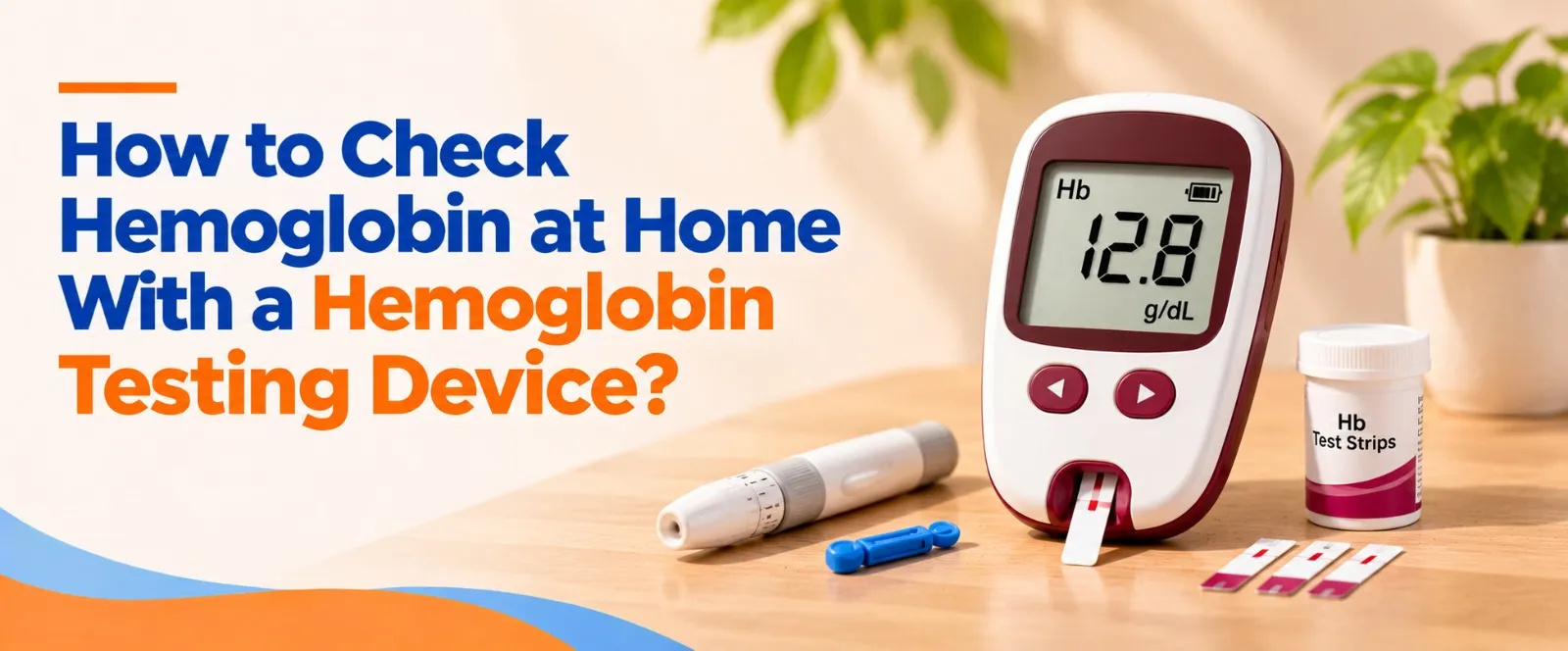
Feeling tired all the time is one of those complaints that's easy to shrug off. A bit of breathlessness on the stairs, a pale face in the mirror, or a headache that keeps coming back could be stress or poor sleep. It could also be low hemoglobin. Anaemia is very common in India, and it often builds up so quietly that people don't notice until it's well established.
That's why more families are looking into how to check hemoglobin at home. A home hemoglobin test can give you a quick reading between lab visits, as long as you understand what it can tell you and what it can't.
What Hemoglobin Is and Why It Matters
Hemoglobin is the protein in your red blood cells that carries oxygen from your lungs to the rest of your body. When it runs low, your tissues get less oxygen, and you feel it as fatigue, weakness, dizziness, pale skin, a racing heartbeat or shortness of breath.
Doctors measure it in grams per deciliter (g/dL). As a rough guide, Anaemia is generally defined as hemoglobin below 13 g/dL in adult men and 12 g/dL in non-pregnant women. During pregnancy, thresholds vary by trimester, with WHO guidance using 11 g/dL in the first and third trimesters and 10.5 g/dL in the second trimester. The exact range depends on age and the lab, so always go by the reference range on your own report or what your doctor tells you.
How a Hemoglobin Testing Device Works
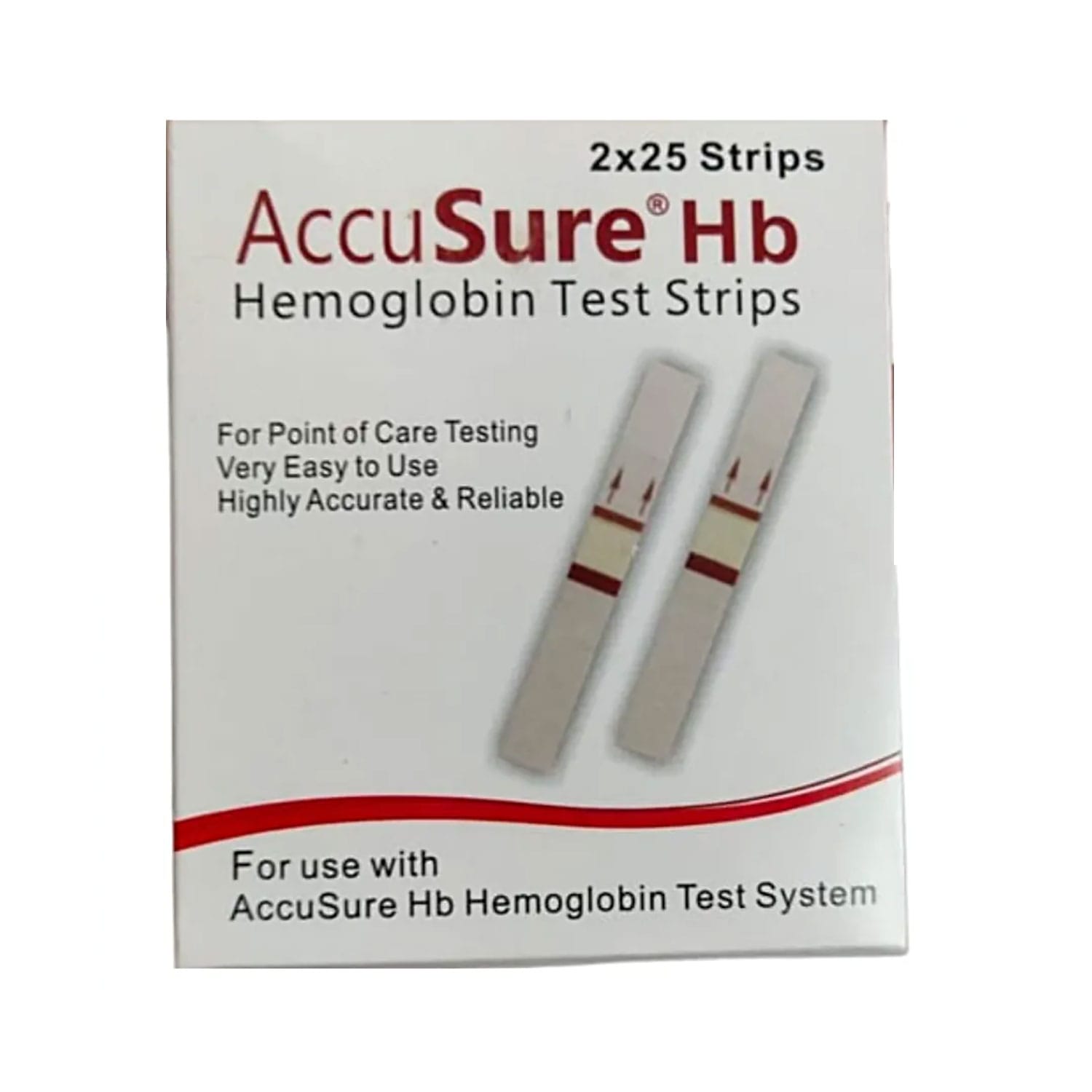
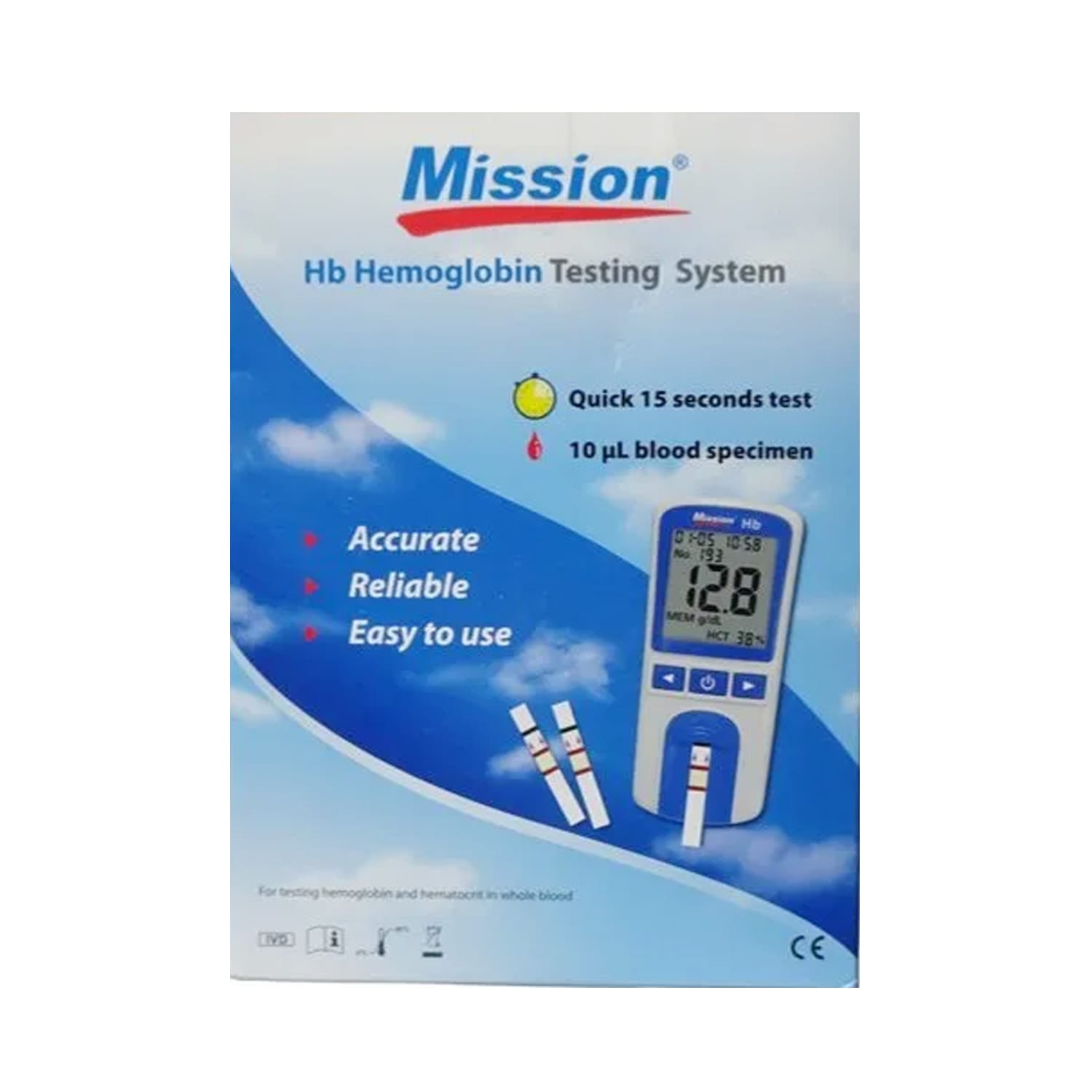
A hemoglobin meter works much like a glucometer. You prick your fingertip with a small lancet, touch a drop of blood to a test strip or cuvette, and the device reads the sample and shows your hemoglobin on the screen, usually within a minute or less.
You'll mainly come across two kinds. Strip-based meters are the most common for home use, since they're compact and easy to handle. Cuvette-based photometers are more of a clinic-style hemoglobin testing machine, but portable versions exist. You may also see non-invasive devices that claim to measure hemoglobin through the skin without a prick. Their accuracy varies a lot between products, so treat them with extra caution.
How to Measure Hemoglobin at Home, Step by Step
Always follow your device's own instructions first. The general routine looks like this.
Wash your hands with warm water and dry them well. Warm hands improve blood flow, and any moisture or residue on the skin can throw off the reading.
Check the strip's expiry date, and make sure the device is set up the way the manual says. Some models need a code or calibration chip that matches the strip batch.
Insert a fresh strip or cuvette. Use a new lancet each time and prick the side of your fingertip, not the pad, since it hurts less.
Wipe away the first drop of blood with clean gauze, and use the next drop for testing. Avoid squeezing the finger hard, because that mixes tissue fluid into the sample and can lower the reading.
Touch the blood drop to the strip's edge, let it fill, and wait for the result. Note it down with the date and time.
Dispose of the lancet safely, and store your strips in their sealed container.
How Accurate Is a Home Hemoglobin Test?
This is the part worth being honest about. A home hemoglobin meter is a screening and tracking tool, not a diagnostic test. The reference standard for diagnosing anaemia is hemoglobin measured in venous blood on an automated analyser in a lab [1]. Fingertip readings can also be less consistent: studies comparing sample types have found that a single drop of capillary blood can give more variable hemoglobin results than venous or pooled samples [2].
In practice, this means your home reading can differ from your lab report by a noticeable margin, especially if the sample was small, squeezed or contaminated. Treat one result as a prompt, and look at the pattern across several readings. If the number looks low, or doesn't match how you feel, get a proper blood test.
Tips for More Reliable Readings
Test at roughly the same time of day, since hydration and recent activity can nudge the number. Keep strips away from heat, humidity and sunlight. Never reuse strips, and don't use ones past their expiry. Make sure the blood drop is large enough to fill the strip in one go, rather than adding more later. If a result is borderline, repeat it with a fresh strip before drawing any conclusions.
Who Might Find a Home Hemoglobin Meter Useful?
People who've been told they have anaemia and need to keep an eye on their levels between check-ups, women with heavy periods, pregnant women whose doctors have asked them to track hemoglobin, older adults, and anyone on a diet that makes iron or B12 gaps more likely. It's also handy for families who live far from a lab. It works best when your doctor knows about it and uses your readings alongside regular blood tests.
When to See a Doctor
A low reading isn't something to fix with supplements on your own. Anaemia has several causes, including iron, B12 or folate deficiency, blood loss, and chronic conditions, and the right treatment depends on which one it is. Taking iron when you don't need it can do harm.
See a doctor promptly if your reading is low, if it keeps dropping, or if you have symptoms such as marked weakness, chest pain, fainting or breathlessness at rest. Pregnant women should never rely on a home meter alone.
What to Look for When Choosing a Hemoglobin Testing Device
Check that the manufacturer states the device's accuracy and how it was tested. Look for a small blood volume requirement, a clear display, a memory for past readings, and easy availability of strips and lancets, since you'll need to keep restocking them. A simple device that you'll actually use beats a complicated one that sits in a drawer. You can browse hemoglobin testing devices on Cureka, and it's worth reading the product details before you order.
The Bottom Line
Knowing how to measure hemoglobin at home puts a useful early-warning tool in your hands. Used carefully, it helps you spot trends and decide when it's time to see a doctor. It doesn't replace a lab test or a medical opinion, and the best way to use it is to treat it as a signal and let your doctor confirm what's going on.
References
[1] Hemoglobin concentration and anemia diagnosis in venous and capillary blood: biological basis and policy implications.
https://pubmed.ncbi.nlm.nih.gov/31231815/
[2] Drops of Capillary Blood Are Not Appropriate for Hemoglobin Measurement with Point-of-Care Devices: A Comparative Study Using Drop Capillary, Pooled Capillary, and Venous Blood Samples.