


Introduction
When an elderly person starts to struggle with walking, using a walker might become necessary to aid in the movement process. However, selecting a walker should not be decided solely on the basis of its design, number of wheels, weight or accessories.
In my opinion as an orthopedic surgeon, it will make sense to consider why this walker is necessary for that patient, their gait pattern, how much support they require and whether they have proper control of the device. For instance, a patient undergoing hip or knee surgery would need something quite different from those that need a walker due to balance issues. Additionally, a person who has good muscle strength in their legs but poor hand grip would require something different from a patient that struggles to put weight on one leg.
Hence, if you are trying to figure out how to select a walker, the first step should be to consider the patient's requirements.
1. Begin With Identifying Why the Older Adult Needs to Use a Walker
Need for walking support is one of the key considerations when selecting a type of walker.
An older individual might use a walker due to:
Surgery of the hips, knees or any lower limb
Fracture or injury
Pain in knees or hips
Poor balance
Weak muscles
Difficulty putting weight on one leg
Frequent falling or near-falling incidents
Low endurance of walking
Unsteadiness outside
Reliance on furniture or another person for support
Not all of these conditions have the same degree of dependency.
If anyone is temporarily restricting their weight-bearing ability after surgery they will likely require a walker which provides plenty of stability. (1) A person who is able to walk on their own, but becomes unsteady after walking longer distances will probably benefit from more mobility equipment.
Therefore, the actual reason for the dependency will be the main determining factor.
2. Assess the Amount of Assistance Required
One typical mistake when it comes to choosing the walker is the assumption that the most stable walker is the best choice for everyone.
Indeed, while providing sufficient assistance, the walker must not become hard to maneuver and control.
It is necessary to think about whether the individual requires:
The application of significant weight on their arms
The ability to put weight on both legs
Loss of balance in standing position
Support both during walking and when standing still
Problems with weight distribution between legs
Ability to maintain an upright position using the device
If the individual requires assistance of the upper body, then the choice of the more stable walker will be required; otherwise, it might be better to use the walker that makes it easy to move around.(2)
When dealing with rehabilitation after surgery or injury, the weight-bearing status of the individual becomes priority and must be taken into account in choosing the walker.
3. Observe How the Person Walks
While selecting walking aids for elderly people, there is much information that you will learn from observing how they walk rather than just asking them whether they are comfortable.
Some signs include:
Very short steps
Foot shuffling
Severe leaning to one side
Hanging on to furniture or walls
Difficulty getting started while walking
Having problems turning
Loss of balance while turning
Gradual slowing down during the walk
Dragging one foot
Constantly looking down while walking
This information may help you determine which kind of aid to select.
Gait aid prescription yielded inconsistent effects on increasing gait velocity and did not appear to reduce gait variability in older people with mobility problems or fall risks, nor in those with Parkinson's disease or Alzheimer's disease.Clinicians may consider using a more extensive gait aid training approach to optimize learning of safe gait patterns and gait aid use, which may produce better outcomes.(3)
As an orthopedic surgeon, I would also like to learn whether the problem is due to pain, weakness, imbalance, or all of these issues together. The walker will only be able to give the patient the needed support, not correct the issue causing the abnormal gait pattern.
4. Assess Hand and Arm Strength
This factor tends to be ignored when selecting a walker for elderly patients.
I have seen patients who may possess sufficient strength in their legs, yet struggle with using a walker due to lack of strength to grip, raise, push, and control the walker.
Check whether the individual can:
Grip the handles of the walker
Push the walker ahead
Lift the walker if needed
Control the walker while making turns
Apply the hand brakes if it is a wheeled walker
Release the brakes when it is needed
Ordinary walkers will be lifted and pushed by the user; it may be hard for an elderly person with poor arm strength, arthritic hands, shoulder pain, or poor grip strength.
Wheeled walkers may not involve lifting, although they do need controlling the motion and applying the brakes in most cases.
Thus, the correct choice is not the walker that seems easy to use just by looking at it. It is the walker that the elderly person can use safely and effectively.
5. Think About Where the Walker Will Be Used
A walker that works well inside a spacious home may not be equally practical outdoors.
Before buying one, consider the surfaces and spaces the person will encounter.
Inside the home
Think about:
Narrow doorways
Furniture placement
Bathroom access
Bedroom space
Kitchen areas
Rugs and mats
Uneven flooring
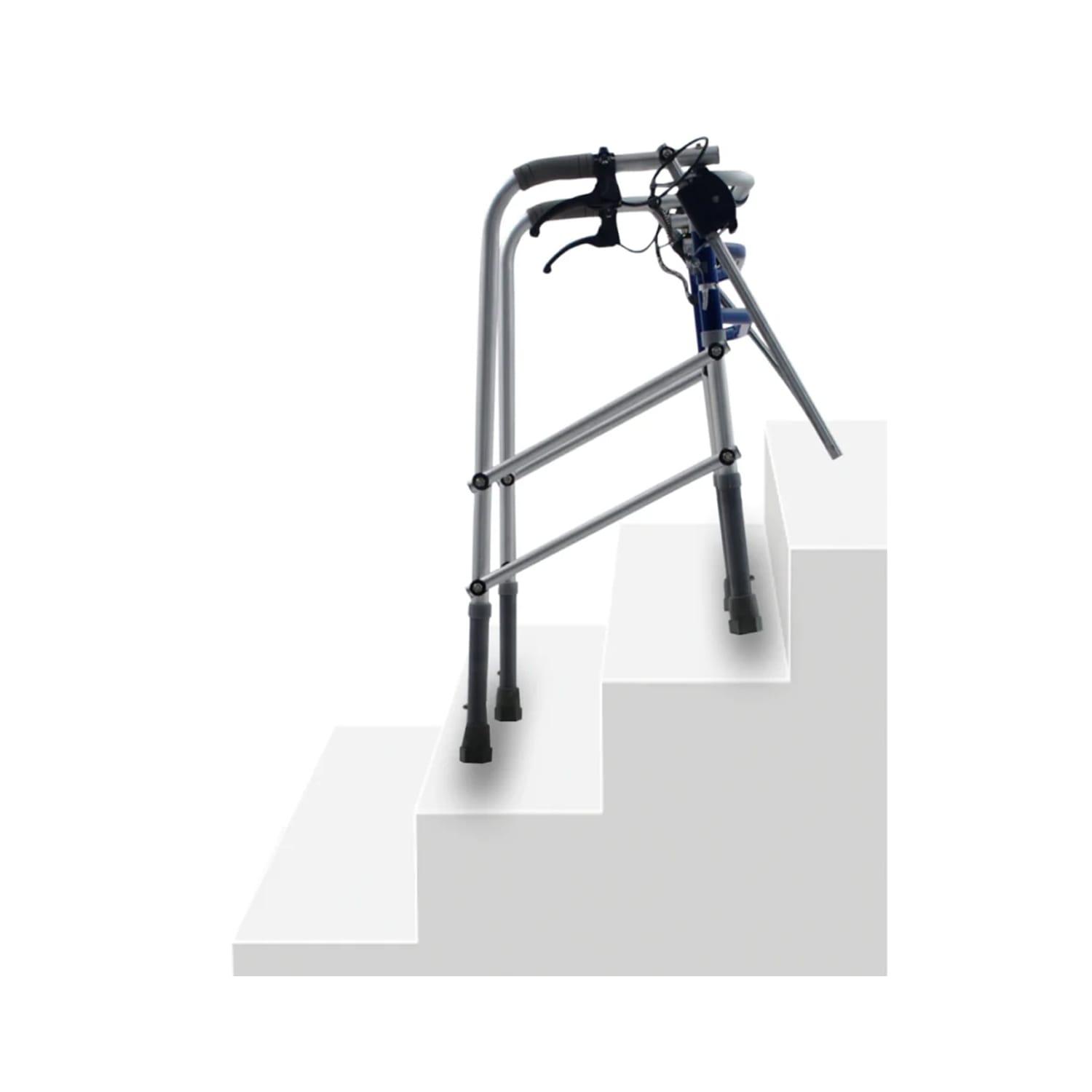
Steps or thresholds
Outside the home
Consider:
Footpaths
Uneven ground
Longer walking distances
Slopes
Outdoor surfaces
Shopping areas
Medical appointments
Public spaces
This is particularly important when comparing different types of walkers. A device that is easy to manoeuvre in a large room may not be equally convenient in a crowded home or narrow corridor.
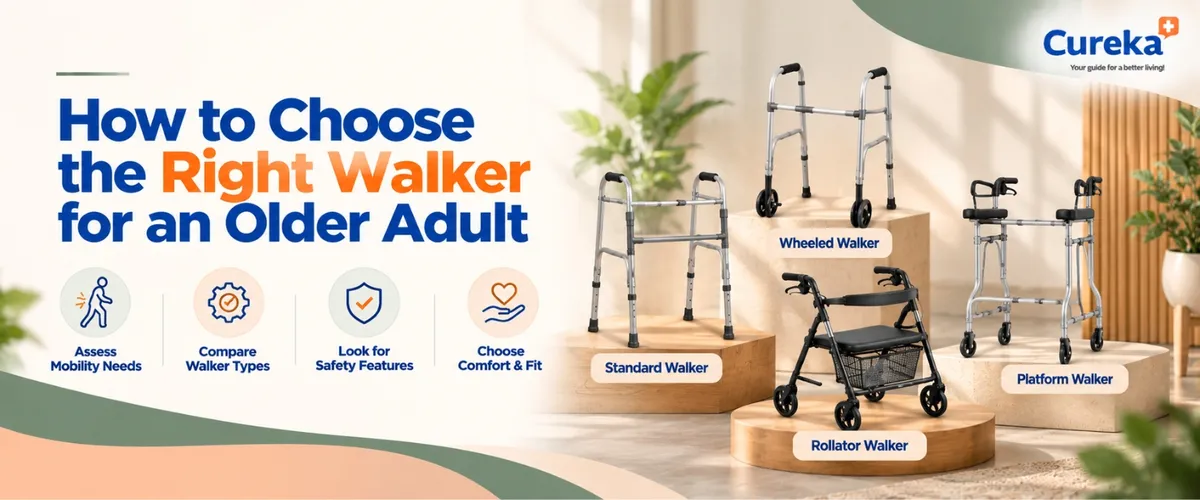
6. Know the Basic Types of Walkers
While there are different types of walkers available, you need to take into consideration what is more functional rather than picking one that is popular.
Walker type | Where it may be useful | What to consider |
|---|---|---|
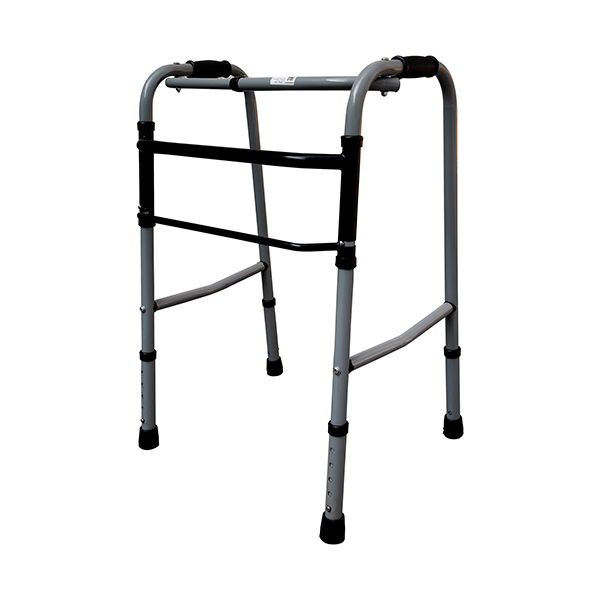
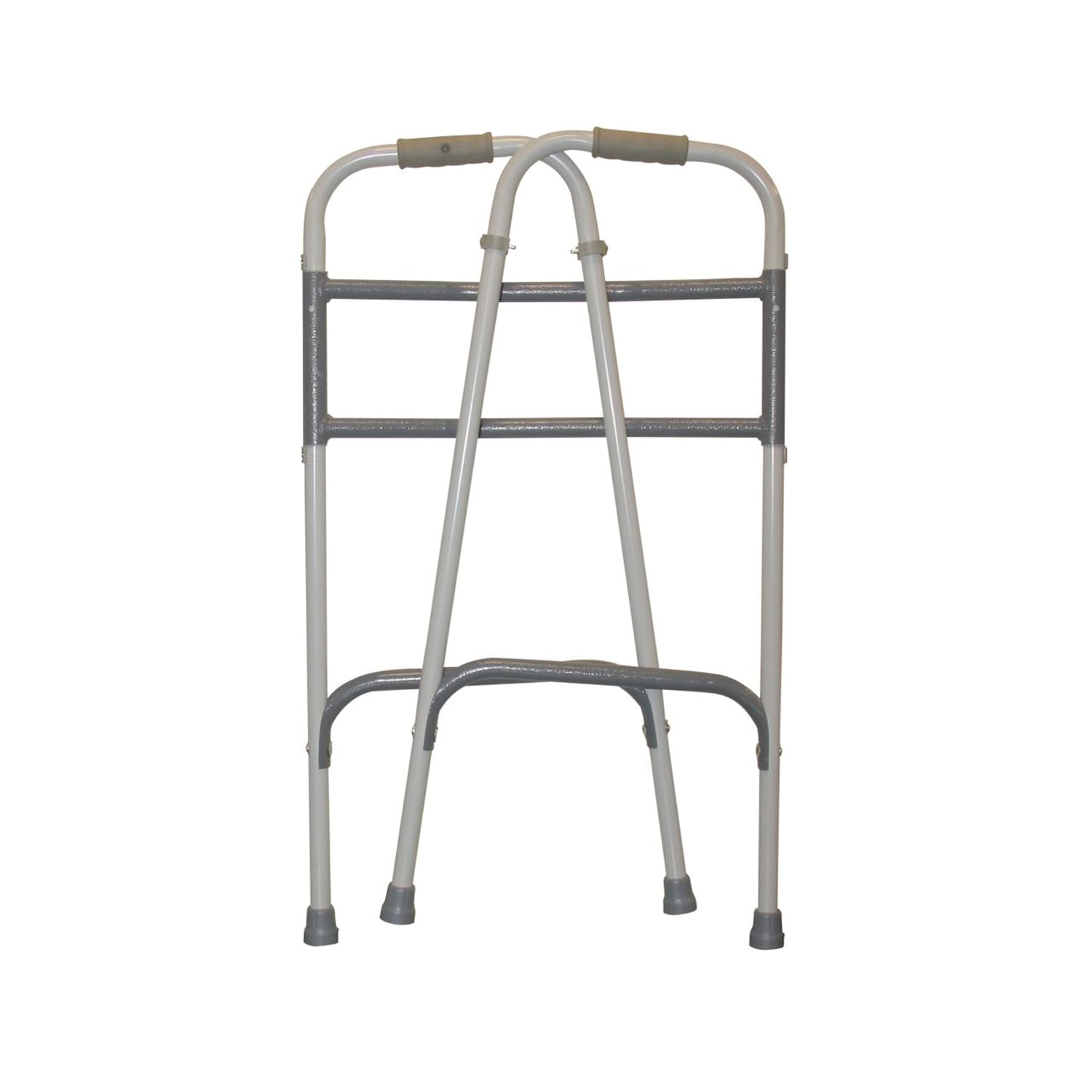
Standard walker | When maximum stability is important | Requires lifting and advancing the walker |
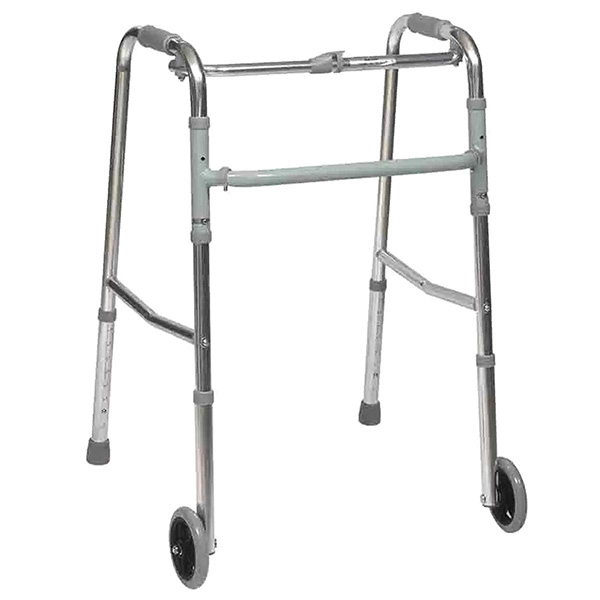
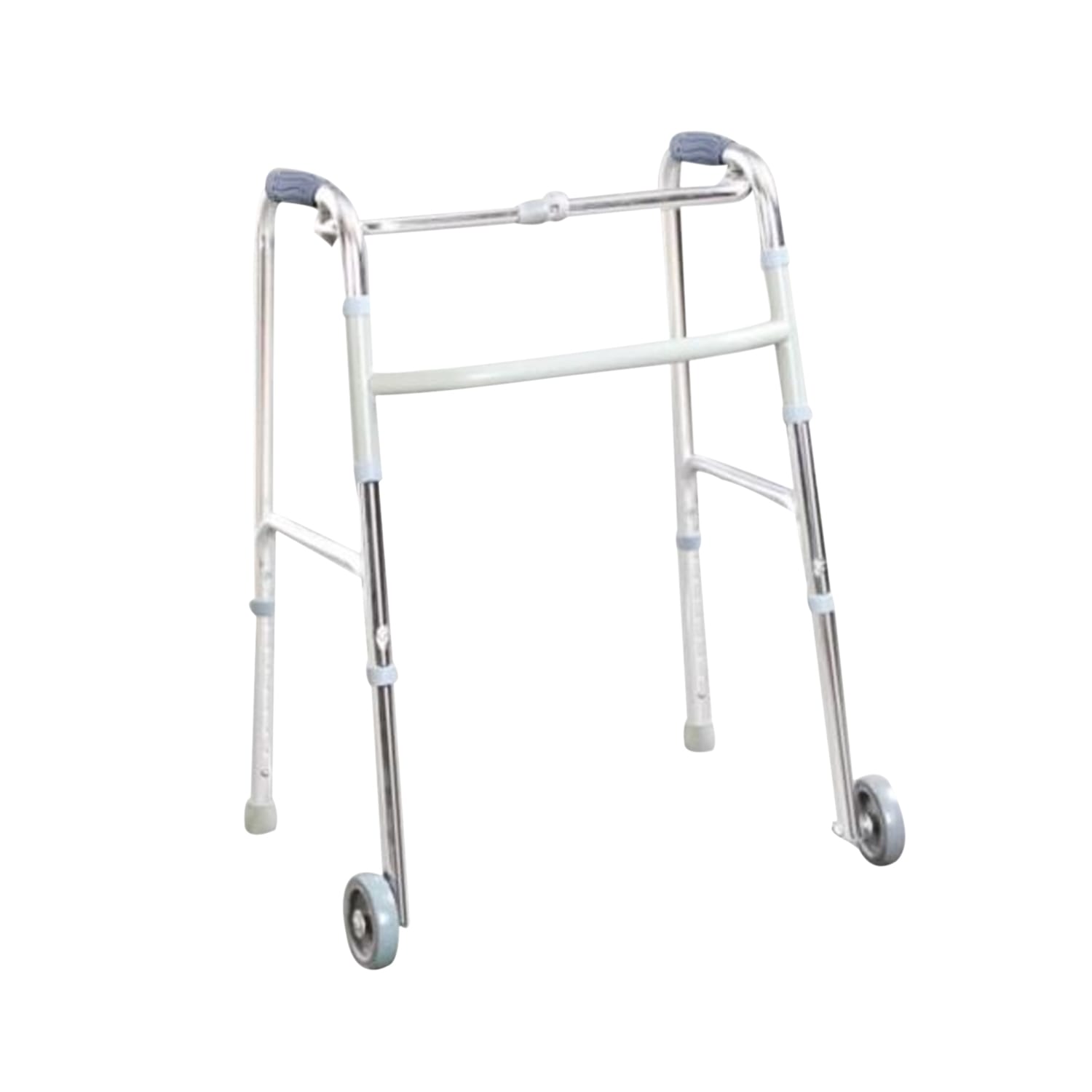
Two-wheel walker | When the user needs stability but finds lifting difficult | Easier to move forward than a standard walker |
Four-wheel walker or rollator | For people who need support while walking but can control a moving device | Requires good control and, usually, brake use |
Although a normal walker will provide stability, it will still require the user to pick up the walker and move it around.
A two-wheeled walker can decrease the necessity of lifting the whole frame of the walker.
The four-wheeled walker/rollator can be a good choice if the patient is able to walk without much help but needs assistance with balancing and walking endurance.
On the other hand, increased mobility can be a problem for elderly patients if they have issues with balancing and controlling their speed of movement.
7. Ensure That the Walker Fits the Patient
It is crucial to select the correct height since improper setting of the walker may cause poor posture and make walking uncomfortable.
When the patient stands inside the walker, the handles should usually allow the patient to stand straight with bent elbows.
The walker should not force the person to:
Bend excessively forward
Reach down to the handles
Shrug the shoulders
Walk too far behind the frame
Take unusually large steps to keep up with it
Professional fitting may be especially helpful following surgery, injuries, or when the individual is having difficulty with balance and gait.
What About a Rollator with a Seat?
There is nothing wrong with using a rollator with a seat if a senior citizen becomes tired during long strolls and requires a resting spot at some point.
Nonetheless, the presence of the seat is not the decisive factor when selecting the product.
A senior should still be capable of doing the following:
Operating the walker during movement
Putting on brakes properly
Stopping safely
Sitting down and getting up without losing balance
An elderly person with considerable imbalance cannot be considered as an appropriate user of a rollator solely because of the presence of the seat.
Does a Lightweight Walker Mean It Is Better?
Not necessarily.
A lighter walker is more portable and easy to carry around; this may suit some seniors. However, this is just one of several factors to consider when selecting a walker.
This walker should:
Be stable for the user
Be durable for the intended purpose
Be controllable
Be the correct size
Be suitable for the individual's physical condition
The ideal walker for seniors in my opinion should be the one that offers safe control and proper support rather than the lightest one.
Do Walker Accessories Matter?
While accessories may help to enhance the convenience, they must not influence the selection process initially.
A basket or a pouch would help to transport personal belongings easily. The usage of a tray can be appropriate in certain household conditions. Nevertheless, the accumulation of accessories may add unnecessary weight and make the walker harder to maneuver.
Initially, the walker itself must be suitable for one’s mobility requirements. Accessories will be added later.
Try the Walker Before Buying it
If possible, the older individual should try out the walker instead of just basing the choice on an online specification or image of the product.
Pay attention to whether they are able to:
Get into the standing position and step into the walker.
Walk.
Push the walker ahead of them.
Turn around.
Stop.
Navigate through a tight area.
Safely sit down and stand up if the walker has a seat.
Such issues might not be immediately apparent based solely on specifications.
When someone keeps walking too far behind the walker, has trouble turning, is unable to use the brakes or seems to be more unstable when using the walker, it might not be the right walker for them.
When Should You Not Simply Buy a Walker?
At other times, the priority is getting the patient’s problem with walking assessed.
Consultation should be considered when there is:
A sudden alteration in walking
A recent fall
Weakness or increased weakness
Hip, knee, or lower back pain
An inability to bear weight
Recurrent loss of balance
Changes in gait pattern
Inability to control the walker, even when using the walker properly
While a walker helps decrease the body effort involved in walking, it neither assesses nor treats the cause of the problem with mobility.
When dealing with an older patient who is newly dependent on furniture or someone else to ambulate, the priority would be finding out what caused this change rather than buying a walker.
Walker or Walking Stick: Which Is More Appropriate?
The walking cane usually offers less stability than the walker. However, the use of a walking cane can be considered when the senior has reasonably good balance but requires a little help, like in cases where one leg hurts.
The walker can be recommended when the person requires more stability and strength, as well as support from both hands.
The type of mobility aid that the patient will use must depend on his or her gait, balance, strength and weight-bearing capacity instead of age.
It is an important factor to consider when choosing between walking aids for seniors because simply being old does not necessarily mean using the most supportive aid.
A Simple Walker Buying Guide
Before buying a walker, ask these questions:
Why does the person need walking support?
How much weight do they need to place through the walker?
Can they grip and control the handles?
Can they lift or push the walker comfortably?
How good is their balance?
Can they turn safely?
Where will they use it most often?
Are there narrow spaces or uneven surfaces?
Do they need to sit and rest while walking?
Has the walker been adjusted to their height?
Can they use the brakes if the model has them?
Have they actually tried the walker?
If you can answer these questions, you are much closer to understanding how to choose a walker that suits the individual rather than simply choosing a popular model.
The Bottom Line
Finding a walker for an older adult is not just about choosing the right number of wheels or the features of the walker.
As an orthopedic surgeon, I would consider such factors as gait, balance, lower limb strength, upper limb strength, weight-bearing ability, endurance and the surroundings where the walker is going to be used.
It should not be seen as looking for the most modern walker, but rather as finding one that offers adequate support while still enabling the individual to be as independent and safe as possible.
Where there is doubt concerning which device may be needed for mobility needs, especially in cases where someone has been through surgery, a fall, an injury, or when someone’s ability to walk has suddenly become impaired, a consultation with an orthopedist or physiotherapist will usually prove more helpful.
References
Mobility Assistive Device Use in Older Adults - 2021 Jun - https://pubmed.ncbi.nlm.nih.gov/34128609/
Assistive devices for balance and mobility: benefits, demands, and adverse consequences - 2005 Jan - https://pubmed.ncbi.nlm.nih.gov/15641004/
Effectiveness of gait aid prescription for improving spatiotemporal gait parameters and associated outcomes in community-dwelling older people: a systematic review - 2022 Oct - https://pubmed.ncbi.nlm.nih.gov/34375545/