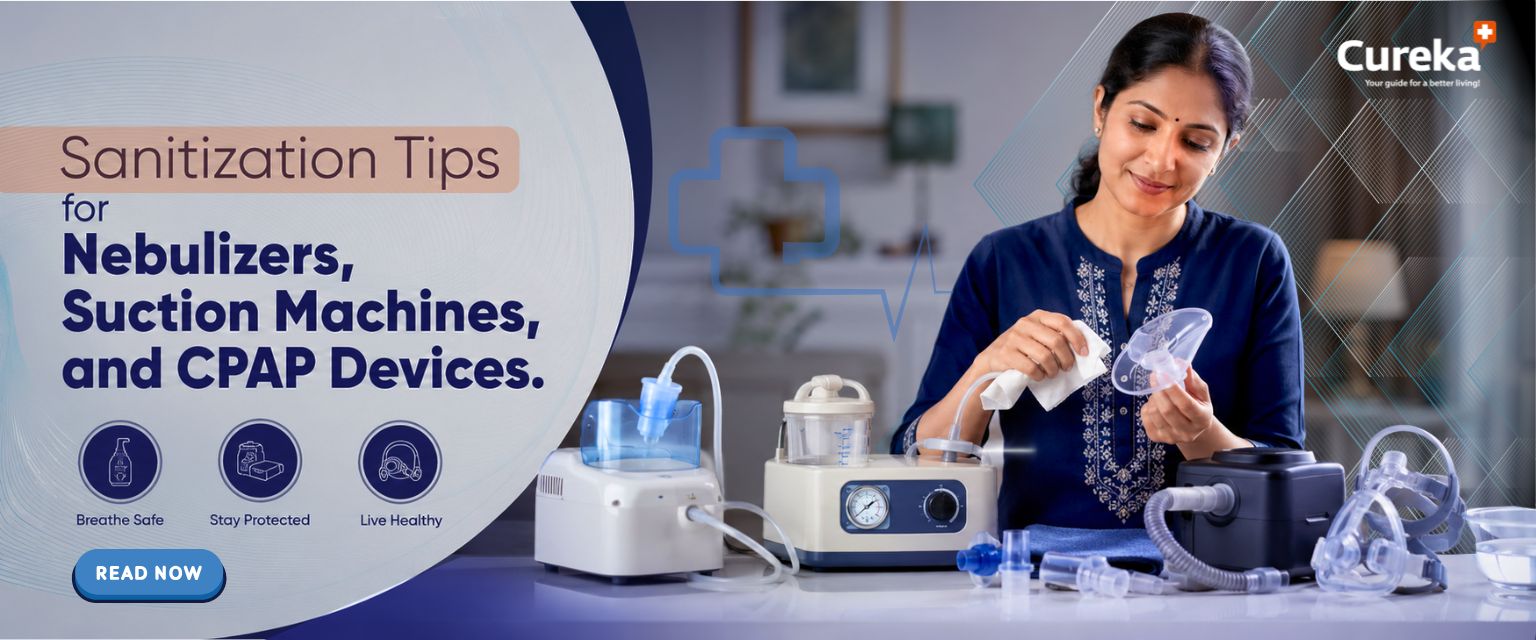
Sanitization Tips for Nebulizers, Suction Machines, and CPAP Devices
Medically Reviewed By:
Dr. Hema Sathish M.B.B.S., D.D(UK)
Dermatologist, Founder of Cureka
Table of Contents
- Why Sanitization Matters
- Building Healthy Habits & Preventing Infections
- Monitoring and Maintenance
- Long-Term Protection for Chronic Users
- Quick Reference Summary
- Conclusion
Why Sanitization Matters
Respiratory care devices like nebulizers, suction machines, and CPAP units are essential tools for individuals with breathing difficulties. They deliver medication, maintain airway clearance, and support sleep and oxygen flow — making them an extension of the respiratory system itself.
But when these devices aren’t cleaned properly, they can quickly become a source of infection rather than relief. Moisture, residual medication, and air exposure create the perfect environment for bacteria, mold, and viruses to thrive. The result? Recurrent infections, breathing discomfort, or even worsening of chronic conditions.(1)
Sanitization, therefore, isn’t just about keeping equipment tidy — it’s a preventive healthcare measure. It helps stop infections before they begin, catch hygiene lapses early, and protect long-term respiratory health.
Building Healthy Habits & Preventing Infections
Good health begins with daily preventive habits. Proper cleaning and handling of respiratory devices prevent harmful microorganisms from entering the airways, especially for vulnerable individuals such as children, older adults, and those with asthma or COPD.
Key Hygiene Steps
1. Clean after every use:
After each session, detach the mask, tubing, and mouthpiece. Wash them with warm water and mild soap, rinse well, and let them air dry on a clean towel.
2. Use only distilled or sterile water:
Avoid tap water in nebulizers or CPAP humidifiers — it can contain minerals and bacteria that lead to buildup and infections.
3. Personal-use devices only:
Even within the same family, each person should use their own equipment. Sharing increases infection risk.
4. Store safely:
Keep devices in a clean, dry space, away from humidity, dust, and direct sunlight.
These small but consistent actions form the foundation of infection prevention, ensuring safe and effective respiratory support every day.
Monitoring and Maintenance
Even when cleaned regularly, devices can show early signs of wear, contamination, or malfunction. Recognizing these signs early helps avoid serious respiratory problems later.
Smart Maintenance Practices
Inspect weekly:
Check all parts — tubing, mask, connectors — for cracks, discoloration, or unusual odors. Replace damaged or cloudy components immediately.
Monitor filters:
Both suction and CPAP machines have filters that trap dust and microbes. Clean or replace them every 2–4 weeks based on manufacturer guidelines.
Notice body signals:
If you develop coughing, nasal irritation, or congestion after device use, it may be due to contamination. Revisit your cleaning steps or consider replacing parts.
Disinfect periodically:
Once or twice a week, disinfect equipment with 3% hydrogen peroxide, a 1:1 vinegar-water solution, or approved medical wipes. Avoid harsh cleaners or alcohol that can damage plastic parts.
Early monitoring acts like an internal alarm — helping you detect risks before they evolve into infections or therapy failures.
Long-Term Protection for Chronic Users
For individuals managing chronic respiratory conditions like asthma, COPD, or sleep apnea, sanitization becomes a part of long-term care. Clean equipment helps maintain consistent therapy outcomes and prevents recurring infections that could lead to hospitalization.
Advanced Care Tips
Follow replacement timelines:
Nebulizer cups and tubing: every 3–6 months
CPAP masks and hoses: every 3–6 months
Suction catheters: ideally single-use or sterilized immediately after use
Deep clean weekly:
If your device parts are boil-safe, boil them for 5–10 minutes once a week, or use UV sanitizing units for convenient disinfection.
Keep a hygiene log:
Track cleaning and replacement schedules — especially helpful for caregivers managing multiple patients.
Schedule periodic servicing:
Ask your healthcare provider or supplier to inspect your equipment for performance, leaks, and hygiene issues at least twice a year.
Long-term prevention not only reduces relapses but also ensures your therapy remains as effective as the day you started using the device.
Quick Reference Summary
| Focus Area | Goal | Recommended Actions |
| Daily Hygiene | Prevent microbial growth | Clean after use, use distilled water, avoid sharing devices |
| Weekly Monitoring | Detect early signs of contamination | Inspect parts, clean filters, watch for unusual odors or irritation |
| Periodic Disinfection | Kill hidden bacteria or mold | Use hydrogen peroxide or vinegar-water mix weekly |
| Long-Term Care | Maintain therapy safety and performance | Replace parts regularly, deep clean, and schedule servicing |
Conclusion
Sanitization might feel like a small task, but it’s one of the most powerful preventive actions in respiratory care. Clean devices help medications reach the lungs effectively, prevent infections, and support better breathing — every single day.
By turning these hygiene steps into routine habits, you safeguard not just your equipment but your health.
Because when it comes to respiratory wellness, clean care is preventive care.
Frequently Asked Questions
1. How often should you clean a nebulizer, CPAP, or suction machine?
Respiratory devices should be cleaned after every use to remove moisture, medication residue, and germs, helping prevent infections and maintain effective therapy.
2. Why is sanitizing respiratory care devices so important?
Proper sanitization helps prevent bacteria, mold, and viruses from growing on respiratory devices, reducing the risk of respiratory infections and supporting healthy breathing.
3. Can I use tap water in a nebulizer or CPAP humidifier?
No. Distilled or sterile water is recommended because tap water may contain minerals and microorganisms that can cause buildup and increase infection risk.
4. How do I know when CPAP or nebulizer parts need replacing?
Replace worn, cracked, discolored, or damaged parts as recommended, and regularly inspect tubing, masks, filters, and connectors to ensure safe and effective respiratory therapy.
5.What is the best way to prevent infections when using respiratory devices?
Clean equipment after every use, disinfect it weekly, replace parts on schedule, and store devices in a clean, dry place to support safe respiratory care and infection prevention.
References:
1. Bacterial Surface Detachment during Nebulization with Contaminated Reusable Home Nebulizers – 2022 Feb – https://pmc.ncbi.nlm.nih.gov/articles/PMC8809330/#s3