Top Preventive Healthcare Essentials Every Home Should Have
Medically Reviewed By:
Dr. Hema Sathish M.B.B.S., D.D(UK)
Dermatologist, Founder of Cureka
Introduction: Health Preparedness Starts at Home
Health worries can occur at any time in the fast-paced world of today, whether it’s a seasonal allergy, a minor cut, or an unexpected fever. We can’t predict every health issue, but we can be equipped with the right products and medicines. This is why having preventative healthcare essential kits at home is so important.
Families are increasingly preparing their homes with doctor-recommended necessities rather than waiting for crises to worsen. With these preventive healthcare products, we are not only reducing stress and saving money but can also avoid the needless hospital visit for minor problems. The best medicine list for home can actually make the difference between an emergency that can be prevented and a scenario that can be handled.
The Vital Importance of Preventive Healthcare: Why It Matters for Your Health and Well-being
One of the most talked-about topics in the modern world is preventive healthcare. It is a proactive step to lower the chance of being sick before it happens. The most effective preventative strategy is the one that leads to changes in lifestyle with respect to diet, physical activities, cessation of smoking, and the control of metabolic disorders (1). It’s better to follow healthy habits to avoid spending money on medical treatments later.
Benefits of preventive healthcare include:
- Early detection and intervention of diseases through regular checkups
- Better quality of life
- Reduced stress levels regarding health
- Helps maintain energy levels for daily life
- Reduced risk of chronic diseases (heart diseases, diabetes)
Why It’s Important to Have Preventive Healthcare Essentials at Home
You will need to go to the hospital if you cut your skin while chopping veggies. However, you must have supplies like cotton or medicine on hand for first aid and urgent needs. If you don’t provide first aid, the wait may make your condition worse. This is why the preventive healthcare essentials at home are essential.
Keeping preventive healthcare kits at home ensures:
- Instant relief before the hospital visit
- cost-effectiveness by reducing avoidable medical visits and preventative healthcare expenses
- Relaxed mindset for people with chronic diseases.
Prevention gives households the ability to take charge of small health issues; however, it does not replace doctors.
Essential Preventive Healthcare Must-Haves for a Healthier Home!
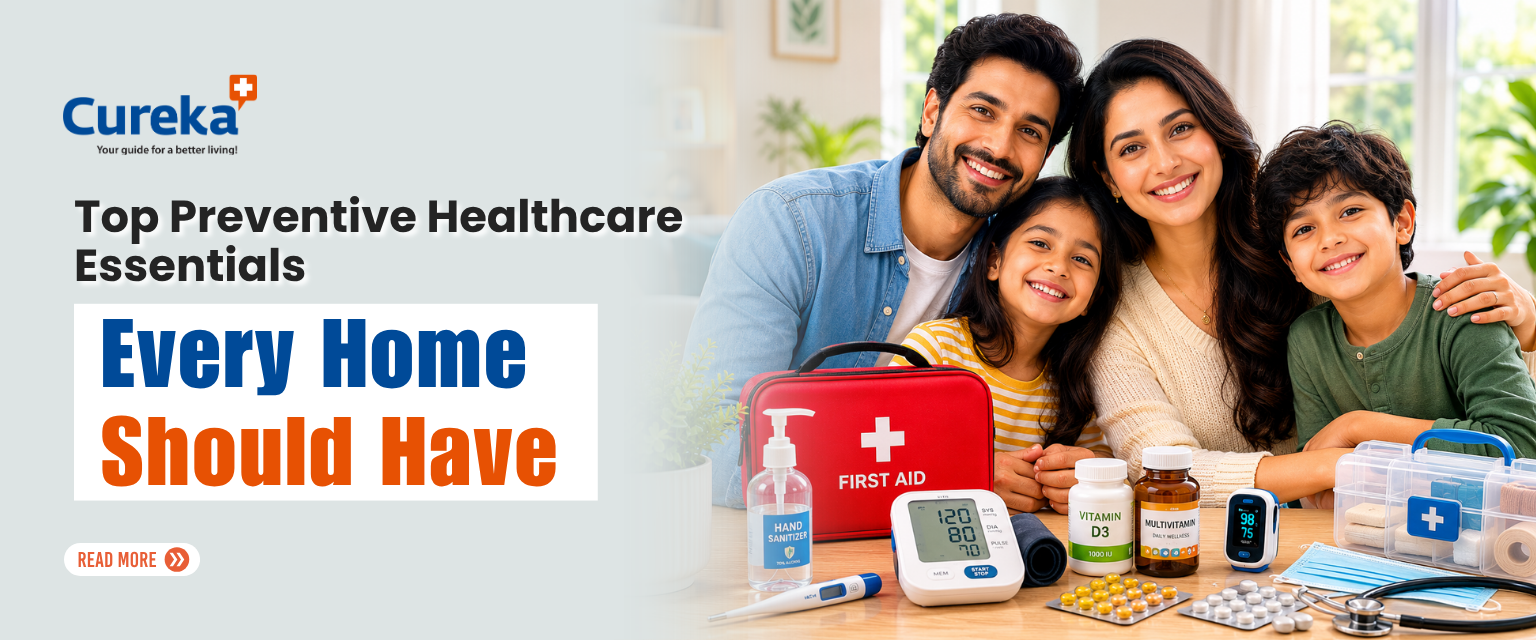
When you have the preventive healthcare products at your home, you can cover first aid, small health concerns, and chronic condition management. A list of preventive healthcare essentials that every household should take into consideration is listed below.
First Aid Basics
- Digital thermometer to check for fever.
- Tweezers, disposable gloves, ice, and hot pack
- Antiseptic wipes or solutions, bandages, and cotton
Everyday Medicines
- Digestive aids like antacids and anti-diarrhea medicines
- Multivitamins are helpful in preventing stomach upset and improving the absorption of fat-soluble vitamins when you take them alongside food.
- For dehydration, use oral rehydration salts (ORS).
Preventive Health Devices
- Glucometer for diabetes management
- Pulse oximeter for measuring oxygen levels
- Blood pressure monitor for measuring high blood pressure.
Multivitamins are helpful in preventing stomach upset and improving the absorption of fat-soluble vitamins when you take them alongside food.
Nutritional support:
- Probiotic supplements for gut health
- Immunity-enhancing supplements like multivitamins
Personal hygiene:
- Mosquito repellents & nets
- Masks, gloves, and sanitizers for protection
- Intimate washes, intimate wipes, and moisturizing balms or creams for maintaining intimate hygiene.
Currently, ventilators, infusion pumps, and dialysis machines are used outside the hospitals and clinics. However, these devices aren’t meant for residential usage, and there are certain rules that limit their use. (2)
What Medical Supplies Should I Have at Home?
The best medicine list for home, which you can store in your home and use in emergency times. It is also advised to use and store the medicines after checking the expiry dates. Here are a few examples.
- Stomach care: Probiotics, ORS, and antacids
- Injury care: Bandages, cotton, and antiseptic solutions
- Chronic care tools: thermometer, glucometer, and oximeter
- Allergy and cold relief: nasal sprays, cough tonics, or vaporizers
The above list can vary based on the age groups, lifestyle, and chronic health conditions. It is advised to consult with the doctors before deciding on your essential preventive healthcare kit.
Conclusion: Prevention Is Always Better Than Cure
Better health starts from home. It’s ideal to keep essential preventive healthcare products at your home for various benefits. These essentials can reduce stress, save time, and minimize preventive healthcare expenses.
Prevention isn’t just a medical theory—it’s a lifestyle. Make your own home kit today, guided by doctor-approved preventive healthcare essentials.
Frequently Asked Questions
1. What are the essential preventive healthcare products every home should have?
A home healthcare kit should include first aid supplies, a digital thermometer, oral rehydration salts (ORS), basic medicines, and health monitoring devices for common health needs.
2. Why is preventive healthcare important?
Preventive healthcare helps reduce the risk of illness through healthy habits, early intervention, and regular health monitoring, supporting long-term well-being.
3. What medical supplies should be included in a home first aid kit?
A home first aid kit should contain bandages, cotton, antiseptic solutions, disposable gloves, tweezers, and hot or cold packs for minor injuries and emergencies.
4. Which supplements can support preventive healthcare?
Probiotics for gut health and multivitamins for nutritional support can help maintain overall wellness as part of a preventive healthcare routine.
5. How often should you check and update your home healthcare kit?
A home healthcare kit should be reviewed regularly to replace expired medicines, restock used supplies, and ensure all essentials are readily available when needed.
References:
- Management and Prevention Strategies for Non-communicable Diseases (NCDs) and Their Risk Factors – Nov 2026 – https://pmc.ncbi.nlm.nih.gov/articles/PMC7726193/
- Medical Devices in Home Health Care – 2010 – https://www.ncbi.nlm.nih.gov/books/NBK210047/