
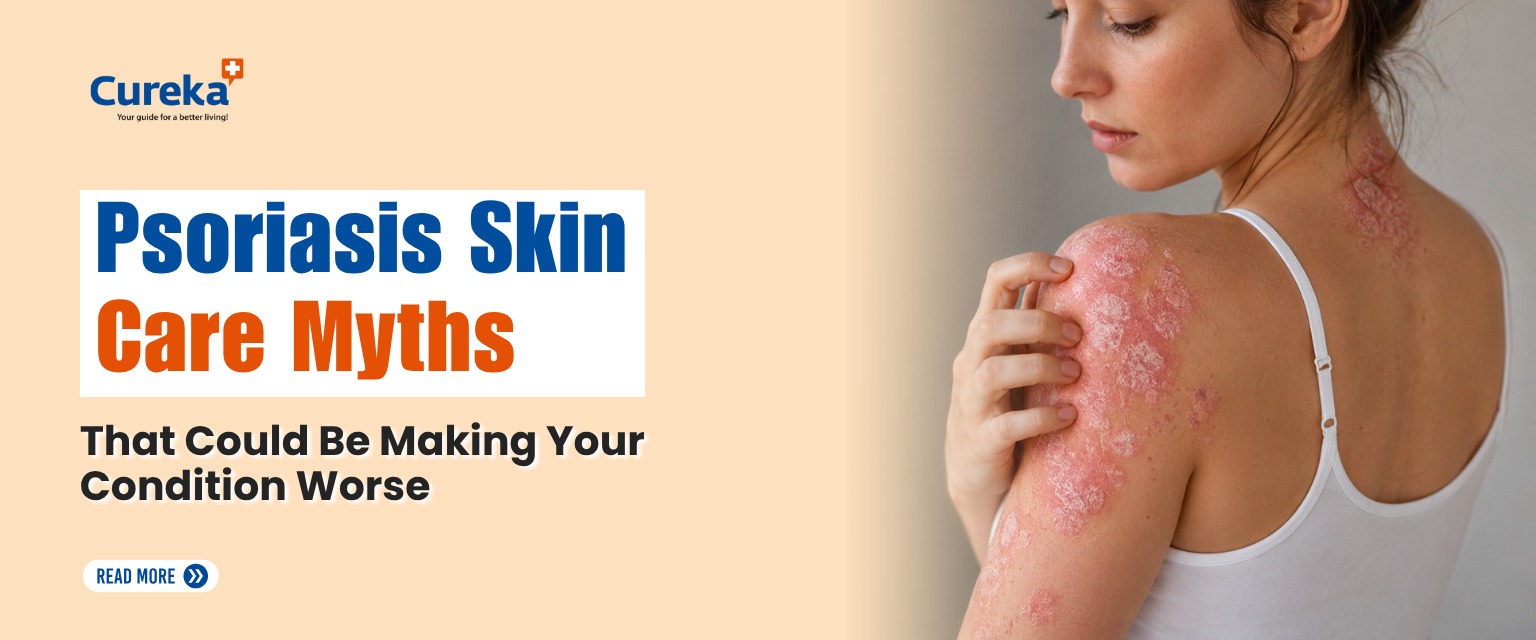
Psoriasis Skin Care Myths That Could Be Making Your Condition Worse
Medically Reviewed By:
Dr. Hema Sathish M.B.B.S., D.D(UK)
Dermatologist, Founder of Cureka
Living with psoriasis is more than just managing red, scaly skin. It’s about battling misinformation that can make things worse. Whether it’s outdated advice or popular psoriasis misconceptions, these myths can interfere with effective treatment and even harm your mental well-being.
Let’s understand the most common psoriasis facts and myths that can lead to better care and outcomes.
1. Myth: Psoriasis Is Caused by Poor Hygiene
Fact: Psoriasis is not a cleanliness issue – it’s an autoimmune disorder. Your immune system mistakenly speeds up skin cell production, causing a buildup of scales and inflammation. Cleanliness plays no role in its origin.
2. Myth: Psoriasis Is Contagious
Fact: You can’t catch or spread psoriasis through touch, sharing towels, or being near someone with it. It’s a non-infectious condition influenced by genetics and immune response, not germs [1].
3. Myth: Psoriasis Can Be Cured
Fact: There is currently no cure for psoriasis. But with the right care topicals, light therapy, or biologics; many people can achieve long-term remission and symptom control.
4. Myth: It’s Just a Skin Problem
Fact: One of the popular psoriasis misconceptions is psoriasis is more than skin deep. It can lead to psoriatic arthritis, and is associated with higher risks of cardiovascular disease, and depression. It’s a systemic condition that needs comprehensive care [2] [3].
5. Myth: Stress Causes Psoriasis
Fact: Stress doesn’t cause psoriasis, but it can trigger flare-ups or worsen existing symptoms [4]. Other common triggers include skin injuries, infections, and medications.
6. Myth: Diet Doesn’t Matter
Fact: Psoriasis isn’t caused by food, but certain dietary habits like high sugar or alcohol intake can aggravate inflammation. While no universal psoriasis diet exists, some people find relief by managing known triggers.
7. Myth: There Are No Effective Treatments
Fact: Dozens of treatment options exist, from moisturizing creams and topical steroids to advanced biologics that target immune system pathways. What works best varies by person, so expert guidance is key.
8. Myth: Sunbeds Are a Good Treatment
Fact: Controlled UVB phototherapy (under medical supervision) may help, but sunbeds are not a safe substitute. They mostly emit UVA, which has little benefit for psoriasis and increases skin cancer risk.
9. Myth: Only Adults Get Psoriasis
Fact: Psoriasis can affect children and adolescents too. Pediatric psoriasis needs special attention as it can impact emotional well-being and development.
10. Myth: Psoriasis is only caused in summer.
Fact: Psoriasis can occur or worsen in any season. While some people may notice flare-ups during summer due to sweat, heat, or sun sensitivity, others experience more severe symptoms in winter due to dry air and reduced sunlight. Seasonal changes affect individuals differently, but psoriasis is a year-round condition that requires ongoing care.
11. Myth: You Just Have to Live With It
Fact: While chronic, psoriasis is highly manageable. With the right treatment plan, doctor-suggested psoriasis skincare tips, and support, people can lead active, confident lives. Dermatologist consultation, avoiding triggers, and consistent moisturizing make a real difference.
Why Busting Myths Matters?
Many people living with psoriasis face emotional and psychological challenges often fueled by misinformation. This lack of disease awareness among patients and even primary care providers leads to delayed diagnosis, poor treatment outcomes, and diminished quality of life. Understanding the psoriasis facts and treatments will support confidence and improve quality of life.
Psoriasis Skincare Tips
- Moisturize regularly to reduce scaling and itching.
- Avoid scratching to prevent infection and skin trauma.
- Identify and avoid triggers like stress, smoking, alcohol, or harsh products.
- Work with a specialist to find the right mix of treatments.
- Focus on mental health: Psoriasis can impact mood; support networks and therapy can help.
Final Thoughts
Psoriasis affects over 2 to 3 percent of people worldwide, yet myths continue to shape how it’s perceived and treated [5]. By separating fact from fiction, you’re not only improving your skincare routine – you’re also improving your quality of life.
Whether you’re newly diagnosed or have been managing psoriasis for years, it’s never too late to rethink your approach, challenge outdated beliefs, follow doctor-recommended psoriasis skincare tips and seek the support you deserve.
Frequently Asked Questions
1. What are the most common psoriasis myths people believe?
Common myths include that psoriasis is contagious, caused by poor hygiene, or has no treatment. In reality, it is an autoimmune condition with manageable care options.
2. Can psoriasis affect only the skin or other parts of the body too?
Psoriasis is not just a skin condition; it is a systemic disease. It may also lead to joint issues like psoriatic arthritis and other health risks.
3. What are the main triggers of psoriasis flare-ups?
Common triggers include stress, skin injuries, infections, medications, and environmental factors. Identifying triggers helps in better psoriasis management.
4. Is psoriasis a lifelong condition or can it be cured?
Psoriasis is a chronic condition with no permanent cure. However, symptoms can be controlled effectively with long-term treatment and care.
5. Do sunbeds help in treating psoriasis safely?
Sunbeds are not recommended for psoriasis. Only medically supervised UVB phototherapy is considered safe and effective for symptom control.
References
- Psoriasis as an Immune-Mediated and Inflammatory Systemic Disease: From Pathophysiology to Novel Therapeutic Approaches
https://pmc.ncbi.nlm.nih.gov/articles/PMC8615182/
- The impact of psoriatic arthritis on quality of life: a systematic review
https://pmc.ncbi.nlm.nih.gov/articles/PMC11664531/
- Quantifying harmful effects of psoriatic diseases on quality of life: Cardio-metabolic outcomes in psoriatic arthritis study (COMPASS)
https://pubmed.ncbi.nlm.nih.gov/26058346/
- Stress and psoriasis
https://pubmed.ncbi.nlm.nih.gov/29729012/
- Advancements in understanding and treating psoriasis: a comprehensive review of pathophysiology, diagnosis, and therapeutic approaches