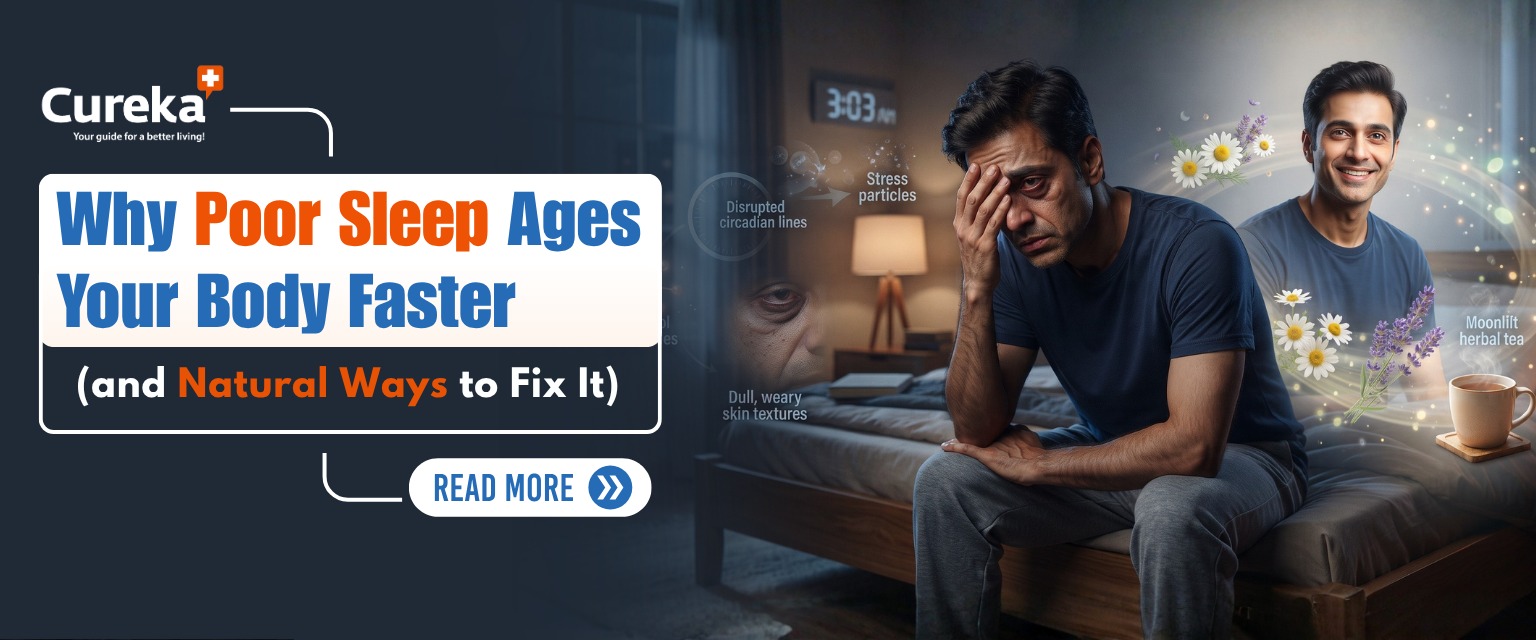
Why Poor Sleep Ages Your Body Faster (and Natural Ways to Fix It)
Medically Reviewed By:
Dr. Hema Sathish M.B.B.S., D.D(UK)
Dermatologist, Founder of Cureka
We often think of sleep as just downtime, but science tells a different story. Quality sleep is an active, restorative process that maintains nearly every system in your body—from skin and hormones to the heart, brain, and immune system. When sleep is consistently disrupted or shortened, your body doesn’t just feel tired—it actually begins to age more quickly.
In this article, we’ll look at how poor sleep accelerates aging across multiple organs, why this happens on a biological level, and the natural ways—including lifestyle changes and targeted supplements—to slow down the process.
The Science of Sleep and Aging
Sleep is when your body conducts deep repair. During the night:
- Growth hormone surges to repair tissues and muscles.(1)
- Melatonin is released, not only regulating circadian rhythm but also acting as a powerful antioxidant.
- Glymphatic drainage in the brain clears out toxins like beta-amyloid (linked to Alzheimer’s).
- The immune system resets, building defenses for the next day.
When sleep is inadequate, these processes are compromised, leading to faster cellular aging, oxidative stress, and systemic inflammation—all hallmarks of premature aging.
How Poor Sleep Ages Different Parts of Your Body
1. Skin and Appearance
Poor sleep reduces collagen production, leading to fine lines, sagging, and dullness. Cortisol, the stress hormone, rises with sleep deprivation and breaks down skin proteins. Research shows that chronic poor sleepers are more likely to show visible signs of aging, such as wrinkles, hyperpigmentation, and reduced skin elasticity.
2. Brain and Cognitive Function
Sleep loss accelerates “brain aging.” During deep sleep, cerebrospinal fluid flushes out neurotoxins like beta-amyloid. When this process is impaired, cognitive decline speeds up, raising the risk of dementia. Memory, attention span, and problem-solving abilities also weaken.
3. Cardiovascular System
This is one of the most critical areas. Poor sleep increases blood pressure, stiffens arteries, and elevates the risk of heart attacks and strokes. (2) Even a single night of reduced sleep can impair endothelial function—the ability of blood vessels to relax and maintain circulation. Chronic sleep loss raises inflammatory markers like CRP (C-reactive protein), directly linked with cardiovascular aging.
4. Immune Function
Your immune system “resets” during sleep. Deep sleep stages promote the release of cytokines, proteins that help fight infection. Sleep deprivation reduces these, leaving the body more vulnerable to infections, autoimmune conditions, and even cancer.
5. Hormonal Balance and Metabolism
Lack of sleep disrupts key hormones:
- Cortisol (stress) rises, leading to inflammation and fat accumulation.
- Insulin sensitivity drops, increasing diabetes risk.
- Leptin and ghrelin, the hunger hormones, shift—leading to overeating and weight gain.
Over time, this hormonal imbalance mimics accelerated aging by fueling obesity, metabolic syndrome, and chronic inflammation.
5. Musculoskeletal System
Growth hormone is released during deep sleep. Poor sleep reduces this surge, impairing muscle recovery, bone density, and joint health. This accelerates sarcopenia (age-related muscle loss) and osteoporosis.
7. Digestive and Gut Health
The gut microbiome has its own circadian rhythm. Poor sleep disrupts gut bacteria balance, increasing gut permeability (“leaky gut”), inflammation, and digestive disorders.
Natural Ways to Improve Sleep and Slow Aging
1. Create a Strong Sleep Routine
Go to bed and wake up at the same time daily. Consistent circadian rhythm helps regulate melatonin and improves sleep quality.
2. Optimize Your Sleep Environment
Keep your room dark, cool, and quiet. Avoid blue light exposure (phones, laptops) at least one hour before bed.
3. Manage Stress
Relaxation techniques like meditation, yoga, or breathing exercises reduce cortisol levels, allowing deeper and more restorative sleep.
4. Nutrition for Better Sleep
Avoid heavy meals, caffeine, and alcohol close to bedtime. Instead, include foods rich in magnesium, tryptophan, and complex carbohydrates that support serotonin and melatonin production.
5. Physical Activity
Regular exercise promotes deeper sleep cycles, but avoid vigorous workouts right before bedtime.
Supplements That Support Healthy Sleep and Slow Aging
While lifestyle changes form the foundation, certain supplements can support sleep quality and help prevent the accelerated aging linked to poor sleep.
For Sleep and Nervous System Balance
- Melatonin: The body’s natural sleep hormone, especially useful for people with circadian rhythm disturbances like jet lag.
- Magnesium
: Supports relaxation by regulating GABA activity in the brain.
- Valerian Root: An herbal remedy shown to reduce sleep latency and improve sleep depth.
- L-Theanine: An amino acid from green tea that promotes calmness without sedation.
- Ashwagandha: An adaptogen that reduces stress and improves sleep onset.
For Cardiovascular Health and Anti-Aging
Since poor sleep accelerates cardiovascular aging, supplements that support both heart function and restorative rest are especially valuable:
1. Omega-3 Fatty Acids (Fish Oil or Algal Oil)
Reduce inflammation, improve endothelial function, and support both heart and brain health. Adequate intake is linked with improved sleep duration and quality.
2. Coenzyme Q10 (CoQ10)
Supports energy production in heart cells and reduces oxidative stress. Sleep deprivation increases oxidative load, making CoQ10 particularly beneficial.
3. Magnesium
Dual benefit—helps relax the nervous system for better sleep and regulates blood pressure and cardiac rhythm.
4. L-Arginine
Improves nitric oxide production, supporting vascular flexibility and circulation. This helps prevent hypertension and cardiovascular stiffness linked to poor sleep.
5. Vitamin D
Plays a role in both circadian rhythm regulation and heart health. Low levels are tied to sleep problems and higher risks of cardiovascular disease.
6. Curcumin (from Turmeric)
Potent antioxidant and anti-inflammatory compound. It helps reduce systemic inflammation, indirectly improving sleep quality while protecting arteries from premature aging.
Conclusion
Sleep is more than just rest—it is an active biological process that keeps your body youthful and resilient. Poor sleep accelerates aging across your skin, brain, heart, hormones, immunity, muscles, and gut. But the good news is that restorative sleep can be cultivated through consistent routines, stress management, optimized environments, and targeted nutrition.
Adding carefully chosen supplements, especially those that support both sleep and cardiovascular health, can strengthen your defenses against premature aging. When you prioritize sleep, you are not only fighting fatigue—you are actively slowing down the clock on your entire body.
Frequently Asked Questions
1. Can lack of sleep cause premature aging?
Yes. Chronic sleep deprivation increases oxidative stress and inflammation while reducing the body’s natural repair processes, contributing to premature aging across multiple body systems.
2. Does poor sleep affect your skin?
Yes. Poor sleep reduces collagen production and increases cortisol levels, which can contribute to wrinkles, dull skin, reduced elasticity, and other visible signs of aging.
3. How can I improve sleep quality naturally?
Maintain a regular sleep schedule, reduce screen time before bed, manage stress, exercise regularly, and create a cool, dark, and quiet sleep environment.
4. Which supplements may support better sleep and healthy aging?
Melatonin, magnesium, L-theanine, valerian root, and ashwagandha may support healthy sleep, while omega-3 fatty acids
, CoQ10, vitamin D, L-arginine, and curcumin may support healthy aging.
5. Why is deep sleep important for your body?
Deep sleep supports tissue repair, brain detoxification, hormone balance, immune function, muscle recovery, and overall healthy aging.
References:
- Normal Physiology of Growth Hormone in Normal Adults – Apr 2025 – https://www.ncbi.nlm.nih.gov/books/NBK279056/#:~:text=Physiological%20Regulation%20of%20GH%20Secretion,output%20in%20men%20(7).
- Implications of Long Sleep Duration on Cardiovascular Health: A Systematic Review – 2025 Jan – https://pmc.ncbi.nlm.nih.gov/articles/PMC11841827/#:~:text=Hypertension%2C%20for%20instance%2C%20is%20often,risk%20and%20management%20of%20CVDs.