
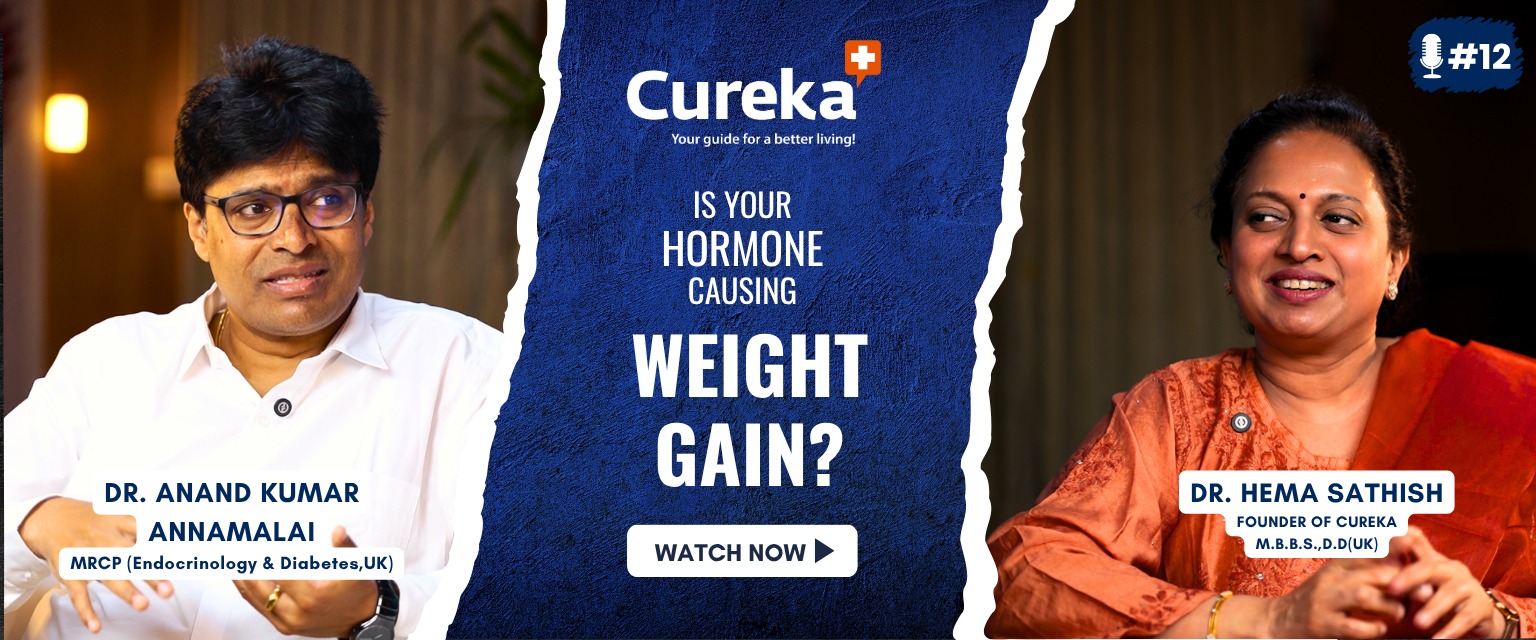
Hormones, PCOS & Weight Gain Explained | Dr. Anand Kumar Annamalai & Dr. Hema Sathish
Table of Content:
- Obesity and Endocrinology: Understanding the Hormonal Connection
- Why Weight Loss Is Difficult: Are Women More Prone to Weight Gain?
- Hormonal Changes in Women: From PCOS to Menopause and Weight Gain
- Does PCOS Increase the Risk of Obesity After Menopause?
- Managing Weight During Menopause: Practical Guidance and Expert Advice
- Understanding Stubborn Obesity
- PCOS, Pregnancy, and Long-Term Diabetes Risk
- Finding the Right Balance: Diet, Protein, and Exercise for Sustainable Weight Loss
- Protein Supplements vs Natural Diet: Convenience or Compromise?
- Vegan vs Animal Protein: What’s Better?
- Fatigue in Perimenopause: When Lifestyle Isn’t Enough
- Persistent Fatigue Despite Healthy Lifestyle in Women
- Protein Supplements: Benefits, Risks, and Safe Limits
- Weight Management During Hormonal Imbalance
- Advice for Women Struggling With Hormonal Weight Gain
Dr. Hema Sathish: Hello everyone. Here we have Dr. Anand Annamalai. He is a good friend of ours above all and he is a MRCP from UK trained endocrinologist from Cambridge. He’s got a long list of publications and researches to his name in different parts of the world and he’s got several awards for his excellence in his research and the paper presentations. So, welcome Anand. It’s great to have you today.
Dr. Anand Kumar Annamalai: Thank you so much.
Dr. Hema Sathish: Well, first we are going to talk about uh you know uh his favorite subjects includes of course endocrinology. Now what we want to talk about is the most burning topic of the world. Obesity and endocrinology. How is it related?
Obesity and Endocrinology: Understanding the Hormonal Connection
Dr. Anand Kumar Annamalai: Well, I mean uh hormones are like the backbone for obesity. So you know obesity is pretty complex. It’s not very simplistic. I think you know that’s that’s the problem you know which people face.
Dr. Hema Sathish: True.
Dr. Anand Kumar Annamalai: They try to put it in into like a simple math figure which unfortunately it’s not. It’s a jigsaw puzzle which has a lot of variables and a lot of interplay. So it’s a lot of things happening at the same time interconnected with hormones. If I’d like to summarize that.
Dr. Hema Sathish: Yeah, that’s very true because in the market you see so many different types of diets and so many diet plans and there are still many people who have tried every anything and everything and nothing works on them. Is it true that women are more prone to weight gain?
Why Weight Loss Is Difficult: Are Women More Prone to Weight Gain?
Dr. Anand Kumar Annamalai: Um yes in in terms of like if you look at official statistics um compared to men women tend to gain more weight.
Dr. Hema Sathish: Yeah.
Dr. Anand Kumar Annamalai: And more so increasingly the increment also is more in women compared to men.
Dr. Hema Sathish: Yes. That is because thanks to the all the hormones which are there right.
Dr. Anand Kumar Annamalai: Well yes thanks to it because basically you know it does bless them also. So you know count your blessings is what I would say
Dr. Hema Sathish: Because there are so many other issues right. If you have to start from a younger age also uh those PCOS also is a problem and then as they grow older also menopause is also a problem though it’s I do not know what we should call it because menopause comes with its own package you know there’s so many things and weight is uh gifted.
Hormonal Changes in Women: From PCOS to Menopause and Weight Gain
Dr. Anand Kumar Annamalai: Very true so yes you’re right because basically you know women go through different phases and um obviously the phases you know correspond to the phases of the hormones um So estrogen obviously you know the main hormone basically is is the main driver I would say. So estrogen tends to protect people especially when they are young and especially when they’re premenopausal and obviously when they reach menopause you know they lack estrogen and they lose the protective effects. As far as weight is concerned, obviously you know you have um estrogen which actually drives basically fat into particular areas which basically you know is beneficial actually and it doesn’t do the same thing for men. So you know so as I said you know count blessings so you know it does have thing. However, after menopause, you know, um unfortunately, you know, women become like men in terms of the risk factors to, you know, chronic diseases like heart um you know, in relation to chronic non-communicable diseases with relevance to the lack of estrogen and this compounded with other hormones especially insulin which basically you know as you mentioned polycystic ovarian syndrome which basically is primarily driven by insulin. Now insulin is a strong signal which actually increases and actually kind of overrides everything and that basically is the problem. So insulin not acting appropriately is the problem and estrogen actually weaning down and going down is also another problem.
Dr. Hema Sathish: So in the younger age if they have PCOS so you think they are more prone to obesity when they go through menopause.
Does PCOS Increase the Risk of Obesity After Menopause?
Dr. Anand Kumar Annamalai: Um yes because um when you say you know people have PCOS the as I said the primary driver is insulin. Now insulin is a hormone which actually regulates glucose. So it’s actually an anabolic hormone which means basically it’s a buildup hormone. So it tries to kind of you know build everything and store everything. So it’s actually a good hormone because you know it is very important but then it goes haywire meaning it’s not working effectively. So it’s kind of pushing you know your glucose into the cells um you know not appropriately inappropriately. So it goes into an overdrive and it tries to kind of you know work more than what it should be doing and it’s driving in things which it should not be doing. So it drives fats inside into each cell. So and then it becomes very stubborn. So it’s like your fat driver into the cell. It pushes it inside and it locks it. So and then it doesn’t come out at all.
Dr. Hema Sathish: That’s too bad. I know.
Dr. Anand Kumar Annamalai: I know. So that’s a problem. And then you you take estrogen on top of this. Now estrogen as I said drives basically fat particularly into the buttocks and the thighs. So we call it gluteofemoral. Um and that is protective. Now when people reach menopause the estrogen effect goes away. So that means they don’t have that fat distribution over there and insulin drives the fat a little bit higher. So it goes like from the buttocks and the thigh into the center and that becomes a problem. So you have the lack of estrogen and the high insulin actually driving fat more above meaning more centrally into like you know the liver and in inside the abdomen which is the wrong place for the fat to be and that basically is havoc
Dr. Hema Sathish: And that will also create a lot of commotion in the system.
Dr. Anand Kumar Annamalai: Correct. So it actually you know it it it actually is like a vicious cycle. It basically goes you know um on and on it accelerates and it accelerates this process and when then then basically it becomes a big problem because you know people are trying to fight this. So people need to understand what the problem is and they need to work with this. I think that’s the key.
Dr. Hema Sathish: So tell us about how to work on this because you know there are so many diets, so many things available and there are so many women who need help. So probably this is one thing especially menopause you know is uh taking over everybody by a storm. So and now at least they openly discussing it. I think earlier the previous generation I don’t know how they managed it. They never spoke about it. They never came out with it. Now at least there are some medications and other things available but nevertheless in spite of that there are many people who need help. So could you give your pearls of wisdom on that?
Managing Weight During Menopause: Practical Guidance and Expert Advice
Dr. Anand Kumar Annamalai: Correct. So I think see um it’s not like a switch. Everyone thinks like you know okay you know people are premenopausal and then they switch off and then they just become pre postmenopausal. It’s actually a process and I think people need to understand that. So if really people are looking at in terms of longevity in terms of you know I want a healthy life um I want to make sure that I don’t gain weight. They’ll have to start early and I think that’s where the problem is. Everyone starts you know kind of jumping around you know doing all the food fads and you know different kinds of things when they actually reach the point of menopause. Lots of data actually states that you know when people start doing things adequately in the premenopausal era meaning you know you’ve got to start at least five six years or even earlier
Dr. Hema Sathish: Okay
Dr. Anand Kumar Annamalai: if you really want you know a proper kind of you know uh let’s say weight and a balanced health later in life and that’s where people miss it. So um when they start early and when we say about lifestyle and diet it’s not too simplistic. It’s not just about oh I’ve I’ve got this calorie in and calorie out I burn it out and then you know I’m fine or I’m going to go on this restrictive diet and basically it’s going to be you know okay because if you look at lots of uh diets you know we get we get people coming and asking us look I’m doing everything right so I’m I’m really starving right I’m not I’m not really you know doing anything wrong but still my weight’s not coming down I mean this is a common problem which people face so it’s not as simplistic as just you know it’s calories which you’ve restricted so basically you know you’re going to make sure that you lose weight. What people need to understand as we said about polycystic ovaries is the insulin. So you need to ensure that whatever diet the so-called diet which you use as a metric to say is this the right diet you need to make sure that you’re doing the diet right because if you have any kind of diet which is going to increase the insulin that’s actually going to backfire.
Dr. Hema Sathish: Okay
Dr. Anand Kumar Annamalai: and that’s the problem. So it’s not about the quantity it’s the quality of the diet. So let’s say you have an ultra-processed food which comes in like you know in between bursts it’s going to spike it. Let’s say you have binges it’s going to you know kind of increase it. Let’s say you have periods of starvation and then suddenly you start eating again you’re going to peak and trough the insulin and that’s where the problem is and that’s what I said consistency is the key and yes you need to be mindful. So I said mindful and you also have to be you know portion control is important. You need to ensure that basically you don’t go like too extreme. You know people go like oh keto people go like extremely carb you know no carb zero carb. I think it’s a balance and I think it’s essential you maintain that balance in such a way that you know your carbohydrate content is balanced if you have polycystic ovaries. Remember this the diet has to be individualized. It’s not like one size fit all for everyone. And I think that’s the key because everyone thinks okay let me follow this for this time. Let me follow intermittent fasting. Let me follow a keto. let me follow you know let’s say a milk diet there are so many different fashionable diets
Dr. Hema Sathish: I know
Dr. Anand Kumar Annamalai: but it doesn’t
Dr. Hema Sathish: So the number is too long actually on the type of diet and it does work for some people and there are some exceptionally stubborn obese people nothing works for them also.
Understanding Stubborn Obesity
Dr. Anand Kumar Annamalai: Now that’s an important point because you know that’s that’s where I think it’s important that people understand their hormones so if basically someone basically has a stubborn weight and it’s not coming off they’re doing everything right I think it’s important that you know they ensure that their hormones are right. For example, you know, you have a lot of people with thyroid dysfunction, people who have their thyroids not working. Now, if you’re not going to correct that, that’s not going to get better. Let’s say they are stressed, they have a lot of cortisol floating around, they’re not sleeping right, that would actually drive the cortisol and stress hormones like over the roof and that would override whatever diet you’re doing. So certain fundamentals, fundamental aspects, you know, ensure you have adequate sleep. when we say adequate sleep at least eight hours and even if it’s like you know one or two days when you basically lose sleep it could drive you know the other way around so that’s important so ensure that you have a peaceful mind you know you have a happy you know happy go-lucky attitude and those are all important aspects in why kind of weight management it’s not just about oh I’ve restricted my diet I I’m doing everything I’m going to the gym I’m jumping around no if you’re jumping around too much your stress goes up the cortisol would actually drive more problems so you see it’s it’s a it’s fine balance and it has to be individualized and even for that particular person it can change from time to time I guess it’s a conversation that um you know each individual has to have with themselves basically and you know it’s not like it’s not a regimental regime that you have to follow this and patterns have to you know you could have certain periods where basically you know um let’s say you’re not able to do what you would routinely do and probably change but you know you come back to your routine change your routine you know those are important aspects and as I mentioned you know lots of times you know people are stressed people are overworked, people don’t sleep, and this would override anything. And on top of this, let’s say they have a high insulin floating around. You go, you know, you go hung ho on on whatever, you know, your gym, you go on your treadmill, you’re not going to burn that. It’s going to retain. It’s going to actually, you know, compound things factor and it’s actually going to gain.
Dr. Hema Sathish: Yeah. So now PCOS, that’s another one big bummer. you know whatever you do you gain weight and the to keep the PCOS under bay you have to lose weight
Dr. Anand Kumar Annamalai: Correct
Dr. Hema Sathish: So that’s such a vicious cycle I find these young girls go through so much you know and then what one more thing I’ve seen is if you give them tablets like uh to control the insulin as most of the time metformin is given and you cannot withdraw it either it becomes such a problem and then if during pregnancy it’s a GANA issue and then post pregnancy they have more I’ve seen more girls being pushed towards diabetics eventually after pregnancy or during pregnancy if they have been on metformin for a long time. So what’s your take on that?
PCOS, Pregnancy, and Long-Term Diabetes Risk
Dr. Anand Kumar Annamalai: So yeah, so I think see the most important concept about polycystic ovaries is you know everyone thinks that you know women with polycystic ovary in syndrome and in PCOS are actually obese and you know the so-called lean people are actually normal. Now
Dr. Hema Sathish: but there are many lean PCOS
Dr. Anand Kumar Annamalai: Correct. So this definition about lean, you know, that’s the million-dollar question. So there’s something called body composition analysis where basically you look at body fat. So you have the body fat um as we were talking about in the wrong places. So for example, if your body fat inside your like say abdomen or as we would say viscera is pretty high you know then basically your chances of PCOS are pretty high. So you can have the so-called normal body mass index person. So you know we measure the BMI by weight divide by height square and we say from an Indian context the normal body mass index is 18 to 23.
Dr. Hema Sathish: Okay.
Dr. Anand Kumar Annamalai: So it is not like the western you know context. So anyone greater than 23 is overweight. So you know so you can see that the the amount of you know the overweight and obesity in India. Now you have a lot of people who with a body mass index of 21 or you know even 19 and 20 having polycystic ovarian syndrome. Now if you do a body composition analysis you will find that their intra-abdominal fat and central fat is pretty high.
Dr. Hema Sathish: Oh
Dr. Anand Kumar Annamalai: Now this is a you know concept called you know metabolic obesity normal weight and this is pretty prevalent in India and there was a recent you know article which actually came out looking at this particular subset and it was pretty high you know pretty high
Dr. Hema Sathish: I know it’s quite high because I have seen a lot of girls and they say they do everything right and you give them this drugs for the insulin resistance and what they find is they always are giddy and then they find it very difficult and they become sick because of the medication and actually nothing is helping
Dr. Anand Kumar Annamalai: I mean the question is because again I think this is where you know people get this wrong because you know the reason they’re feeling giddy is because their insulin levels are still high and they’re not bringing it down. So the medicine is helping them but let’s say let’s say they’re not following basic rules diet discipline. Let’s say they’re not eating at the appropriate times. People tend to you know skip their breakfast. People tend to eat a little late. They just tend to just go on like you know they take beverages sugar sweetened beverages. You know ultra processed food UPFs are the biggest problem. People rely on it a lot and they look at it as a quantity. So people look at food as a quantity. They say oh I’ve consumed only a small quantity. They don’t look at the quality and that’s the problem. And any ultra processed food basically is a problem. And interestingly today’s article from Lancet which basically is a landmark journal states that the UPF is highest in a country like India and that has increased.
Dr. Hema Sathish: That’s very true actually.
Dr. Anand Kumar Annamalai: Yeah that’s increased 40fold. That’s not a small number.
Dr. Hema Sathish: Yeah, it wasn’t like this before.
Dr. Anand Kumar Annamalai: Yeah. So you can understand you know like ultra processed food you mean like sugar sweetened beverages you know you go you have soft drinks you have juices. So people think juice is healthy but no the whole fruit is different. You get everything you get the fiber you digest it you actually you know assimilate it properly whereas a sugar sweetened beverage or even you know without sugar the beverage is going to be a problem. So people tend to go to a packaged foods. So they open package. You have a lot of flavoring substances, you have stabilizers, you have emulsifiers, you have all these kind of things, colorants, flavorants and all these actually you know cause havoc in the insulin. So it’s not just about them eating you know a lot it’s eating wrong and the problem is these are addictive. So in fact these particular food items are like tobacco you know it drives them to eat more.
Dr. Hema Sathish: True.
Dr. Anand Kumar Annamalai: You know they start eating they just can’t stop. So you call it the hydonic response and they want more. They want more and then they think okay I’ve done enough. I’ll stop here but they’ve done the havoc and that’s the problem. So you see polycystic ovaries that’s the problem. So when we’re talking about lean or you know obesity in terms of polycystic ovarian syndrome the medication does help but always you know it’s the lifestyle and diet which has to be consistent. Again coming to the same fact and as they’re consistent people do well. So it’s not like you know oh you got polycystic ovarian syndrome these girls don’t do well these girls have to become obese as I said if they start early and they start appropriate lifestyle very early on they understand their body and understand their hormones they actually do pretty well I mean we have two subset of people with polycystic ovarian syndrome one subset who understand it very well and they’re able to manage it they don’t require a lot a lot of times they don’t require medicines they don’t require help to fall pregnant and even postmenopausal they do pretty well. So these are the um ones who actually understand it very well. There are people unfortunately who actually you know think that they’re doing everything right. So for example, you know if let’s say they go on a like say a diet which basically is restrictive because everyone thinks a hypercaloric diet is the way forward. So you know you cut your calories you and you basically you know you should actually improve. But then if they’re just cutting their calories and not exercising then they’re not making that insulin work. So insulin is as I said it’s like the key. it opens up you know glucose into the cells in the muscle in the adipost tissue and more cells so you need the lock and the key and if you don’t do that then you know there’s no point so it’s not going to help and equally if you have a diet which has a high carbohydrate based diet it’s actually going to do the same thing and again coming back to the UPF ultra processed food is the same thing so there you go.
Dr. Hema Sathish: Very well explained well uh when you said so many things so I just wanted to pick your brain on what kind of a diet Why would you advise that because everybody says protein protein and then they are on whey protein this protein that protein and then after a few days the kidney is a problem
Dr. Anand Kumar Annamalai: Correct
Dr. Hema Sathish: And then even exercises so they say you know this form of exercise or high intensity exercise because you got to burn out and everything and then they come with other problems so what according to your experience and of course your research and everything just uh tell us what would be the perfect balance?
Finding the Right Balance: Diet, Protein, and Exercise for Sustainable Weight Loss
Dr. Anand Kumar Annamalai: So as you say um life is about a perfect balance so it’s balance about everything. So in terms of like you know food especially in terms of diet especially with high protein the concept comes because you know proteins basically you know are very important for let’s say satiety. It gives people this sense of satisfaction that they’ve eaten um and obviously you know it is important for muscle and that’s where the concept about using proteins. But the problem is you know nothing can replace nature’s protein instead of like you know a protein shake or like say a protein bar you know all of these basically have refined carbohydrates. So to make it palatable you know most of these protein shakes actually have a lot of glucose.
Dr. Hema Sathish: Yeah.
Dr. Anand Kumar Annamalai: They have you know hidden sugars. They have you know complex carbohydrates you know paralled in it which actually makes it palatin. So you’re actually still driving the insulin resistance. So again it’s the same problem. And if you look at the bars, you know, they although it says low carb, it still has carb and it has, you know, obviously the flavoring agents and things we were talking about
Dr. Hema Sathish: And the sugars are very high in.
Dr. Anand Kumar Annamalai: Exactly. So instead of that, you know, like let’s say just a bowl of let’s say chicken with some vegetables would do the same trick. Why do we need to go into those kind of, you know, um, you know, kind of extreme diets? So the concept about protein, yes, it’s important. It’s important that we actually reduce the carbohydrate content but not it’s not absolutely zero. We don’t have to go there. So if you look at a diet which probably you know would help the insulin resistance. The perfect example is the Mediterranean diet and basically that has a lot of evidence. So the Mediterranean diet you know actually focuses on what a lot of you know our grandmothers and grandfathers would tell us eat a lot of veggies eat a lot of fruits but basically it’s whole vegetables and whole fruits. It’s not juices. It’s not crushed because then people crush it. They make you know kind of concoctions and gone you’ve got the quality is gone. So you want the entire macronutrient quality the micronutrient quality and all the goodness in it and that’s important and you want to eat it and digest it and I think that’s where the problem is and that’s what we need to focus on. So the Mediterranean diet focus on a lot on this. It focuses on lean meat so like fish. It focuses on basically you know like poultry. It focuses on um a lot of portions of veggies and fruits, legumes, whole grains and olives, nuts. So it’s a complete package and this is basically you know it’s a complete comprehensive thing with adequate balance of all the macronutrients. So it’s not about oh this macronutrient it’s it’s you know it’s it’s carb less or you know fat high or protein you know intermediate it’s it’s a balance of all these. So if you were to look at diet, that’s probably the diet which you should be actually looking at in terms of insulin resistance. Now as far as physical activity, so again physical activity, the consistency is important. So it’s not about or you go for a burst and then you stop.
Dr. Hema Sathish: That that many people do that.
Dr. Anand Kumar Annamalai: That’s the problem. So it’s a consistency which helps. And remember in the weight loss process, the physical activity would prevent the weight regain. It’s not going to, you know, make your weight come down dramatically. However, once you lose your weight with all the appropriate measures in terms of lifestyle and diet and along with medicines where necessary, you know, it would help you maintain and it would continuously do so. So, the consistency of that is important. So, it’s not the duration, it’s not the intensity. So, as you mentioned, a lot of people go into these high intensity trainings. It’s not really required. So you know you basically would need you know a few you know kind of sessions of resistance training which is important which obviously would build muscle and actually you know that would actually increase the basil metabolic rate and then increase let’s say the burning capacity in terms of you know making sure that basically you’re losing weight adequately with the diet appropriate diet you’re taking. However basically it’s important that you balance both of these together and I think that’s the key. So even just a walk a consistent walk of 45 minutes a day is important. Research shows that 7,000 steps per day is reasonably adequate. You reach up to 10,000 pretty good, but you need not do 20,000. You need not do 30,000. Now people, that’s a problem. You stress it out. You’re going to push your cortisol and you’re going to get stressed out and this is just going to go again or again.
Dr. Hema Sathish: So Dr. Anand, you were speaking about proteins. The diet sounded absolutely fabulous and it’s very true. You know, your grandma’s diet is the best diet or your parents whatever they gave you also. I think even our generation we had a very normal diet from our parents but now the next generation is like having lot of other things to eat. So anyways so what I was thinking was but the diet which you mentioned is a very ideal diet and it is possible for somebody who has everything set right or has the time and the energy to do all these things and all but in today’s fast paced world it’s very tough. So many of them just scoop the protein mix it and they say it’s equivalent to that. So what does it matter? So I’m taking my protein in. So this is a quick fix. But do you think that is plus or minus?
Protein Supplements vs Natural Diet: Convenience or Compromise?
Dr. Anand Kumar Annamalai: Well, basically unfortunately not is what I would say. Um because basically you know when they take these protein powders um you know the Indian taste buds basically you know people are very very you know finicky. They really want you know something tasty.
Dr. Hema Sathish: True.
Dr. Anand Kumar Annamalai: They want their diet to taste good and they’re happy to do the restricted diet. So what happens in these protein powders you know people need to kind of mix it with something which makes it palatable that means they will need to bring in some form of carbohydrate is where I was saying so you know so it you know you lose the kind of plot there you know you’re not really going to give them the correct protein balance so if you make it too too kind of let’s say proteinatious you know that means it’s not going to be very palatable and people are not going to like it and that’s a problem. So most of these um you know um obviously you know um the powders or the shakes basically as I said they’re not holistic they don’t have the right balance between the macro the micro the bulk the fiber, you know all those things are missing there that’s the problem so um I generally would say well you know um you could try it but basically remember you know you use it where basically you know you’re using let’s say you’re using it for polycystic ovaries if that’s got too much carbohydrate you know it’s going to be counterproductive So clearly it’s not going to help. Dr. Hema Sathish: And what about uh vegan protein that is more advisable or u animal protein?
Vegan vs Animal Protein: What’s Better?
Dr. Anand Kumar Annamalai: See again I think you know it’s the it’s the holistic protein which is important. So basically I mean if someone um you know an egg is an ideal protein so you know a vegan protein you know for people who are not able to take meat is fine but vegan protein again contains a mix of carbohydrate. Let’s say for example you take you know you take chana.
Dr. Hema Sathish: Yeah.
Dr. Anand Kumar Annamalai: Now chana is not pure protein. People think you know it’s protein.
Dr. Hema Sathish: Yeah. But it has got it.
Dr. Anand Kumar Annamalai: Even your soybean has protein but it’s got carbohydrates also. So if you overdo that and this is what I’m talking about mindful eating and portion size. People think I’m taking a lot of protein. I’m taking a lot of chana. No, you’re actually taking a lot of calories at the end of the day.
Dr. Hema Sathish: Oh.
Dr. Anand Kumar Annamalai: So that’s what I said. So it has to be individualized to the person and it has to be you know and it can vary from time to time. It’s a personal journey and the personal journey. So I think it’s a lot of understanding that the person also needs to get. So it’s an understanding of how their health is, what they need to do and you know how they take it forward. I think once they get that and they’ll be fine and it’s not it’s not.
Dr. Hema Sathish: That’s like you know trial and error.
Dr. Anand Kumar Annamalai: Correct.
Dr. Hema Sathish: And I think it’s it has to be tried by the person who is doing it.
Dr. Anand Kumar Annamalai: Exactly.
Dr. Hema Sathish: And then they figure out a way that this is what works well for me.
Dr. Anand Kumar Annamalai: Correct. And again you know choose the appropriate advice. Don’t go to Instagram. Don’t speak to your friend. you know speak to the appropriate people. So speak to qualified dieticians, speak to people who will actually advise you appropriately, medical professionals. I think this is what is important.
Dr. Hema Sathish: There are many women as they keep aging, they find themselves getting very sluggish or they feel tired all the time and actually if you have to listen to their story, they do it all right. You know, they’ll be doing their yoga or some walking, then they’re talking to friends and they say they sleep quite decently well also and they’re eating a good diet also. Probably a little bit here and there probably but then still they have it and many people women I’ve seen during peri menopause they come in complain about this so is there something missing?
Fatigue in Perimenopause: When Lifestyle Isn’t Enough
Dr. Anand Kumar Annamalai: Correct so basically if someone’s basically saying that they’re getting more fatigued um they’re doing everything right and they still don’t feel right then it’s important that we actually check their hormones
Dr. Hema Sathish: Okay
Dr. Anand Kumar Annamalai: And a lot of times basically we do find that these people have some form of thyroid dysfunction, thyroid is a master regulator it’s a master switch so you know um the hormone basically regulates the basil metabolic rate. It basically, you know, makes sure that your energy expenditure is appropriately controlled. So, it’s like, you know, if you don’t get that right and then you you’re doing you’re doing everything right, it’s like you’ve switched off the main lights.
Dr. Hema Sathish: Oh, that’s so sad.
Dr. Anand Kumar Annamalai: So, you know, only if you correct that, everything will get itself in the proper way. So, you know, that’s very important that people understand that. And the same thing goes with um, you know, the polycystic ovaries you were talking about. So basically the insulin is supposed to work but it’s not working. So it’s like water water everywhere but not a drop to drink. So it’s supposed to push the glucose inside. The glucose is not really going inside. And basically the the cells are starved. The cells are thinking hey I don’t have any glucose. So it’s sending signals and the insulin is is kind of producing more. And what what does the insulin do? It stores fat and it locks it up.
Dr. Hema Sathish: And they are eating also well and then they keep saying that oh I’m tired. I’m not feeling good. That’s the thing.
Persistent Fatigue Despite Healthy Lifestyle in Women
Dr. Anand Kumar Annamalai: So this this is this is what I meant in terms of understanding. So you know I think it’s important that people understand their hormonal conditions and this is a pretty common condition polycystic ovarian syndrome and it’s important they understand what the basics are and what they need to do and only if they stick to it basically you know people do well and and as I said a lot of people who do well actually stick to that and then they say look I’m feeling really great they come back they say I’m feeling really great I’m doing good but if you don’t not sticking to the basics you know they come back to you and say well you know I’m still tired I’m you know I’m doing this and and I’m not doing everything right but saying but if you actually go through it there are certain aspects which will look very minuscule but still you know probably not doing everything and addressing everything which is which is appropriate
Dr. Hema Sathish: And as you said the protein shakes on Instagram wow everybody talks about it and it’s such a fad you know that everybody carries something and then they’re having their protein shakes on time and all the time being very consistent with it well uh there are uh actually on one side as doctors we see a lot of cases is with kidney damage also. So where’s the line to be drawn?
Protein Supplements: Benefits, Risks, and Safe Limits
Dr. Anand Kumar Annamalai: So this is the problem. So as I said, you know, it has to be regulated and unfortunately this particular, you know, um this protein content which comes out through the social media, you know, the different concoctions, the different things which people buy in, you know, across the counter in in the gymnasiums and other things you know basically you know these are not regulated. So you need to be very careful. So you don’t know what um you know that particular product contains. um you know there are regulatory authorities which actually would tell you what each you know what food label it has how much protein it has and you know you will need to as I said consult a doctor to say whether that would be an appropriate thing for them to take, because let’s say they have let’s say diabetes and they have you know a problem in in terms of early kidney damage and if they’re if they’re if they’re not doing the right thing they could actually create more havoc so I think it’s important they consult their medical professional before they do all those things so always go back ask the you know ask the relevant professional to say is this product okay and not look at you know something which looks very kind of shiny on social media
Dr. Hema Sathish: Shiny and shimmery on social media actually social media is something like you know a child lost in a candy store it’s so many things to look at so many things attracting and then you do not know what to do this hormone weight gain is a very gradual process right so I mean so initial phases when you’re gaining weight you might think that you’re gaining weight because of this so by the time you go through everything and you figure out your hormones are the problem. How do you fix not the the hormonal issue of course you got to fix it. I’m asking about how do you fix the weight because it’s not going to happen that it goes reverse immediately right.
Weight Management During Hormonal Imbalance
Dr. Anand Kumar Annamalai: So that’s an interesting question actually um because see the weight um with relation to hormones can actually be even very quick
Dr. Hema Sathish: Okay
Dr. Anand Kumar Annamalai: it can be pretty quick, so let’s say for example you know thyroid hormone per se you know thyroid obviously we’ve just spoken about it as a you know metabolic regulator in terms of basil metabolic rate energy expenditure it also basically controls you know how the kidney excretes water.
Dr. Hema Sathish: Okay.
Dr. Anand Kumar Annamalai: So basically let’s say someone has thyroid issues. Let’s say they have an underactive thyroid or hypothyroidism as we’d call it and they basically are taking thyroid medicines and then suddenly they stop it for some reason. And a lot of times you know people do this.
Dr. Hema Sathish: Yeah they do.
Dr. Anand Kumar Annamalai: Right. And
Dr. Hema Sathish: Especially when they check their hormones it’s fine. So they said why do you take a tablet now?
Dr. Anand Kumar Annamalai: Exactly. So they stop it. Now you may find it dramatic that basically you know they actually regain a lot of water and they actually feel more bloated. So and that can happen pretty quickly and the other way around too. Lots of people say um you cannot use thyroid hormone as a weight loss medicine.
Dr. Hema Sathish: Oh that also I’ve heard some people do it say it in low doses.
Dr. Anand Kumar Annamalai: Yeah. So again you know in someone who has a normal thyroid they should not be taking thyroid hormone medicine.
Dr. Hema Sathish: They shouldn’t should never venture.
Dr. Anand Kumar Annamalai: They’ve been, you know, because if you’re doing it when you have a normal thyroid, it can create more problems. So again, with someone with a low thyroid, just taking your thyroid hormone medicines alone and fixing your hormones is not going to be the fix entirely. And that’s that’s again the problem. So and again, let’s say like a hormone like cortisol. Now cortisol is a stress hormone. Now let’s say someone’s not sleeping adequately, the cortisol is going to go high. let’s say someone’s a CEO of you know a particular industry and they’re really you know kind of you know driven with problems in terms of what’s happening in their industry and you know they they’re stressed now that’s basically going to go high and that’s going to be the driver along with insulin resistance which would actually you know increase the weight. So unless they get that down, whatever they’re going to do in terms of diet or whatever they’re going to do in terms of physical activity is not going to overdrive and get this better.
So that’s why we’re talking about the fundamentals, making sure the fundamentals are right. So and that’s that’s where it’s important.
Dr. Hema Sathish: I think after everything you have to come back to your fundamentals, check and then decide what else you can do next. If there’s something wrong in the fundamentals itself, then you got to fix that before you even think of doing something else.
Dr. Anand Kumar Annamalai: Sure. Definitely.
Dr. Hema Sathish: So I think just sticking to a normal routine which you already been doing which works well for you and then checking all your fundamentals and making sure that each box is ticked correct and ticked not just like that ticked and make sure that it is tweaked to perfection and then we think about something else.
Dr. Anand Kumar Annamalai: It’s even not in perfection. And I just guess you tick it and you keep ticking it and you’re consistent with it.
Dr. Hema Sathish: All right. Okay. That’s a nice way to put it forward. That’s good. So, what’s your advice to all the women out there who are so fed up of being you know overweight or having so many hormone issues, so many problems with their lives.
Advice for Women Struggling With Hormonal Weight Gain
Dr. Anand Kumar Annamalai: So that’s a very important question because you know a lot of women and you know across the age groups they come to you saying that um you know, oh look um I’m really fed up. I’m doing everything and I’m not just getting it right. So I think it’s important that you know as I mentioned they need to understand it is personal. It’s very personal. It is very individualized and basically they’ll need to understand that it is not about oh am I losing my willpower? Am I not doing everything right? It’s important that they understand their body. It’s important that they understand the phases which they go through and you know as I mentioned you start things early and go consistently is what is important. So there are three four things I tell people. So I said look it’s about your body it’s about your mind it’s about your spirits and it’s about your emotion. Now these are the four important aspects which actually would regulate your hormones and regulate your weight. So take care of your body right is important. So when you say body right make sure you put in things inside properly. The fuel you’re going to put inside is your food. So mindful eating as we were talking about. So that’s very very important. Portion control do away with ultra processed food which is the biggest problem right now. So it’s not about quantity as I mentioned it’s about quality. So that’s very very important. Then talking about the body you know the physical activity is important but again moderation. Now moderation is is pretty much the key because people go with very high intensity levels and research has proved that basically you know increased physical activity more than what you would need would be detrimental. So I asked them look you want to lose your weight yes but what’s your ultimate goal you want to live healthy there a lot of people who basically you know carry a lot of weight in terms of a number but they’re still healthy.
Dr. Hema Sathish: Yeah.
Dr. Anand Kumar Annamalai: So that’s something to understand. So treat your body well is what I always tell them. Yes. Have your goals. Yes, you want to look good. Yes, you want to reduce your weight. What’s a process? Please continue with that. Then we’re talking about mind, the spirit, and emotions. So, if you’re in a stable state of mind, you’re happy, you know, yes, you will lose weight. If you’re stressed, we’re talking about the cortisol that’s basically going to create havoc and it’s not basically going to get, you know, better. Looking at, you know, emotions and looking at, you know, where we are. Um, sleep, this is another important aspect. So it’s a balance of all these things which actually would actually help women maintain it properly. So remember weight is not just a number. It’s a way of life and how you live.
Dr. Hema Sathish: It’s a fantastic way of putting it forward. Thanks a lot Anand. It was wonderful having you and I’m sure there are so many so many women out there who have been helped with this conversation. Thank you.
FOR MORE REAL INSIGHTS AND EXPERT PERSPECTIVES, WATCH THE FULL PODCAST BELOW:
CATCH THE FULL PODCAST ON SPOTIFY:


