
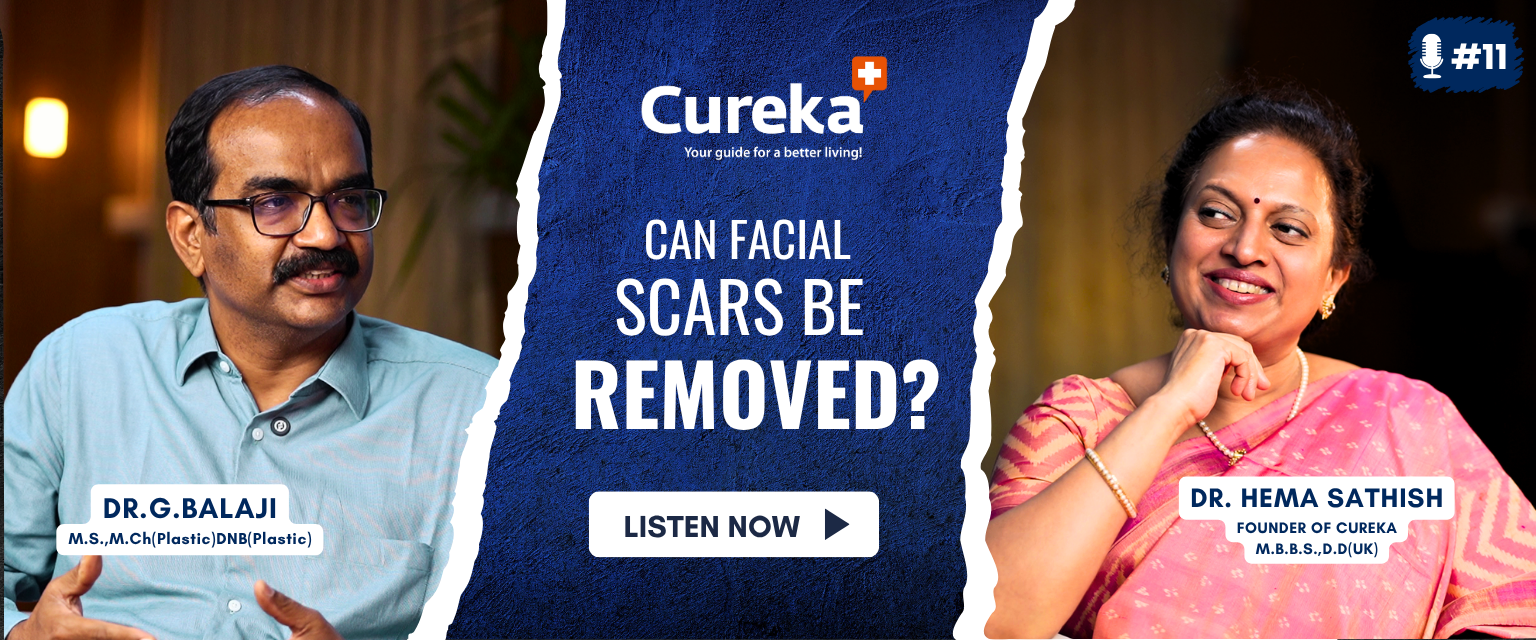
Can Plastic Surgery Remove Face Scars? The Truth About Scar Management | Dr. Balaji
Table of Contents:
- Types of Trauma-Related Facial Scars Encountered in Plastic Surgery
- Home vs Road Injuries: Differences in Treatment Approach
- When Does a Scar Require Surgical Intervention?
- Management of Abrasions to Prevent Scarring and Pigmentation
- Types of Dressings Used for Abrasion Care and Scar Prevention
- Timing of Early Intervention in Burn Injuries for Optimal Scar Control
- Post-Suturing Scar Care to Prevent Hypertrophic Scarring
- Silicone Gel vs Silicone Sheets for Scar Management
- Scar Remodelling Timeline and Duration of Silicone Sheet Use
- Management of Hypertrophic Scars
- Can Scars Be Completely Removed?
- Treatment Options for Keloid Scars
- First Aid Steps for Immediate Burn Management
- First Aid Principles for Chemical (Acid) Burns
- Immediate Management of Ocular Acid Burns and Eyelid Protection
- Role of Aloe Vera and Vitamin E in Scar Management
- Management of Acne Scars
- Importance of Early Evaluation and Treatment of Childhood Scars
- Common Myths About Scar Formation and Treatment
Dr. Hema Sathish: Hello everyone. Here we have the well-renowned Dr. Balaji who is a MCH in plastic surgery. He’s got many years of experience and to you know narrow it down much more he’s a super specialist in facial scarring.So welcome Dr. Balaji.
Dr. Balaji: Hello thank you.
Dr. Hema Sathish: I have heard about your paper presentations about the facial scars and in the international conferences.
Dr. Balaji: Yeah.
Dr. Hema Sathish: So what would you incorporate when you say facial scarring because there are many reasons for a scarring on the face right
Dr. Balaji: so most of the common causes trauma
Dr. Hema Sathish: okay
Dr. Balaji: then facial burns now that recently acid burns also these are the common causes we have so we come across a lot of trauma facial traumas
Dr. Hema Sathish: okay
Dr. Balaji: so I presented that case in Turkey in avulsion facial avulsion injury.So, we did including micro surgery as well as facial bone fixation then healed very well.
Dr. Hema Sathish: And your speciality is micro surgery.
Dr. Balaji: Micro surgery.
Dr. Hema Sathish: So, you operate under a microscope.
Dr. Hema Sathish: Okay. Oh, so then he you know you put back the nerves and the blood vessels together to get it functioning to normal. Okay. That’s great. That’s absolutely. So as a dermatologist you know uh when we say facial scarring we are thinking about more of acne and of course burn scars are there and then uh many other postsurgical scars also one aspect of it. But as a plastic surgeon I think when you said trauma scar I mean what would the scar types you would include in the trauma?
Types of Trauma-Related Facial Scars Encountered in Plastic Surgery
Dr. Balaji: So come across with uh abrasions that superficial skin peeling of the skin then some lacerations just like some cut injuries.
Dr. Hema Sathish: Okay.
Dr. Balaji: Insized wounds. So these are all that commonly we come across. So most of the time we come across that road traffic accidents. So all that wounds are contaminated with the road dust. So it needs a proper cleaning and then uh layer by layer suturing and then proper care. So that gives a very good results postoperatively.
Dr. Hema Sathish: Okay. So what you’re talking about is a very high-end scar type of thing, not like the routine scar which everybody comes across. What is the difference between a cut which happens at home and what happens in the road it absolutely the treatment plan itself changes right the minute if the uh patient has fallen somewhere outside in the road.
Home vs Road Injuries: Differences in Treatment Approach
Dr. Balaji: It’s when the patient fall from that any two wheelers that commonly comeacrossin that road traffic accidents so they have that facial abrasions superficial peeling of skin. So same thing that road dust also get contaminated with that wound. So sometimes that is a laceration so insides like wound that also get contaminated sometimes associated with that facial wound fractures also.So that need to be so first thing is these type of patients should be transferred to the hospital. So it needs airway management and then cleaning of the wound and then first thing is then examination by the plastic surgeon is a very very important thing.
Dr. Hema Sathish:Yeah.
Dr. Balaji: Then it’s first thing is assessing that wound that contamination. So it needs any intervention what type of intervention we needed. So it should be done under aesthesia in the theatre.
Dr. Hema Sathish: You know many of times we see that you know there’s a scar and there’s a small scar. I mean there is a nick you can see the depth also but then many doctors feel no that heal itself so I mean as a plastic surgeon I don’t think you would recommend that right
Dr. Balaji: yeah it’s any wound in that uh skin that leads to the scar so because the scarring once that scar once injury in that skin formed by the fibrous tissue formation that’s heals by fibrous tissue so that will be not by the remodelling so it’s not regeneration it’s replaced by the scar tissues.
Dr. Hema Sathish: So that is when the scar occurs
Dr. Balaji: when that scar occurs. So you should be properly care that good care postoperative care and then postsurgical management is very very important.
Dr. Hema Sathish: Okay. So so early intervention is also important.
Dr. Balaji: Early intervention and good surgical management and then postsurgical intervention is very very important.
Dr. Hema Sathish: So a scar is not a simple thing. It’s quite hard to quite
Dr. Balaji: sometimes that facial scar a patient may get demotivated. I know some very bad scars, hypertrophy scars, keloid formations. These are all uh disfiguring the face. So their mental morality also become reduced.So that’s why should be properly treated and then post-operative is very very important for that scar management.
Dr. Hema Sathish: If I have to ask you as a rule of thumb, when would you say that a surgical intervention is necessary in a scar?
When Does a Scar Require Surgical Intervention?
Dr. Balaji: If the scar become thicker, red, itchy
Dr. Hema Sathish: okay
Dr. Balaji: It needs to be managed.Either it can be used non-surgical interventions.
Dr. Hema Sathish: Okay. When you said you know there are abrasions, so if a abrasion comes like you know a patient comes with abrasions, I have seen several times in my OPD that they would have had abrasion which didn’t look very bad. So there’s no intervention at all but then they scar.
Dr. Balaji: Yeah. Okay.
Dr. Hema Sathish: And then it becomes dark pigmented also. So what do you what would you do as a plastic surgeon when you have a abrasion?
Management of Abrasions to Prevent Scarring and Pigmentation
Dr. Balaji: Yeah, the patient comes with the abrasion, he needs that cleaning of the wound is very very important. We use a lot of saline uh clean that wound and then we apply some topical medications and then dressing medicated dressings.
Dr. Hema Sathish: What type of dressings are there? There are many dressings right now to help with this uh abrasions also so that they don’t scar in the future.
Types of Dressings Used for Abrasion Care and Scar Prevention
Dr. Balaji: That superficial abrasions I think with good medications that will heal very nicely.
Dr. Hema Sathish: Okay.So the moisturization factor has to be way higher and araidive wounds right.
Dr. Balaji: Wounds. Yes. Correct.
Dr. Hema Sathish: And if you’re talking about like deeper scar like cuts or something then you do suture them.
Dr. Balaji: Yes. Yes. Yeah.
Dr. Hema Sathish: But then suturing should be done in layers only then the scar is not very bad.
Dr. Balaji: So it depends upon the depth of the wound. So that is a deep wounds it should be closed in layers. We put absorbable switches inside and as well as skin also we can use that very fine materials to produce a very good fine scar.
Dr. Balaji: Okay.
Dr. Hema Sathish: Yeah, When it comes to burn scars uh how early can we intervene in a scar?I mean in a in a burn injury itself injury. So how early if you intervene would uh the scar not be like really bad and we can handle it quite well.
Timing of Early Intervention in Burn Injuries for Optimal Scar Control
Dr. Balaji: Yeah, that any burn wound it’s depend upon that degree and depth of the bones.
Dr. Hema Sathish: Yeah, true.
Dr. Balaji: So degree as on the depth of the wound the depth of the burns is deeper that be produces scar definitely.
Dr. Hema Sathish: Okay.
Dr. Balaji: Superficial burn skills with the collagen sheet applications.
Dr. Hema Sathish: Okay.
Dr. Balaji: that is available in commercially. So we can apply most of that hospitalswe apply that collagen sheets but deeper burns second degree burns and third degree burns. So that needs first initially the cleaning and proper medicated dressings.Then if the wound is deeper, it’s more than third degree that needs to be the skin is either the skin is lost that needs to be replaced by skin grafting.
Dr. Hema Sathish: Okay.
Dr. Hema Sathish: By plastic surgery technique.
Dr. Hema Sathish: So there has to be a proper assessment done
Dr. Balaji: proper assessment and then
Dr. Hema Sathish: I have seen several cases who have done very well with burns with very first degree burns where the collagen dressing was given and you don’t even see that they had a scar you know and they heal and come they do so fabulously well and but at the same time what happens is many a times when they see a very superficial burn then many people advise no need of doing anything it’s just unnecessary to do a treatment on such a burn scar burn tissue right
Dr. Balaji: Facial wounds that that open dressing is also open method is also advisable only application of medications.Sometime little bit deeper wounds that heals by scar so it may produces a disfigurement of that in case of eyelids there’ll be a contraction of eyelids in that upper lip that will contraure upper lips. So that neck some contraure of the necks also so that should be addressed properly.
Dr. Hema Sathish: So when even I have seen like you know especially in traumatic scars like uh road traffic accidents for example just one part of it. So after the suturing they tend to develop uh scars which are very bad like hypertrophic scars. So why do they develop such scars?
Dr. Balaji: So it’s uh depends upon that individual.
Dr. Hema Sathish: Okay.
Dr. Balaji: next thing is that depends upon that surgical technique they use.
Dr. Hema Sathish: Okay.
Dr. Balaji: Both then depends upon that any contamination wounds also any infections sometimes that infections also causes some thickening of the scar.
Dr. Hema Sathish: Okay.
Dr. Balaji: So proper poor manner poor healing of the wound that leads to hypertrophy scars.
Dr. Hema Sathish: Okay.
Dr. Balaji: So these are all the factors involved in that scar.
Dr. Hema Sathish: Okay.
Dr. Balaji: Um so first thing is any traumatic scars, traumatic injuries needs cleaning and then proper method surgical techniques and then uh material by layer by layer closure. Then postoperative good postoperative care antibiotic everything is needed for that.
Dr. Hema Sathish: Okay. Somebody has got a scar and then they have been sutured.Okay. They’ve been taken very good care of and then they exit the hospital also very well and but if ever the scar then you know what else to do like what kind of a care like to prevent a hypertrophic scar is there something you can do because after the scar comes it gets funny to prevent or treat it also it’s quite a task right.
Post-Suturing Scar Care to Prevent Hypertrophic Scarring
Dr. Balaji: So once that suture everything done after removal of the sutures usually scars heals very well in the face in some individuals they behave little bit differently. So some individuals they become thicker. So it confined to that only the scar some individuals may extend beyond that uh that scar limit.So it depends upon that basic genetics of the patients. So we can identify by that early signs of that scars which scar behave prop which scar behave very good. So red itches wounds that indicates that this a problematic scar.
Dr. Hema Sathish: Oh okay.
Dr. Balaji: And then that scar become very darker.
Dr. Hema Sathish: Okay.
Dr. Balaji: So going by darker in Color it’s also problematic scars.
Dr. Hema Sathish: All right.
Dr. Balaji: So this type of scars we started managing silicon.
Dr. Hema Sathish: Okay.
Dr. Balaji: So now the available silicon gels, gel gel sheets are all available.
Dr. Hema Sathish: But there are so many in them. No, the form of ointments also.
Dr. Balaji: Ointments also then sheets also.So the type of scars can be managed with this type of management that will make it also steroid injections also is available for certain patients.
Dr. Hema Sathish: Okay.
Dr. Balaji: Not in every cases.
Dr. Hema Sathish: Okay. And you know when they say silicon gels and silicon gel sheets the progression of the scar is controlled quite a bit but nevertheless it’s a slow process right
Dr. Balaji: Definitely Yes.
Dr. Hema Sathish: So what do you recommend like how many months or how long?
Dr. Balaji: Once the wound healed we don’t advise that uh some any wound or uh any discharge from the wound. We don’t advise any silicon gel immediately. Once that wound is healed completely epithelialized completely healed he started silicon gels or gel sheets usually second week or third week of that proper management.Then he advised for around 3 to four weeks and then up to 6 weeks times we can use
Dr. Hema Sathish: okay
Dr. Balaji: maximum 6 months also you can use for that.
Dr. Hema Sathish: Okay. So if you have a scar which is red, itchy or showing some kind of a
Dr. Balaji: discoloration become more of a blackening colour. It’s also problematic to act real fast.
Dr. Hema Sathish: So now there’s a tricky question.
Dr. Balaji: Okay.
Dr. Hema Sathish: If you’re going to put the silicone gel as like you know you get it in tubes also and you apply it. Of course it moisturizes quite well and it you know protects the scar really well. But what would you advise more? The application of a ointment like a thing or it’s the sheet which is more advisable?
Silicone Gel vs Silicone Sheets for Scar Management
Dr. Balaji: That gel is very convenient.
Dr. Hema Sathish: Yeah, I know.
Dr. Balaji: Yeah
Dr. Hema Sathish: it’s kind of but then it’ll brush off also, right?
Dr. Balaji: You put it and then get sticky then become invisible also. So even if office goes can just apply the skill and then go. But gel sheet that’s a little bit odd thing. You can either he can the night time or home when the patient comes to that home then can apply that. So gel is I think it’s very convenient for the patients and apply.
Dr. Hema Sathish: Okay.
Dr. Balaji: You can act up to 24 hours I think.
Dr. Hema Sathish: Okay. Okay. That’s that’s quite good right
Dr. Balaji: 12 to 24 hours then you can apply it.
Dr. Hema Sathish: So if if a silicon gel sheet is applied usually what we do is in burns cars and all they have to use it for a longer period of time.So till what time or till what phase do you think there is a remodelling of the scar happening and when does it stop happening after?
Scar Remodelling Timeline and Duration of Silicone Sheet Use
Dr. Balaji: So remodelling of scar extend up to 6 months to one year also.
Dr. Hema Sathish: Okay.
Dr. Balaji: One year also. So not only silicon gel we can give the pressures compression garments also we can apply. Then these are all the things we can advise the patient. So which scar behaves badly. So compression garments is one of the technique we’ll give a compression
Dr. Hema Sathish: more for burn scars right burn scar you use it for trauma scars also
Dr. Balaji: in some cases we use
Dr. Hema Sathish: Okay
Dr. Balaji: some burn scar is commonly used but in
Dr. Hema Sathish: and in face uh using a compression garment might be quite a challenge right
Dr. Balaji: Yes but only thing is sometimes that exposing that eye and lips only they exposing they are custom made uh to the patients.So depends upon that you can wear it and put that zip beneath that.
Dr. Hema Sathish: So when we are talking about scars there is a first it is a scar which you see then after that it can become a hypertrophic scar also then it can become a keloid also right, so when it is hypertrophic scar how would you care for it?
Management of Hypertrophic Scars
Dr. Balaji: So coming to that hypertrophic scar most of the times the patient comes with its keloid have a keloid so most of them it’s confined so when the scar the thickening is confined to that scar it’s called a hypertrophy scar so it’s not infiltrated going adjacent to the skin normal skin. So if that normal skin get involved it’s called keloid. So it’s depends upon that genetic of that patient. So hypertrophy scar usually we give some compression therapy. then silicon sheets and then uh silicon gels and these are that commonly we do that and sometimes we can use that Kennecott injections also. These are the common methods we are using following that hypertrophy scar. But hypertrophy scar with properly treated gives good results.
Dr. Hema Sathish: You know there are patients who come and then they want the scar to be removed like how in movies they see you know plastic surgery is done and the face is only changed totally and then there are no scars at all.I mean is that possible?
Can Scars Be Completely Removed?
Dr. Balaji: So it’s it’s completely it’s not real. So any any injury to the skin that produce scar. So we plastic surgeon do that make it scar very minimized or very fade or very invisible. So it’s scar we cannot uh erase from the body. So you make it as a invisible one by doing that any hidden incisions taking care of the scars.
Dr. Hema Sathish: And the suturing also you do with the microscopic
Dr. Balaji: that you do it in that inside the subcuticular sutures without any skin markings. So we do subcuticular suturesthis makes the scar very fine.
Dr. Hema Sathish: Yeah. so if a keloid forms then what can be done?
Treatment Options for Keloid Scars
Dr. Balaji: So keloid is basically depends upon the patient’s genitical conditions it’s form. So patient came with itching a bigger one then most commonly patient come with that earlobe piercing. So they come with that sometimes that this lump in the air. So if the lump is quite big we can excise that and then use uh that kinacot injection some steroid injection to give the test every once in 3 weeks time. So then a proper massaging of that scar and then is also suggested silicon gels also we pressure therapy. So these are the types
Dr. Hema Sathish: And what kind of pressure therapy can you give for a ear lobe?
Dr. Balaji: So we can use that studs.
Dr. Hema Sathish: Ah okay.
Dr. Balaji: Yeah it’s compressive studs. So after that surgery after that kinacot injection we put a compressive studs. So that gives a complete pressure for 24 hours time.
Dr. Hema Sathish: Okay that’s helpful.
Dr. Balaji:So initially itself we should do that or eventually also we can do it after the keloid is formed you can use it. It is going to be helpful. If the patient feels that become thicker in guys the scar is become harder then use that pressure therapy. You can initially if it is quite bigger it’s not responding to that pressure therapy we can just started the treatment. In traditional key light it’s quite big it’s not a response to that injectionsthen we can go ahead with that excision of that scar then we’ll do that uh followed by that lesional therapy Intra-lesional therapy.
Dr. Hema Sathish: What would be the first thing you would advise a person to do if they have a burn?
First Aid Steps for Immediate Burn Management
Dr. Balaji: That person have a burn injury so it should be that that patient should be removed from that that that injury the accidental site then pouring that that heat to reduce The heat you should be pour lot of water. that’s very very important. So cooling that part is very very important that reduces the tissue damage
Dr. Hema Sathish: the heat is there it can damage deeper tissue.
Dr. Balaji: So it become very superficial. So so a lot of pouring of water minimum 15 to 20 minutes time. So that’s very very important reduces that heat damage as well as the depth of the tissue damage is also reduced.
Dr. Hema Sathish: So now burns you have to pour a lot of water and make sure that the skin is cooled down immediately as soon as possible. Right.when it comes to a acid burn.
First Aid Principles for Chemical (Acid) Burns
Dr. Balaji: Yeah. So acid burns also it’s it can be should be neutralized by a lot of water only. Again water that plays important role. Then dilutes that that acidic effect. Then uh it reduces that damage to the tissues. So usually acid burns produce a lot of tissue damage.
Dr. Hema Sathish: Yeah. I know. it can go deeper than what you definitely it’s deeper than normal bone tissue. Now when uh you have sometimes what happens is if the acid hits the eye or around the eye is there some precaution we can do or take to make sure that the eyelids are not hurt very badly because that’s one thing which gets damaged real fast and then the eye becomes person suffers so much because they can’t close the eyes the lid contracts immediately becausethe skin is very thin.
Immediate Management of Ocular Acid Burns and Eyelid Protection
Dr. Balaji: Yeah. Because that eyelid is a very specialized tissue. It’s a very very thin skin. So it’s damaged very quickly with that acid burns. So this type of wounds that needs uh cleaning and then dressing. So it should be examined that internal the eye lobe is a damage or not. So it should be examined by that of ophthalmologist also play important role and then give a the moisturizing effect that prevent corneal exposure. So that cornea are the round thing that should not be dried up. So any opened up eye or that that needs a lot of moisture that’s an ointments ointments sometime we do that Tarsorrhaphia also this case closing that eyelids to prevent that cornealexposure.So once that wound is healing so sometime most of the time that eyelids get contracted. So that heals by contraction that is it tightens
Dr. Hema Sathish: tightened not able to close that.
Dr. Balaji: So that time what we do to important thing is we release the contractions then put some graft skin from that other part of the body put that uh graft over that. So make it closure. So that’s a very important thing otherwise that division will get lost.
Dr. Hema Sathish: Okay. So you have to be very very careful. Not only if the acid directly didn’t hurt your eye also you have to be careful eventually also you have to be careful to make sure that the vision is maintained.So now uh a scar has formed and you know uh we have treated it well and in spite of that the it is the scar is present and then it grows a little thicker also. So what else can we do to improvise the scar or to make sure that you know it’s not u it’s not getting worse than what it is now.
Dr. Balaji: So most of the time we suggested silicon gels only and then uh we can suggest some moisturizer also. So in homemade we
Dr. Hema Sathish: okay deep moisturizer
Dr. Balaji: deep moisturizers we can use then keep that scars hydrated and supple.
Dr. Hema Sathish: Yeah do you recommend aloe vera and vitamin E also for these scars?
Role of Aloe Vera and Vitamin E in Scar Management
Dr. Balaji: Yeah, we suggested but to some extent okay some scars very responds very well to that not every scar responds to
Dr. Hema Sathish: and earlier it is it’ll better
Dr. Balaji: yeah earlier scar gives better result
Dr. Hema Sathish: and the thickness has to be much lesser yeah otherwise the penetration won’t be there, vitamin E does help to a certain extent
Dr. Balaji: yeah some somesomeextent not in every cases.
Dr. Hema Sathish: Coming to one very common scar which we see in everyday practice acne scar you know the acne scar there market claims so many things that you put this put that and then the scar gets better but then there are some cases where the scars are very deep.
Management of Acne Scars
Dr. Balaji: Yeah. So sometimes the patient come with puckered scars. So they these type of patients comes to the plastic what will you do for that? So we have some techniques. So any deeper scar puckered scar you do some surgical intervention by needling. So release that scar aggressions then we can use some fillers also. That will fill up that that puckered scar. So make it the surface smooth. So these are the things.
Dr. Hema Sathish: And what about lasers in scarring?
Dr. Balaji: Yeah definitely laser role is there. So fractional razors are used very commonly make the scar supple as well as fading of the scar is also very useful.So we suggested a dermatologist. We have combined with that dermatologist. Ask the patient get a laser therapy for improving the scar management. It’s not a single modal is a multimodality treatment for the scar. So we not only surgical treatment good postoperative surgical care needs post-operative postsurgical intervention is very very needed. So scar management laser therapy then everything is very very important for a good scar.
Dr. Hema Sathish: So scar is a small thing. It leaves a big history behind and to top it all it’s it needs a lot of intervention and earlier the intervention better the result.You know we have seen lot of children who don’t bother when they’re younger right and then they get injured then they have a scar and that time it’s overlooked then the parents also feel small kids do have scars so it’s okay and then they come later when they are real grown-ups they come with a scar so what what do you suggest for them?
Importance of Early Evaluation and Treatment of Childhood Scars
Dr. Balaji: so the patients uh that scar is quite big or thick or deeper in that need some surgical intervention needed it’s called a scar revision so depends upon It’s a very puckered deeper scars. So we just remove the excise the scar tissues. Then uh underlying tissues to be released and a layer by layer closure.We do it uh break the scar into Z-plasty or W-plasty. So make the scar not a linear one it’s break it into a different small size. So then post good post-operative care then followed by some uh silicon gel sheets and then as well as some laser therapy also very useful for that.
Dr. Hema Sathish: Okay, that makes sense. So then we the starting of the scar treatment is simple that you can apply something on top or you can you know use some lasers and stuff like that but as the scar gets older and older and older that’s a problem.
Dr. Balaji: Problematic yes definitely that a lot of fibrous tissue was there so difficult to treat.
Common Myths About Scar Formation and Treatment
Dr. Hema Sathish: So there are so many myths about scars, right?
Dr. Balaji: Okay.
Dr. Hema Sathish: So one major myth is they say if it’s scars Yeah. Yeah. When you’re a child you get scars, it’ll just go off. Okay. Does it go off?
Dr. Balaji: No, it’s not. Scientifically it’s not.okay.
Dr. Hema Sathish: Scar tissue is a different tissue.
Dr. Balaji: Scar is a different tissue. But uh during time that uh patient goes with sometimes get fading off sometimes get stretched.
Dr. Hema Sathish: Okay.
Dr. Balaji: Yeah, that stretching of scar is also that it’s not become hypertrophy then sometimes that scar the body grows the scar is also get stretched so patient came with that stretching of scar that become ugly so we do some revision we do some revision so but not disappear it become fade or sometime it get stretched so it needs
Dr. Hema Sathish: so it doesn’t go off
Dr. Balaji: Nodon’t go off okay
Dr. Hema Sathish: Then they say drying the scar in the sun is very helpful
Dr. Balaji: yeah early scars we don’t suggest exposure of scans somewe suggested some sun protecting factor usually 30 to 50 SPF that leads to hyperpigmentation’s ultra hyperpigmentation become darker in colour so we suggested to avoid exposure direct exposure to the sunlight true
Dr. Hema Sathish: And there is one more thing they say this let the scar air out you know
Dr. Balaji: Yeah usually plastic surgeon not advise any of airing of the scar We used to moist the wound. The moisture of the wound leads the better scar. Moisture is a very very important factor to prevent infection as well as healing of the scar
Dr. Hema Sathish: So drying out just like that or leaving it just like that leads to a poor scar definitely that scar will be.So that’s a that’s a myth again.
Dr. Balaji: Correct.
Dr. Hema Sathish: So it was wonderful having you Dr. Balaji. Thanks a lot for all the explanations and uh you know just talking about so many types of scars just on the face. It was very nice conversation. Thank you.
Dr. Balaji: Thank you.


