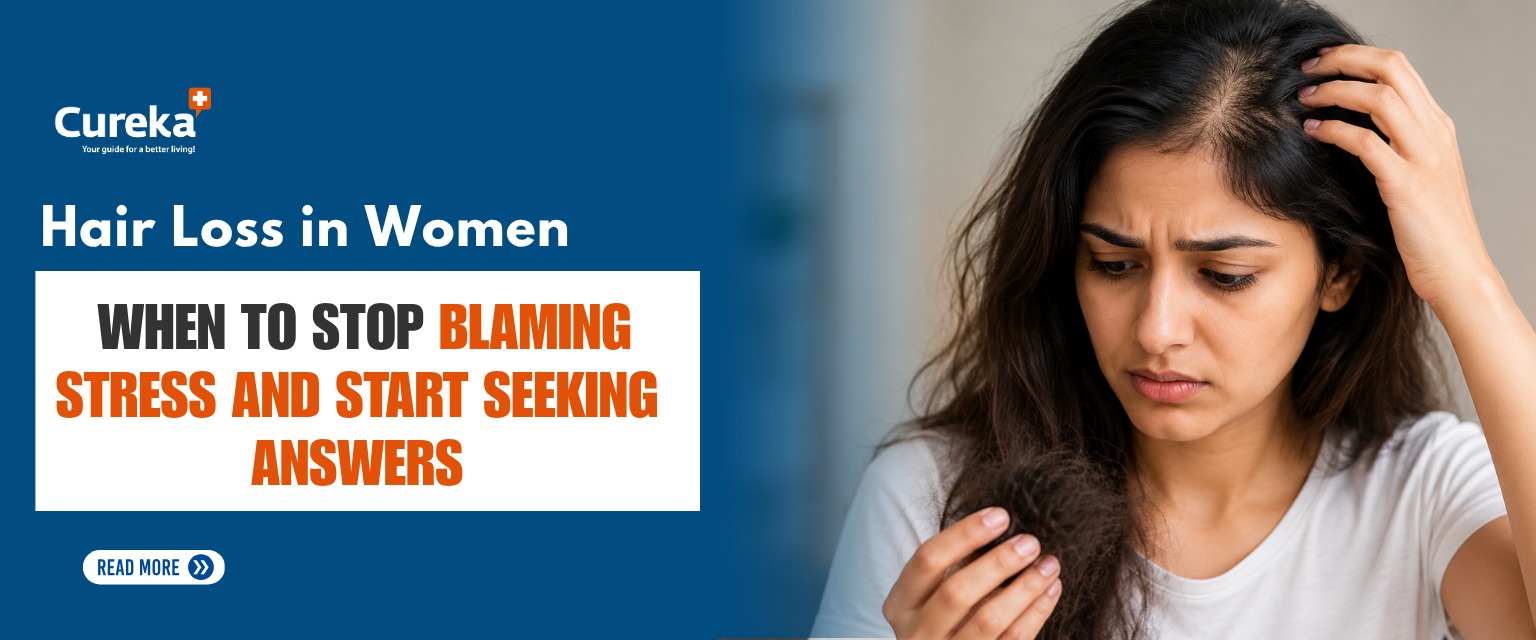
Hair Loss in Women: When to Stop Blaming Stress and Start Seeking Answers
Medically Reviewed By:
Dr. Hema Sathish M.B.B.S., D.D(UK)
Dermatologist, Founder of Cureka
For years, whenever women notice extra strands in their hairbrush or see a widening part in the mirror, the most common explanation they hear sometimes from friends, sometimes from themselves is “It’s just stress.” And yes, stress can cause temporary shedding, but it’s rarely the whole story. If you’ve been blaming stress for months or even years without improvement, it’s time to dig deeper into the hair loss in women causes that go beyond everyday tension.
Hair thinning in women is not just a cosmetic concern; it can also be a silent signal from your body that something inside needs attention. The key is to know when it’s a temporary shedding phase and when it’s a sign to investigate further and seek targeted treatment.
Understanding the Nature of Hair Loss in Women
While men’s hair loss patterns are widely discussed, women experience a more complex picture. Men often lose hair in specific patterns, but women tend to notice a gradual reduction in hair volume, widening parts, or diffuse thinning across the scalp. This means it can take longer to recognize, and many women delay seeking help until significant loss has occurred.
The most important thing to know is this: hair loss is a symptom, not a standalone condition. It’s your body’s way of signaling that something is disrupting the natural growth cycle.
The Most Common Hair Loss in Women Causes
Understanding the root cause is the first step toward effective treatment. Here are the major factors that often contribute:
1. Hormonal Imbalances
One of the most overlooked hair loss in women causes is hormonal fluctuation. Conditions such as polycystic ovary syndrome (PCOS), thyroid disorders, menopause, and postpartum changes can all trigger shedding. Hormones like estrogen, progesterone, and androgens directly influence the hair growth cycle, and any disturbance can tip the balance toward loss.
A key player here is hormonal hair loss in women linked to higher levels of dihydrotestosterone (DHT), which can miniaturize hair follicles over time, leading to thinner strands and slower regrowth.
2. Nutritional Deficiencies
Hair is made primarily of keratin, a protein. Without sufficient protein, iron, zinc, vitamin D, and B vitamins, hair struggles to grow at its normal rate. In fact, low ferritin (a marker of stored iron) is one of the most common findings in women with unexplained hair thinning. Crash diets, restrictive eating, and poor nutrient absorption from gut issues can all contribute.
3. Chronic Illness and Autoimmune Disorders
Conditions like lupus, alopecia areata, and other autoimmune disorders can directly attack hair follicles, causing patchy or widespread thinning. Chronic illnesses such as diabetes and inflammatory bowel disease can also have hair loss as a side effect.
4. Medications
Certain drugs—such as those for blood pressure, cholesterol, depression, and even birth control—can trigger hair shedding. Chemotherapy is the most well-known example, but even common medications can impact your hair’s life cycle.
5. Scalp Conditions
Dandruff, seborrheic dermatitis, psoriasis, and fungal infections can all interfere with healthy hair growth. These issues may not only weaken follicles but also cause inflammation, which disrupts the hair growth cycle.
6. Genetics
Sometimes, hair loss is part of your genetic blueprint. Female pattern baldness (androgenetic alopecia) affects millions of women and usually becomes more noticeable with age. (1) Unlike men, women don’t typically lose all hair in one region but instead experience overall thinning and a widening part.
When It’s More Than Stress: Red Flags to Watch For
While mild shedding for a few weeks can be stress-related, you should see a professional if you notice:
- Hair thinning that lasts more than 3–4 months.
- Noticeable widening of your hair part.
- Thinning at the crown or temples.
- Sudden clumps of hair falling out.
- Changes in your menstrual cycle, skin, or weight alongside hair loss.
- Itching, burning, or redness on your scalp.
These signs suggest that your hair loss is likely due to an underlying medical or hormonal cause—not just stress.
Female Pattern Baldness Treatment Options
If your hair loss turns out to be genetic or hormone-related, the good news is that female pattern baldness treatment has advanced significantly. Options range from topical to oral therapies, and the right choice depends on your diagnosis and health profile.
1. Topical Minoxidil
An FDA-approved option for women, minoxidil helps extend the growth phase of hair follicles, encouraging thicker regrowth. It works for many women but needs consistent use, and results may take 3–6 months to appear.
2. Oral Medications
Low-dose anti-androgens like spironolactone can block the effects of DHT, which plays a major role in hormonal hair loss in women. These are usually prescribed if blood tests show elevated androgens or if PCOS is diagnosed.
3. Nutritional Support
If your hair loss is linked to deficiencies, targeted supplementation with iron, vitamin D, biotin, or zinc can help restore growth. However, it’s best to confirm deficiencies through blood work before starting supplements.
4. Low-Level Laser Therapy (LLLT)
Laser devices designed for at-home use can stimulate hair follicles and improve density over time. (2)They work by increasing blood flow and cellular energy in the scalp.
5. Platelet-Rich Plasma (PRP) Therapy
This involves using your own blood plasma, rich in growth factors, to stimulate hair follicles. Many dermatologists report positive results, especially when combined with other treatments.
6. Scalp Health Treatments
Treating dandruff, inflammation, or infections can restore a healthy environment for hair growth. Medicated shampoos, anti-fungal treatments, or steroid lotions may be prescribed.
7. Hair Transplant Surgery
In severe cases of female pattern baldness where other treatments haven’t worked, hair transplant surgery can redistribute healthy hair follicles to thinning areas. This option is typically chosen only after medical therapies have been tried.
The Role of Lifestyle and Self-Care in Hair Recovery
While medical treatment addresses the underlying cause, your daily habits can support or hinder recovery:
Gentle Hair Care: Avoid excessive heat styling, tight hairstyles, and harsh chemical treatments that can cause breakage.
Balanced Diet: Include protein-rich foods (eggs, fish, legumes), leafy greens, nuts, and seeds to nourish follicles.
Stress Management: While stress may not be the only cause, chronic stress can worsen existing hair loss. Techniques like yoga, meditation, and proper sleep can help.
Regular Scalp Massage: Improves circulation and delivers more nutrients to hair follicles.
Why Early Action Matters
Hair follicles that have been inactive for a long time may not fully recover. That’s why early detection and female pattern baldness treatment are essential to preserve existing hair. Delaying action in hopes that stress relief alone will solve the problem often leads to more noticeable thinning.
Conclusion
If your hair loss has been ongoing, accompanied by other symptoms, or progressively worsening, it’s time to move beyond the “it’s just stress” explanation. From hormonal hair loss in women to nutritional deficiencies and genetic predisposition, the causes are varied—but so are the solutions.
Getting a proper diagnosis from a dermatologist or trichologist can mean the difference between temporary shedding and long-term thinning. Armed with the right treatment plan, many women not only stop further loss but also see visible regrowth and restored confidence.
So the next time you notice more hair in your brush, ask yourself: Is this really just stress—or is my body asking me to listen more closely?
Frequently Asked Questions
1. How can I tell if my hair loss is caused by hormones rather than stress?
Hormonal hair loss often causes gradual thinning at the crown, temples, or part line and may occur with symptoms like irregular periods, acne, or menopause-related changes. Unlike stress-related shedding, it usually persists or worsens over time.
2. What medical tests should women consider for unexplained hair loss or hair thinning?
Common tests include ferritin (iron stores), vitamin D, thyroid function, vitamin B12, zinc levels, and hormone profiles. These can help identify nutritional deficiencies, thyroid disorders, or hormonal imbalances affecting hair growth.
3. Can female pattern baldness be reversed if treatment is started early?
Early treatment can slow female pattern baldness and improve hair density. Options such as minoxidil, anti-androgen medications, laser therapy, and PRP may help preserve follicles and support regrowth.
4. Which nutrient deficiencies are most commonly linked to hair loss in women?
Iron deficiency is a leading nutritional cause of hair loss in women. Low vitamin D, zinc, protein, and B vitamins can also affect hair growth and contribute to thinning.
5. When should I seek professional help for ongoing hair loss instead of waiting for it to improve on its own?
Consult a healthcare professional if hair loss lasts longer than three to four months, worsens over time, or occurs with symptoms such as scalp irritation, weight changes, or menstrual irregularities. Early diagnosis can improve treatment outcomes.
References:
- Female pattern hair loss: Current treatment concepts – 2007 Jun – https://pmc.ncbi.nlm.nih.gov/articles/PMC2684510/#:~:text=The%20prevalence%20increases%20with%20age%20from%20approximately,women%20is%20associated%20with%20significant%20psychological%20morbidity.
- Role of Low-Level Light Therapy (LLLT) in Androgenetic Alopecia – 2021 Oct – https://pmc.ncbi.nlm.nih.gov/articles/PMC8906269/#:~:text=These%20transcription%20factors%20enhance%20gene,may%20then%20activate%20hair%20growth.