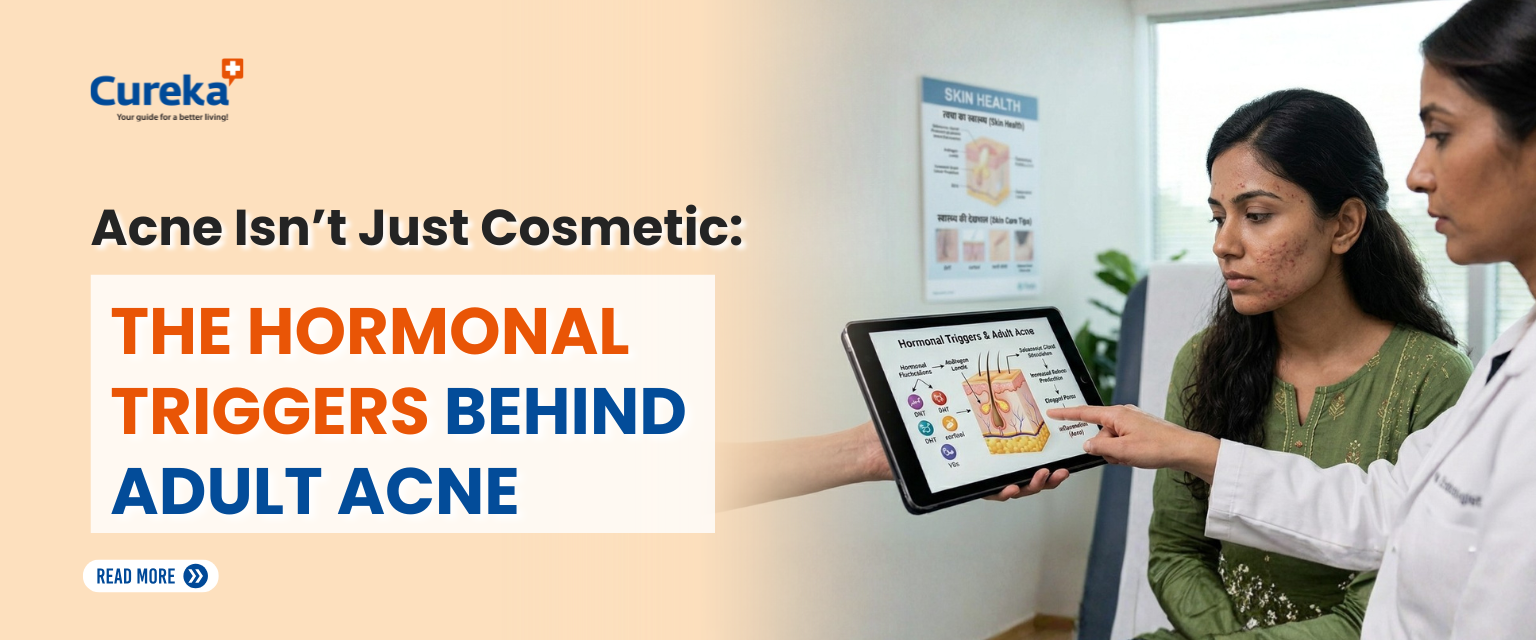
Acne Isn’t Just Cosmetic: The Hormonal Triggers Behind Adult Acne
Medically Reviewed By:
Dr. Hema Sathish M.B.B.S., D.D(UK)
Dermatologist, Founder of Cureka
Acne in adulthood can feel frustrating, especially when breakouts appear long after your teenage years. What many don’t realize is that adult acne is often rooted in internal imbalances, particularly hormones. Fluctuations related to menstrual cycles, pregnancy, menopause, or conditions like PCOS can disrupt the skin’s natural balance, increasing oil production and inflammation. Understanding these triggers is key to identifying the adult acne best treatment options and managing persistent breakouts effectively. This blog explores the science behind acne causes related to hormones, and how to find the most effective adult acne treatment, one that targets more than just the surface.
Whether you’re exploring adult acne best treatment options or looking to understand acne causes hormones, this guide reveals why hormonal balance is key and how to address the root causes effectively.
Hormonal Fluctuations Reasons for Adult Acne
Menstrual cycles: Shifting estrogen and progesterone levels before your period can trigger adult acne flare‑ups, especially around the chin and jawline.
Pregnancy: Many women experience increased acne in the first trimester as hormonal levels fluctuate.
Menopause: Decreasing estrogen and relatively higher androgens during menopause can lead to new acne in your 40s and 50s [1].
PCOS (Polycystic Ovary Syndrome): Elevated androgens are common in PCOS, often resulting in persistent adult acne .
Other Contributing Factors
Stress & Cortisol: Stress hormones like cortisol and CRH stimulate oil glands, contributing to acne. Studies confirm that stress-triggered hormone release worsens adult acne [2] .
Medications: Certain contraceptives and corticosteroids can shift hormones, leading to breakouts.
Diet: High-glycemic foods and dairy raise insulin and IGF‑1, both of which fuel oil production and acne [3].
Genetics: Family history also can be a factor for adult acne.
Other Triggers: Certain medications, skincare products high in comedogenic oils, smoking, and cosmetics contribute to hormonal acne.
Best Pimple Treatment for Adults Starts with Recognizing Hormonal Acne
- Location & Pattern: Often appears around the jawline, chin, and lower face; includes deep, cystic lesions.
- Resistance to Conventional Treatments: May not respond to typical acne medications. Hormonal therapies may be required.
Consider the above points and check with your dermatologist.
Adult Acne Best Treatment – What Works:
Topical Solutions
- Retinoids (tretinoin/adapalene): Encourage cell turnover and prevent clogged pores, helping reduce acne formation.
- Anti-inflammatories (benzoyl peroxide, azelaic acid, niacinamide, centella asiatica): These ingredients soothe irritated skin, reduce inflammation, and target acne-causing bacteria.
The Good Soothing Face Serum combines niacinamide and centella asiatica to calm flare-ups, reduce redness, and support barrier repair, making it an ideal anti-inflammatory solution for adult acne care.
Hormonal Therapies
- Spironolactone: Blocks androgen receptors, reducing sebum.
- Combined oral contraceptives: Help balance estrogen-to-androgen levels, reducing breakouts .
Lifestyle Adjustments
- Stress reduction: Techniques like mindfulness or yoga can lower cortisol, reducing acne flare-ups .
- Diet revision: Lowering high-glycemic carbohydrates and dairy may dampen hormonal acne .
Systemic Therapies
In persistent or severe cases, dermatologists may prescribe oral antibiotics, anti-androgens, or isotretinoin. Isotretinoin is a powerful oral retinoid that shrinks sebaceous glands, significantly reduces oil production, prevents clogged pores, and has long-term benefits in severe or resistant acne. While highly effective, isotretinoin is known for causing extreme dryness, especially of the skin and lips, often leading to chapping. Regular moisturizers and lip balms are essential during treatment. It also requires close medical supervision due to potential systemic effects.
Final Thoughts
Adult acne often stems from hormonal triggers, fluctuating estrogen, androgens, cortisol, and diet-induced hormonal imbalances. Addressing it effectively requires more than just topical cleansers; it calls for a multifaceted strategy: hormonal therapies, skincare, lifestyle changes, and possibly systemic treatment.
With this holistic approach, you can confidently treat adult acne at its source, not just its symptoms.
Frequently Asked Questions
1. What causes adult acne in women?
Adult acne is mainly caused by hormonal imbalance, especially during menstrual cycles, pregnancy, menopause, or conditions like PCOS that increase oil production and inflammation.
2. How do hormones trigger acne breakouts?
Hormones like androgens stimulate excess sebum (oil) production, clogging pores and leading to persistent hormonal acne, especially around the chin and jawline.
3. What is the best treatment for adult hormonal acne?
The best treatment includes topical retinoids, anti-inflammatory ingredients, hormonal therapies, and lifestyle changes that target the root hormonal causes of acne.
4. Why doesn’t adult acne respond to regular treatments?
Hormonal acne often resists conventional treatments because it originates from internal imbalances, requiring targeted hormonal or systemic therapy.
5. Can diet and stress worsen adult acne?
Yes, high-glycemic foods, dairy, and stress hormones like cortisol can increase oil production and inflammation, worsening adult acne breakouts.
References
- Unveiling the Nuances of Adult Female Acne: A Comprehensive Exploration of Epidemiology, Treatment Modalities, Dermocosmetics, and the Menopausal Influence
https://pubmed.ncbi.nlm.nih.gov/38650835/
- A Prospective Study Examining Trigger Factors and Hormonal Abnormalities in Adult Female Acne
https://pubmed.ncbi.nlm.nih.gov/32832440/
- A low-glycemic-load diet improves symptoms in acne vulgaris patients: a randomized controlled trial