

Beyond Inhalers: Building a Long-Term Prevention Plan for Asthma
Medically Reviewed By:
Dr. Hema Sathish M.B.B.S., D.D(UK)
Dermatologist, Founder of Cureka
For individuals living with asthma, life often feels like a cycle of relying on inhalers—waiting for symptoms to appear and then treating them as they come. Inhalers are life-saving and essential, but they’re only one piece of the puzzle. If you rely solely on them without addressing the root triggers, you may find yourself trapped in an endless loop of flare-ups.
The real goal of asthma care isn’t just quick relief – it’s asthma management that reduces attacks in the first place. This is where asthma self care strategies and even natural remedies for asthma can help build a prevention plan that supports lung health for the long run.
Understanding Asthma Beyond the Symptoms
Asthma is a chronic inflammatory condition of the airways. In people with asthma, the bronchial tubes become overly sensitive to triggers such as allergens, pollution, exercise, or even cold air. When exposed, the airways narrow, swell, and produce extra mucus, making breathing difficult.(1)
The key to prevention lies in controlling inflammation and reducing the frequency and intensity of these reactions—not just treating them after they happen.
Step 1: Identifying and Eliminating Triggers
You can’t control asthma without knowing what sets it off. Common triggers include:
- Allergens like dust mites, pollen, mold, and pet dander.
- Irritants such as cigarette smoke, strong perfumes, cleaning products, and air pollution.
- Weather changes, especially cold, dry air.
- Respiratory infections, including colds and flu.
- Exercise-induced asthma, triggered by intense activity without proper warm-up.
- Food sensitivities, sometimes related to sulfites in dried fruits, wine, or processed foods.
Practical tip: Keep a “trigger diary” for 4–6 weeks. Note down where you were, what you were exposed to, and what symptoms followed. Patterns often emerge that can guide lifestyle changes.
Step 2: Strengthening Asthma Self Care Habits
Asthma isn’t just something you manage during attacks—it’s a condition that benefits from daily preventive habits.
1. Follow Your Asthma Action Plan
Work with your doctor to create a step-by-step plan that outlines what to do when symptoms worsen, when to use controller medication, and when to seek emergency care.
2. Monitor Your Breathing
Peak flow meters can measure how well your lungs are functioning. Tracking your scores daily can alert you to inflammation before symptoms escalate, giving you time to adjust your medication or lifestyle.
3. Maintain a Healthy Weight
Excess weight can increase inflammation and make breathing more difficult. Even moderate weight loss in overweight individuals can improve lung function.
4. Get Vaccinated
Flu and pneumonia can trigger severe asthma attacks. Staying up to date with recommended vaccines is an important part of asthma management.
5. Build Lung-Friendly Fitness
Exercise strengthens respiratory muscles and improves lung capacity. Swimming, walking, yoga, and cycling are often better tolerated than high-intensity workouts—just remember to warm up and avoid exercising outdoors during high-pollen or high-pollution days.
Step 3: Environmental Control—Making Your Home Asthma-Safe
Since we spend a large portion of our lives indoors, creating an asthma-friendly environment is crucial.
- Control dust mites by using allergen-proof mattress and pillow covers, washing bedding weekly in hot water, and removing carpets if possible.
- Reduce moulds by using dehumidifiers and fixing leaks promptly.
- Improve air quality with HEPA filters and regular ventilation, especially in bedrooms.
- Keep pets groomed and out of sleeping areas if you’re allergic.
Step 4: Natural Remedies for Asthma—A Supportive Approach
While prescription medication should never be replaced without medical advice, many find natural remedies for asthma that can complement their treatment and improve quality of life.
1. Breathing Techniques
Methods like Buteyko breathing or the Papworth method can help control hyperventilation, slow breathing rates, and reduce airway constriction. With regular practice, these techniques can become natural habits, making it easier to manage breathing during flare-ups.
2. Omega-3 Fatty Acids
Found in fatty fish, flaxseeds, and walnuts, omega-3s have anti-inflammatory properties that may help reduce airway swelling.
3. Magnesium-Rich Foods
Magnesium helps relax airway muscles. Leafy greens, nuts, seeds, and whole grains are good sources. Some studies suggest low magnesium levels may be linked to worse asthma control.(2)
4. Ginger and Turmeric
Both have natural anti-inflammatory effects. Ginger tea or turmeric-spiced dishes can be simple, flavorful additions to your diet. Curcumin, turmeric’s active compound, has been studied for its role in reducing airway inflammation.
5. Vitamin D
Low vitamin D levels have been linked to increased asthma attacks. Sun exposure in moderation, fortified foods, and supplements (if advised by your doctor) can help maintain healthy levels.
6. Steam Inhalation
Warm, moist air can temporarily ease breathing by loosening mucus. Adding a drop of eucalyptus oil may enhance the effect, but always test for sensitivity first.
Important: Natural remedies are best used as supportive measures alongside your prescribed treatment—not as replacements for controller or rescue inhalers.
Step 5: Stress Management—An Overlooked Factor
Emotional stress doesn’t cause asthma, but it can worsen symptoms. Stress hormones can influence inflammation and airway sensitivity.
- Mindfulness meditation and guided relaxation can help reduce the physical stress response.
- Yoga combines gentle movement, breathing exercises, and relaxation—beneficial for both physical and mental health.
- Adequate sleep is essential; poor sleep can weaken immune function and trigger flare-ups.
Step 6: Regular Medical Follow-Up
Asthma is a dynamic condition—it can change over time. Regular check-ins with your healthcare provider ensure your asthma management plan stays effective. Discuss any changes in symptoms, side effects from medications, or new triggers you’ve identified.
Putting It All Together: Your Long-Term Prevention Framework
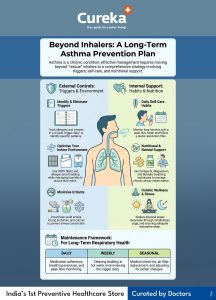
Here’s how a comprehensive prevention plan might look:
1. Daily Habits
- Monitor breathing with a peak flow meter.
- Follow your prescribed medication schedule.
- Eat an anti-inflammatory diet rich in omega-3s, magnesium, and vitamin D.
- Practice 5–10 minutes of breathing exercises.
2. Weekly Actions
- Wash bedding in hot water.
- Clean and vacuum with a HEPA filter.
- Review your trigger diary.
3. Monthly/Seasonal Checkpoints
- Replace air filters in your home.
- Schedule medical check-ins every 3–6 months.
- Adjust your activity level and protective measures during high-pollen or high-pollution seasons.
The Takeaway
Living with asthma doesn’t mean resigning yourself to constant flare-ups and medication dependence. By combining medical treatment with asthma self care, proactive asthma management, and carefully chosen natural remedies for asthma, you can create a life where breathing feels easy most of the time—not just after using an inhaler.
Think of it as shifting from “reacting” to “preventing.” Inhalers will always be an essential safety net, but your daily choices, environment, and long-term strategies can reduce how often you need them.
Your lungs are remarkably responsive to care—give them the right support, and they’ll give you the freedom to live, work, and play without the constant shadow of breathlessness.
Frequently Asked Questions
1. What is the best way to prevent asthma attacks naturally?
The best approach to asthma prevention is identifying triggers, following asthma self care habits, and supporting lung health with breathing exercises, diet, and stress management.
2. What are the most common asthma triggers to avoid?
Common asthma triggers include dust mites, pollen, air pollution, cold air, infections, strong odors, and certain foods like sulfites in processed items.
3. Can natural remedies help in asthma management?
Yes, natural remedies for asthma like omega-3 foods, magnesium, ginger, turmeric, and breathing techniques can support asthma management alongside prescribed treatment.
4. How does daily asthma self care reduce flare-ups?
Consistent asthma self care—like monitoring breathing, maintaining a healthy weight, and following an asthma action plan—helps reduce inflammation and prevent frequent attacks.
5. Why is stress management important in asthma control?
Stress can worsen asthma symptoms by increasing airway sensitivity, so practices like yoga, meditation, and proper sleep play a key role in asthma control.
References:
- Asthma Causes and Triggers – Apr 2024 – https://www.nhlbi.nih.gov/health/asthma/causes#:~:text=the%20fact%20sheet-,How%20asthma%20affects%20the%20lungs,of%20people%20who%20have%20asthma.
- Serum magnesium levels and its correlation with level of control in patients with asthma: A hospital-based, cross-sectional, prospective study – 2018 Sep – https://pubmed.ncbi.nlm.nih.gov/30168460/