
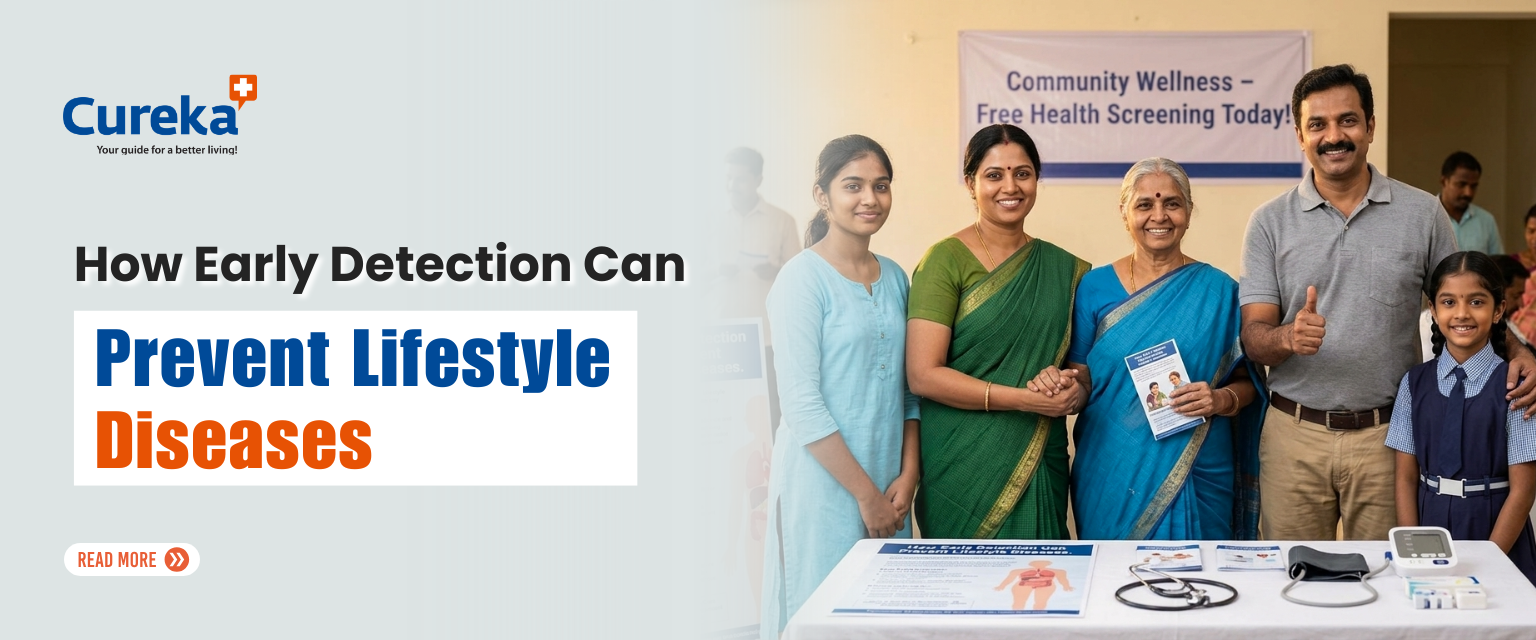
How Early Detection Can Prevent Lifestyle Diseases
Medically Reviewed By:
Dr. Hema Sathish M.B.B.S., D.D(UK)
Dermatologist, Founder of Cureka
From the name itself, it’s clear that lifestyle diseases are non-communicable, chronic conditions impacted by day-to-day habits and environmental factors. Modern desk-bound jobs, prolonged stress, and unbalanced diets can all lead to their development over time. So, it’s important to make informed lifestyle decisions and undergo timely preventive healthcare screenings to reduce health risks in the long term and maintain good health.
These diseases typically occur when environmental exposures and long-term habits impact the natural functioning of the human body. They include conditions like cardiovascular issues, certain cancers, musculoskeletal problems, obesity, and type-2 diabetes. So, early detection of lifestyle diseases and taking preventive healthcare screenings give the opportunity to maintain your health proactively [1].
Some Common Lifestyle Diseases
1.Cardiovascular Conditions
Cardiovascular health is impacted by sleep, lifestyle choices, body weight, and diet. Key triggering factors are consuming diets high in trans or saturated fats, excess body weight, lifestyle habits like alcohol or tobacco use, and inadequate sleep.
By opting for a heart-healthy active lifestyle habits and by following regular screenings, you can easily manage cardiovascular wellness.
2.Some Types of Cancers (Breast, Colon, Lung)
Excess fat accumulation in certain body regions may increase the risk of certain cancers [2].
There are chances of developing various cancers when impacted by different lifestyle factors like diet (high intake of red meat, processed foods, or saturated fats), low physical activity, alcohol usage, etc. But, being aware and changing your lifestyle habits can contribute to avoiding unwanted health complications.
3.Musculoskeletal Health (Osteoarthritis, Osteoporosis)
Weight-bearing bones (like hips and knees) are impacted by excess body weight, while stress in bone joints can result in inflammation or, at times, reduced mobility. So, it’s always better to regularly involve yourself in physical activities and intake adequate nutrition to help muscle health.
4.Obesity
It is typically a condition that increases the possibility of other health issues like cardiovascular disease, type-2 diabetes, fatty liver, some kinds of cancer, and osteoarthritis. So, make sure to maintain a healthy body weight so that it can maintain your energy levels, support joint functioning, and your complete well-being.
5.Type-2 Diabetes
It is associated with dietary patterns, body weight, and physical inactivity. It affects the body’s metabolic health and could impact multiple systems when not managed effectively. But, don’t worry! Monitoring your blood sugar level on a regular basis and following balanced lifestyle habits aid in maintaining your overall metabolic functioning. Not only that, it also helps in managing risk.
Key Factors Impacting Lifestyle Diseases
1. Sedentary Lifestyle
Technological advancements, increased screen time, and automation have all contributed to inactive routines. Lack of physical movement can generally affect energy balance in our body and slow metabolism. So, involving moderate activity in daily life like cycling, stretching, or walking can bring meaningful changes to our health.
2. Sugar Intake
Regular consumption of high sugar foods can impact metabolic function. So, it’s always better to consume nutrient-rich alternatives. This would contribute to reducing the intake of sugar to a specific range.
3. Salt Intake
Excess amount of sodium in your diet may increase blood pressure in sensitive individuals. So, be aware in choosing a moderate amount of salt intake and also ensure to reduce your intake of processed foods.
4. Diet Quality
An imbalanced diet (rich in processed foods and low in fiber) can impact your overall weight management, nutrition, and even digestive health. Including several whole foods like legumes, lean proteins, fruits, vegetables, and nuts supports maintaining metabolic balance.
5. Work-Oriented Stress
Chronic stress might impact daily routines, sleep, and appetite, affecting mental and physical well-being. To avoid this, you can practice relaxation techniques, maintain structured schedules, and adopt other coping approaches to support health.
6. Alcohol and Tobacco Usage
They may impact multiple systems, including liver, metabolic, and cardiovascular health. Changing to healthy personal habits can alleviate long-term risks.
7. Genetic Factors
The most important genetic factor (Family history) can show proneness to specific conditions. So, be mindful of certain genetic risk factors so you can undertake suitable measures like regular screenings and lifestyle adjustments.
Procedures for Lifestyle Disease Prevention
-
Balanced Diet
A diet rich in fruits, healthy fats, vegetables, whole grains, and lean proteins elevates energy levels, overall wellness, and metabolic balance. Contrarily, limiting excess sugar, unhealthy fats, and highly processed foods further improves health benefits.
-
Consistent Lifestyle Adjustments
Gradual changes in regular diet and physical activity are more sustainable than sudden lifestyle overhauls. Adopting healthy habits at the earliest can contribute to long-term health benefits for a lifetime.
-
Maintaining a Healthy Balanced Weight
Typically, a healthy weight aids in hormone balance, energy, joint health, and metabolic function. Regularly monitoring and changes to diet plans and physical activity levels help in maintaining your weight within suggested ranges.
-
Enough Sleep
Ensure to have (at least 6–8 hours) of sleep daily. This supports emotional balance, physical recovery, and even mental clarity. Adequate and consistent rest enhances energy levels, reduces stress, and improves mood.
-
Regular Physical Activity
Get yourself involved in routine physical activities (like swimming, strength training or walking). This enhances your joint flexibility, stamina, heart health and muscle strength. Regular movement supports maintaining overall well-being and energy balance.
-
Conscious Use of Alcohol and Tobacco
Moderating or reducing the consumption of both tobacco and alcohol can give you good health and lessen the possibility of getting long-term health problems.
-
Regular Medical Checkups
Routine screenings allow you to track different health-oriented markers like cholesterol levels, blood pressure etc. Checking this would assist in identifying changes for early detection of lifestyle diseases so one can take informed decisions about lifestyle adjustments.
Following the above procedures can smoothly contribute to lifestyle disease prevention [3].
Benefits of Early Detection for Lifestyle Disease Prevention
- Allows in timely management of health conditions even before its progression
- Gives insights into personal risk-oriented factors
- Motivates the adoption of healthy routines and habits
- Supports quality of life and overall health being
- Minimizes overall potential costs associated with advanced health conditions
Conclusion
Maintaining good well-being is a consistent and slow process impacted by various factors. But here are a few countermeasures you can follow like: taking sufficient rest, having balanced nutrition, undertaking routine physical activity, and undergoing preventive health screenings. All these can assist in long-term health benefits.
Along with these, professional consultation is always the best option as it ensures evidence-based procedures and also empowers you to make quality decisions.
Frequently Asked Questions
1. What are lifestyle diseases and what are their common causes?
Lifestyle diseases are chronic conditions caused by unhealthy habits like poor diet, physical inactivity, stress, alcohol, and tobacco use, along with environmental and genetic factors.
2. Why is early detection important for lifestyle diseases?
Early detection through preventive health screenings helps identify risk factors early, enabling timely lifestyle changes to prevent disease progression and complications.
3. Which are the most common lifestyle diseases?
Common lifestyle diseases include cardiovascular diseases, certain cancers, obesity, type-2 diabetes, and musculoskeletal disorders like osteoporosis and osteoarthritis.
4. What are the key risk factors for developing lifestyle diseases?
Major risk factors include sedentary lifestyle, high sugar and salt intake, poor diet quality, chronic stress, alcohol and tobacco use, and family history.
5. How can lifestyle diseases be prevented effectively?
Adopting a healthy lifestyle with a balanced diet, regular physical activity, adequate sleep, weight management, and routine medical checkups supports long-term disease prevention.
References
[1] World Health Organization (WHO) – (2023) – Reducing risks and detecting early to prevent and manage noncommunicable diseases- (https://www.who.int/publications/m/item/reducing-risks-and-detecting-early-to-prevent-and-manage-noncommunicable-diseases)
[2] Wong L-Y et al. “A validated estimate of visceral adipose tissue volume in relation to cancer risk in the UK Biobank cohort.” J Natl Cancer Inst. 2024;116(12):1942-1951
[3] Centers for Disease Control and Prevention (CDC). (2025). Preventing Chronic Diseases: What You Can Do Now.