Precision Nutrition: How Food Timing Affects Absorption of Nutrients
Medically Reviewed By:
Dr. Hema Sathish M.B.B.S., D.D(UK)
Dermatologist, Founder of Cureka
In the quest for optimal health, what you eat has always been the primary focus. But emerging research suggests that when you eat—the timing of your meals and nutrients—can be just as important as the food itself. This concept, often referred to as precision nutrition, integrates circadian biology, metabolism, and nutrient absorption to optimize health, prevent chronic disease, and support longevity.
Understanding the science behind nutrient timing can help you make smarter choices for energy, immunity, muscle health, and overall wellness.
The Science of Nutrient Timing
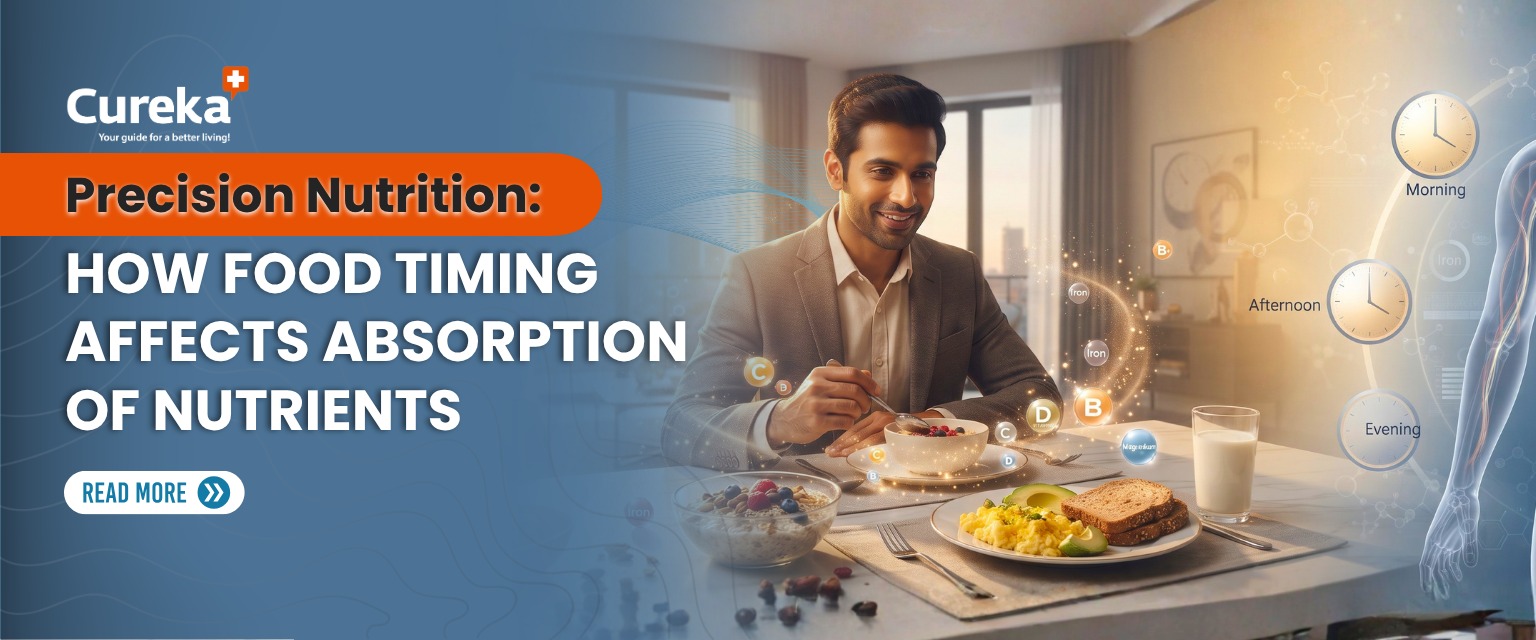
Our bodies operate on a circadian rhythm, a 24-hour internal clock that governs sleep, hormone production, digestion, and metabolism. Nutrient absorption, enzyme activity, and hormonal responses vary throughout the day:
- Morning: Digestive enzymes and metabolic rate are high; insulin sensitivity is optimal.
- Afternoon: Body temperature peaks, energy metabolism is efficient.
- Evening: Insulin sensitivity decreases; digestion slows down.
Eating at times aligned with your circadian rhythm can enhance nutrient absorption and reduce metabolic stress. Conversely, misaligned eating—like late-night snacking—can impair digestion, lead to weight gain, and disrupt hormonal balance.
Macronutrient Timing: When Your Body Uses Them Best
1. Proteins
Protein supports muscle synthesis, repair, and satiety. Timing affects its effectiveness:
- Morning and Post-Workout: Consuming high-quality protein in the morning or after exercise maximizes muscle protein synthesis.(1)
- Evening: Light protein intake can support overnight repair, but heavy late-night protein may stress digestion.
Tip: Include easily digestible proteins like eggs, Greek yogurt, or whey immediately post-workout.
2. Carbohydrates
Carbs fuel energy, replenish glycogen, and affect insulin:
- Morning/Afternoon: Eating complex carbs earlier in the day aligns with peak insulin sensitivity and energy needs.
- Evening: High-carb meals late at night can increase fat storage and disrupt sleep if they spike blood sugar.(2)
Tip: Favor whole grains, fruits, and legumes in the first half of the day, and reduce starchy carbs after 7–8 PM.
3. Fats
Healthy fats are essential for hormone production and fat-soluble vitamin absorption (A, D, E, K):
- Anytime, but paired wisely: Fat slows digestion, so pairing fats with fat-soluble vitamins enhances absorption.(3)
- Evening: Moderate intake is fine; excessive fats late at night may slow gastric emptying and impair sleep.
Tip: Include nuts, seeds, avocado, or olive oil with vegetables or protein sources for optimal nutrient absorption.
Micronutrients and Timing
Some vitamins and minerals are particularly sensitive to timing for maximum bioavailability:
1. Fat-Soluble Vitamins (A, D, E, K)
- Best absorbed with dietary fat.
- Example: Spinach (Vitamin K) sautéed in olive oil increases absorption.
2. Water-Soluble Vitamins (B-complex, C)
- Absorbed more efficiently on an empty stomach, typically in the morning.
- Vitamin C taken with meals can reduce stomach upset but may compete with certain minerals for absorption.
3. Minerals
- Calcium: Absorption is higher in small, divided doses throughout the day.
- Magnesium: Best taken in the evening to support relaxation and sleep.
- Iron: Absorption improves when taken on an empty stomach, away from calcium-rich foods and tea/coffee.
Strategic Meal Timing for Health Goals
Precision nutrition can be tailored to your specific health goals:
1. Weight Management
- Front-load calories earlier in the day to match energy expenditure.
- Avoid heavy late-night meals to prevent fat accumulation.
- Use protein and fiber in the morning to maintain satiety.
2. Muscle Growth
- Prioritize protein intake post-workout.
- Distribute protein evenly across meals to maximize synthesis.
3. Heart Health
- Align carbohydrate intake with active periods to optimize glucose metabolism.
- Limit late-night snacking, which can increase triglycerides and LDL cholesterol.
4. Sleep and Hormonal Balance
- Avoid caffeine and heavy meals close to bedtime.
- Magnesium-rich snacks like almonds or pumpkin seeds in the evening can improve sleep quality.
- Fat-soluble vitamins in the evening can support hormone synthesis during sleep.
Chrono-Nutrition: Eating According to Your Body Clock
The emerging field of chrono-nutrition emphasizes meal timing in alignment with circadian biology. Key principles include:
1. Consistent meal schedule: Helps regulate insulin, cortisol, and ghrelin.(4)
2. Time-restricted eating: Eating within 8–10 hours improves metabolism and may support longevity.
3. Avoiding late-night calories: Supports circadian rhythm and prevents metabolic stress.
4. Breakfast importance: Fueling the body in the morning improves energy, cognitive function, and nutrient utilization.
Research shows that time-restricted feeding or intermittent fasting, when aligned with circadian rhythm, improves insulin sensitivity, reduces inflammation, and enhances nutrient absorption.
Supplements and Nutrient Timing
Even with a balanced diet, supplements can benefit from strategic timing:
- Multivitamins: Usually best taken with meals containing fat to improve absorption of fat-soluble vitamins.
- Omega-3s: Best absorbed with a meal containing fat.
- Probiotics: Morning on an empty stomach or just before meals improves survival through the digestive tract.
- Magnesium: Evening to support sleep and muscle recovery.
- Iron: Morning, on an empty stomach, away from calcium sources.
Tip: Combining precision nutrition with targeted supplementation ensures maximum benefit from each nutrient.
Practical Tips to Implement Precision Nutrition
1. Plan meals around your activity level: Eat carbs before workouts and protein after.
2. Front-load calories: Eat a bigger breakfast and moderate lunch; light dinner.
3. Pair nutrients smartly: Fat-soluble vitamins with healthy fats; iron away from calcium.
4. Stay consistent: Regular meal timing improves digestive enzyme efficiency.
5. Track and adjust: Use apps or a journal to monitor energy, digestion, and sleep responses.
Key Takeaways
- Nutrient timing can enhance absorption, optimize metabolism, and prevent chronic disease.
- Aligning meals with your circadian rhythm ensures energy is available when needed and reduces metabolic stress.
- Macronutrients, micronutrients, and supplements all have optimal timing windows.
- Personalized timing strategies—chrono-nutrition and precision supplementation—can help achieve health goals, whether it’s weight management, muscle building, or long-term longevity.
By not just focusing on what you eat, but also when you eat it, you can maximize nutrient benefits, support your body’s natural rhythms, and prevent age-related health issues.
Frequently Asked Questions
1. What is precision nutrition, and why is it important?
Precision nutrition focuses on both what you eat and when you eat. Aligning meals with your body’s needs helps improve nutrient absorption, metabolism, and overall health.
2. What is the connection between circadian rhythm and nutrition?
Your circadian rhythm regulates digestion, metabolism, and hormone production. Eating in sync with this natural body clock helps improve nutrient absorption, energy levels, and metabolic health.
3. How does nutrient timing improve nutrient absorption?
Nutrient timing improves nutrient absorption by aligning food intake with your circadian rhythm, allowing the body to absorb and use nutrients more efficiently.
4. Can eating late at night affect digestion and weight gain?
Yes. Late-night eating can slow digestion, reduce insulin sensitivity, and increase the risk of weight gain by disrupting the body’s natural metabolic rhythm.
5. When should you take vitamins and minerals for better absorption?
Take fat-soluble vitamins, such as Vitamin D, with a meal containing healthy fats. Take iron on an empty stomach away from calcium-rich foods, and calcium in smaller doses throughout the day for better absorption.
References:
- Effects of Protein Supplementation on Performance and Recovery in Resistance and Endurance Training – 2018 Sep – =https://pmc.ncbi.nlm.nih.gov/articles/PMC6142015/#:~:text=Abstract,daily%20energy%20and%20protein%20intake.
- The Health Impact of Nighttime Eating: Old and New Perspectives – 2015 Apr – https://pmc.ncbi.nlm.nih.gov/articles/PMC4425165/#:~:text=As%20demonstrated%20above%2C%20consuming%20large,in%20total%20cholesterol%20%5B51%5D.
- Biochemistry, Fat Soluble Vitamins – Sep 2022 – https://www.ncbi.nlm.nih.gov/books/NBK534869/#:~:text=Cellular%20Level,system%20before%20entering%20the%20bloodstream.
- Chrononutrition in Cardiometabolic Health – 2022 Jan – https://pmc.ncbi.nlm.nih.gov/articles/PMC8780356/#:~:text=Notably%2C%20metabolic%20hormones%20that%20communicate,as%20will%20be%20further%20mentioned.