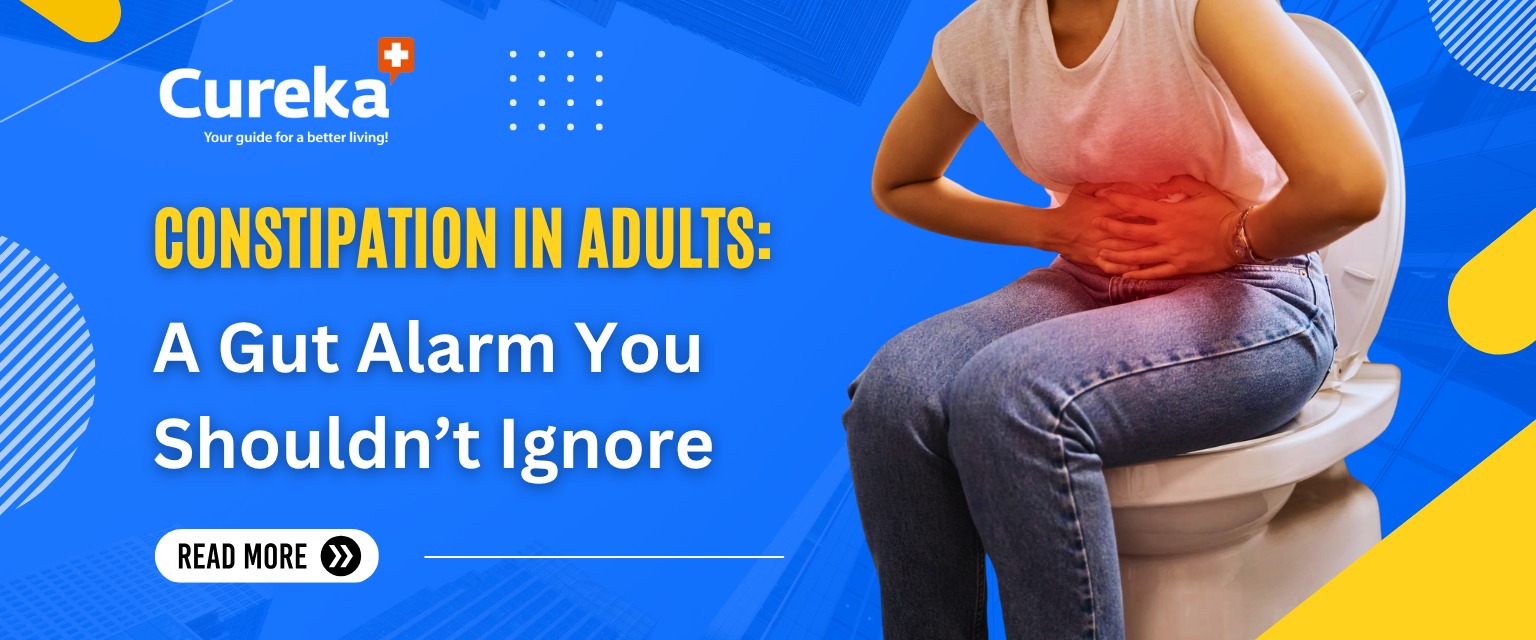
Constipation in Adults : A Gut Alarm You Shouldn’t Ignore
Medically Reviewed By:
Dr. Hema Sathish M.B.B.S., D.D(UK)
Dermatologist, Founder of Cureka
Constipation might seem like a minor inconvenience—until it disrupts your day, your mood, and your overall well-being. It’s more common than you think, affecting nearly one in every five adults, especially those over 40. Yet, despite how widespread it is, constipation is often misunderstood, underreported, and underestimated.
In this blog, we’ll talk about what causes constipation, what it really means for your gut health, and most importantly—how to deal with it effectively using natural methods, dietary changes, and home care tools.
What Is Constipation, Really?
Constipation isn’t just about frequency. While having fewer than three bowel movements per week is a clinical sign, people with constipation may also experience:
- Hard, dry, or lumpy stools
- Straining during bowel movements
- A feeling of incomplete evacuation
- Bloating or abdominal discomfort
Chronic constipation can significantly affect your digestive health, nutrient absorption, and quality of life. When your gut isn’t happy, your whole system feels the stress.
What Causes Constipation in Adults?
Several lifestyle and health-related factors contribute to constipation, including:
- Low fiber intake
- Dehydration
- Lack of physical activity
- Delaying the urge to go
- Stress and anxiety
- Certain medications (e.g., iron supplements, antidepressants, painkillers)
- Medical conditions like IBS, hypothyroidism, or diabetes(1)
Constipation can also occur after surgeries, or due to prolonged bed rest in elderly individuals. In such cases, daily living aids like a bedpan or raised toilet seat can provide comfort and dignity while addressing mobility issues.
Why You Shouldn’t Ignore Constipation
Occasional constipation is not usually a cause for concern. But when it becomes chronic, it can lead to:
- Hemorrhoids (due to straining)
- Anal fissures
- Rectal prolapse
- Impacted stool
- Sluggish digestion and toxin buildup
More importantly, it can be a warning sign of underlying issues, such as colorectal disorders or even early signs of bowel obstruction. Constipation is your gut’s way of signaling that something isn’t quite right.
How Gut Health Impacts Constipation
Your gut is home to trillions of microorganisms, collectively called the gut microbiota, which play a vital role in digestion, nutrient absorption, and waste elimination. When this delicate ecosystem is disrupted—whether due to poor diet, stress, antibiotics, or aging—it can slow down bowel movements and lead to constipation.
Here’s how:
- Microbial Imbalance (Dysbiosis): A reduction in beneficial bacteria and an overgrowth of harmful ones can reduce intestinal motility and impair digestion. This leads to harder stools and irregular bowel movements. (2)
- Reduced Short-Chain Fatty Acids (SCFAs): Good gut bacteria produce SCFAs like butyrate, which help nourish the colon lining and keep stools soft. A disrupted microbiome means fewer SCFAs, making constipation more likely. (3)
- Inflammation: An unhealthy gut can increase low-grade inflammation in the intestines, making the bowel lining less responsive to natural movement signals (peristalsis). (4)
- Weakened Gut-Brain Axis: Your gut and brain communicate constantly. An imbalanced gut can affect mood and stress levels, which in turn impact bowel patterns—leading to what’s often called “nervous constipation.” (5)
Maintaining a balanced gut flora is essential for regular bowel function. That’s why probiotic-rich foods, plant fibers, and fermented supplements are considered foundational in managing chronic constipation.
Home care products like daily probiotic sachets, gut-health herbal teas, or fiber-rich nutrition powders can support microbiome restoration as part of your routine—without needing to rely on harsh laxatives.
Natural Remedies and Lifestyle Changes That Work
Before turning to medications, it’s wise to adopt simple lifestyle changes that improve bowel habits naturally.
1. Increase Fiber Intake
Soluble and insoluble fibers play a major role in gut motility. They add bulk to the stool and retain water, making it easier to pass.
Include oats, chia seeds, bananas, whole grains, and beans.
Consider using a plant-based fiber supplement (psyllium husk or inulin) if your diet lacks variety.
Check out fiber-rich health mixes available in the home care section, especially those tailored for elderly digestion.
Tip: Always increase fiber gradually and pair it with more water.
2. Stay Hydrated—Consistently
Dehydration is a silent constipation culprit. Water softens stools and keeps things moving.
Drink at least 8 glasses of water a day.
You can also try herbal teas with fennel, senna, or ginger, known for their gut-calming properties.
For those who forget to hydrate, a smart water bottle or reminder mug can be a helpful home care addition.
3. Try Abdominal Massage and Heat Therapy
Gentle clockwise abdominal massage can stimulate peristalsis (gut movement). For bloating and discomfort, applying a warm compress or heating pad on the lower abdomen relaxes intestinal muscles.
These home therapy tools are especially useful for adults with chronic constipation due to sedentary lifestyle or post-surgical recovery.
4. Probiotics for a Healthy Gut Flora
Your gut microbiome plays a major role in regular bowel movements. Lactobacillus and Bifidobacterium strains have shown benefits in easing constipation.
Add curd, kefir, fermented veggies, or probiotic supplements to your diet.
Probiotic gummies or sachets available online are easy options, especially for those who dislike tablets.
Some home care brands also offer gut-focused wellness kits, which bundle probiotics, fiber, and digestive enzymes together—ideal for maintaining daily gut balance.
5. Stay Active
Physical movement stimulates intestinal contractions. Even light exercises like:
Walking for 20–30 minutes
Gentle yoga (like Pawanmuktasana)
Deep breathing for gut relaxation
…can do wonders.
If mobility is an issue, pedal exercisers and stretch bands (available in home care) offer safe ways to stay active while seated or on the bed.
When to Consider Laxatives or Stool Softeners
If natural methods fail, osmotic laxatives (like polyethylene glycol) or bulk-forming agents (like ispaghula husk) may help. But prolonged use should be avoided without medical advice.
For elderly patients or those with spinal injuries, stool softeners may be a better first step. Enema kits or suppositories, when used occasionally, can provide relief but should not become routine.
Look for gentle, non-stimulant formulations that are dermatologically tested and free of harsh chemicals. Many home care platforms offer such products in easy-to-use packaging.
Home Care Products That Support Gut Wellness
A few non-pharmaceutical solutions that support digestive wellness:
- Adjustable toilet seats – Encourage a more natural squat-like posture for easier elimination.
- Bidet sprayers or cleansing wipes – Offer gentle cleaning, especially after hard stools or fissures.
- Footrests or squat stools – Elevate your knees while seated to align the rectum for better passage.
- Herbal gut teas or tonics – With ingredients like triphala, fennel, or ajwain ( Carom seeds), support digestion naturally.
- Digestive enzyme supplements – Especially helpful for those with weak digestion due to age or illness.
All these fall under home care and lifestyle tools that help manage constipation gently and sustainably—without jumping to heavy medications.
When to See a Doctor
If you experience any of the following, don’t wait:
- Blood in stools
- Sudden weight loss
- Severe abdominal pain
- Unexplained fatigue
- No bowel movement for over a week despite trying home remedies
Chronic constipation can sometimes signal colon polyps, thyroid disorders, or even neurological conditions. Always consult a physician for a thorough diagnosis.
A Word on Constipation in the Elderly
Constipation is even more prevalent among older adults, especially those on multiple medications or with reduced mobility. It’s not just about discomfort—it impacts nutrition, sleep, and independence.
In such cases, daily living aids like adult diapers, bedpans, stool collectors, or digital reminders for hydration and medications can help maintain hygiene and dignity.
If you’re a caregiver, ensuring a fiber-rich diet, proper hydration, and scheduled toilet time can significantly reduce the need for emergency care.
Frequently Asked Questions
1. What are the most common causes of constipation in adults?
Constipation is mainly caused by low fiber intake, dehydration, inactivity, stress, and certain medications. Conditions like IBS, diabetes, and hypothyroidism can also affect bowel movements.
2. How does gut health affect constipation?
An unhealthy gut microbiome can slow digestion and reduce bowel movement frequency. Balanced gut bacteria help maintain regular and smooth digestion.
3. What are quick natural remedies to relieve constipation?
Drinking warm fluids, increasing fiber gradually, and gentle movement like walking can provide quick relief from constipation and improve stool passage.
4. When should I be concerned about chronic constipation?
Medical advice is needed if constipation persists or includes symptoms like blood in stools, severe abdominal pain, or unexplained weight loss.
5. How can daily habits prevent constipation long-term?
Consistent hydration, a fiber-rich diet, regular physical activity, and not delaying bowel urges help prevent constipation and support digestive health.
Conclusion
Constipation isn’t just a symptom—it’s your body raising a red flag. Whether it’s a dietary imbalance, lifestyle inertia, or stress overload, your gut knows first. Responding early with natural remedies and gut-friendly home care tools can restore not only digestive comfort but your entire sense of well-being.
Don’t ignore the signals. Let constipation be the wake-up call that pushes you toward a healthier, more balanced life—one that your gut will thank you for.
References:
- Gastrointestinal Complications of Diabetes – 2019 Jul – https://pmc.ncbi.nlm.nih.gov/articles/PMC6658178/#:~:text=Esophageal%20Motility%20Dysfunction%20in%20Diabetes,transit%2C%20and%20increased%20acid%20reflux.&text=Esophageal%20motility%20disorders%20appear%20to,dysfunction%20as%20playing%20a%20role.
- Impacts of Gut Bacteria on Human Health and Diseases – 2015 Apr – https://pmc.ncbi.nlm.nih.gov/articles/PMC4425030/#sec6
- Metabolomics Insights into Gut Microbiota and Functional Constipation – 2025 Apr – https://pmc.ncbi.nlm.nih.gov/articles/PMC12029362/#sec2-metabolites-15-00269
- Low-grade inflammation plays a pivotal role in gastrointestinal dysfunction in irritable bowel syndrome – 2010 Aug – https://pmc.ncbi.nlm.nih.gov/articles/PMC3097950/#:~:text=biomarker%20for%20IBS.-,Microbiota,seen%20in%20IBS%5B41%5D.
- The gut-brain axis: interactions between enteric microbiota, central and enteric nervous systems – 2015 Apr – https://pmc.ncbi.nlm.nih.gov/articles/PMC4367209/#:~:text=It%20is%20a%20part%20of,human%20organs%2C%20including%20the%20brain.