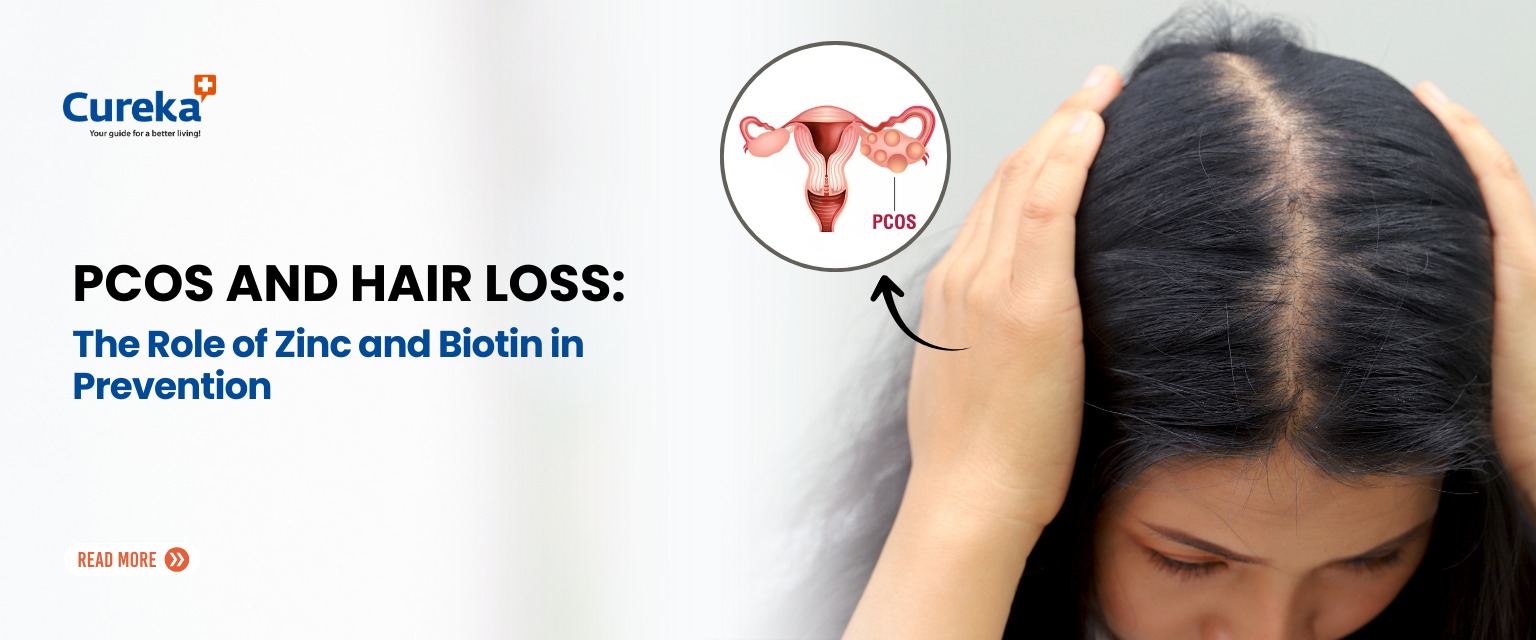
PCOS and Hair Loss: The Role of Zinc and Biotin in Prevention
Medically Reviewed By:
Dr. Hema Sathish M.B.B.S., D.D(UK)
Dermatologist, Founder of Cureka
If you’ve been noticing your hairbrush looking a little fuller than usual or your ponytail shrinking in thickness, and you also live with PCOS you’re not imagining things. PCOS hair loss is real, frustrating, and often overlooked.
Polycystic Ovary Syndrome (PCOS) affects more than just your reproductive system. It has ripple effects across your skin, metabolism, weight, mood and yes, your hair. And while hirsutism (excess facial/body hair) gets a lot of attention, scalp hair thinning especially around the temples or crown is one of the most distressing symptoms for many women.
But here’s the hopeful part: certain nutrients, particularly zinc and biotin, may help prevent and even reverse some of that hair loss when used wisely and in the right context.
Let’s unravel this complex connection in a way that’s both medically sound and personally relatable.
PCOS Hair Loss
PCOS is the most common hormone disorder in women of reproductive age. It affects multiple systems – reproductive, metabolic, cardiovascular, and dermatological. Hair loss due to PCOS is primarily driven by hormonal imbalance, particularly elevated levels of androgens (male hormones like testosterone). (1)
This hormonal pattern can:
- Shorten the hair growth cycle (anagen phase)
- Increase hair fall (telogen phase)
- Cause androgenic alopecia, where hair gradually thins at the crown and temples
Here’s what makes PCOS-related hair loss even trickier: you might also be dealing with oily scalp, acne, and unwanted facial hair — making it feel like your body is working against you.
The good news? Addressing nutrient deficiencies and supporting your body with the right micronutrients can play a major role in managing this hair imbalance.
Zinc for PCOS: More Than Just a Skin Mineral
You’ve probably heard of zinc for immunity and acne, but did you know it plays a powerful role in hormonal health — particularly for women with PCOS?
What Zinc Does:
- Regulates androgens: Zinc helps modulate testosterone levels and reduce its harmful effects on hair follicles.
- Reduces 5-alpha reductase activity: This enzyme converts testosterone to dihydrotestosterone (DHT), which is the real culprit behind hair thinning in PCOS. Zinc may inhibit this enzyme.
- Anti-inflammatory properties: Zinc helps lower inflammation and oxidative stress, both of which are common in PCOS and contribute to hair loss.
What Has Been Observed:
In PCOS women, supplementing with 50 mg/day of elemental zinc for 8 weeks showed visible improvement in hair thinning and hirsutism. (2) It didn’t significantly change hormone levels overall, but the reduction in oxidative damage and scalp inflammation seemed to support healthier hair growth.
It’s worth noting that zinc supplementation didn’t affect all inflammatory markers or hormonal profiles, but the visible effects—especially on hair—were meaningful. It’s not a magic pill, but it can be an effective support.
Food Sources of Zinc:
- Pumpkin seeds
- Chickpeas
- Cashews
- Eggs
- Lentils
- Dark chocolate (yes, really!)
Tip: If you’re supplementing, go for chelated forms like zinc picolinate or zinc gluconate. Always check with your doctor before starting, as high doses over long periods can cause copper deficiency.
Biotin: The Buzz-Worthy Beauty Vitamin
You’ve likely seen biotin marketed in every hair vitamin or gummy on the shelf. That’s because this B-vitamin (specifically B7) is essential for keratin production, which forms the structure of your hair, skin, and nails.
Why Biotin Matters for PCOS Hair Loss:
- Biotin deficiency, though rare, can lead to hair breakage, brittleness, and hair fall
- Many PCOS women experience digestive issues or nutrient malabsorption — increasing the risk of low biotin levels
- Biotin supports metabolic pathways that influence hormone balance
Here’s the kicker: Biotin alone won’t fix hormone-driven hair loss, but it does help improve hair quality — making strands stronger, shinier, and less prone to breakage. (3)
Natural Sources of Biotin:
- Eggs (especially yolks)
- Almonds and walnuts
- Sweet potatoes
- Spinach
- Mushrooms
- Bananas
How much is enough?
For general hair support, a dose of 2,000–5,000 mcg/day is often used in supplements. However, very high doses may interfere with lab tests (especially thyroid or cardiac panels), so avoid taking biotin before medical testing.
Signs Your Hair Loss May Be Linked to PCOS
Many women don’t realize their hair thinning is a symptom of PCOS — especially if they haven’t been diagnosed yet. Some dermatologists report that scalp hair loss is often the first reason women walk into their clinics, not knowing PCOS is behind it.
Here are some signs your hair loss might be hormone-related:
- Thinning around the temples or crown
- Increased facial/body hair (chin, upper lip, belly)
- Irregular or absent periods
- Oily skin or adult acne
- Unexplained weight gain
- Family history of PCOS or type 2 diabetes
If this feels familiar, it’s worth discussing PCOS screening with your gynecologist. Diagnostic criteria often include two of the following:
- Irregular or absent ovulatio
- Elevated androgens (acne, facial hair, hair loss)
- Polycystic ovaries visible on ultrasound
PCOS Hair Thinning Remedies That Work Holistically
Managing PCOS hair loss takes a multifaceted approach. While no single pill or shampoo can fix it overnight, combining internal and external strategies can make a real difference.
- Correct the Nutrient Gaps
Take zinc and biotin supplements as advised
Add more plant-based, zinc-rich meals to your diet
Rotate protein-rich and anti-inflammatory foods (think salmon, flaxseeds, green leafy vegetables)
- Address Hormonal Imbalance
Work with your doctor on options like metformin, birth control pills, or anti-androgens (if needed)
Prioritize stress reduction: yoga, deep breathing, nature walks
Sleep at least 7–8 hours a night to support hormonal rhythms
- Support the Scalp
Use sulfate-free, DHT-blocking shampoos (look for ingredients like pumpkin seed oil, caffeine, saw palmetto)
Avoid heat styling, tight buns, and harsh brushing
Scalp massages with rosemary or peppermint oil may improve circulation
- Manage Insulin Resistance
Many PCOS symptoms (including hair loss) are worsened by insulin resistance. Reducing refined carbs, eating more fiber, and maintaining stable blood sugar can help regulate androgens naturally.
When to See a Doctor or Specialist
If your hair fall has lasted longer than 3–6 months, or if you’re seeing bald spots, it’s time to consult a professional. A dermatologist can evaluate your scalp, and a gynecologist or endocrinologist can guide you through PCOS diagnosis and treatment.
Blood tests worth requesting:
- Free and total testosterone
- DHEA-S
- LH/FSH ratio
- Ferritin (iron stores)
- Vitamin D and B12
- TSH and thyroid panel (especially if on biotin)
Conclusion:
PCOS-related hair loss is emotionally challenging, but it’s also manageable with the right tools, time, and care. Nutrients like zinc and biotin are not just supplements they can prevent hair loss by supporting your body. So the next time you run your fingers through your hair and feel disheartened, remember: your body isn’t broken. It’s just asking for support. And now, you know how to give it.
References:
- Polycystic ovarian syndrome in patients with hair thinning – 2021 Jul – https://pmc.ncbi.nlm.nih.gov/articles/PMC8291365/
- Effects of Zinc Supplementation on Endocrine Outcomes in Women with Polycystic Ovary Syndrome: a Randomized, Double-Blind, Placebo-Controlled Trial – 2015 Aug – https://pubmed.ncbi.nlm.nih.gov/26315303/#:~:text=In%20conclusion%2C%20using%2050%20mg,other%20biomarkers%20of%20oxidative%20stress.
- A Review of the Use of Biotin for Hair Loss – 2017 Apr- https://pmc.ncbi.nlm.nih.gov/articles/PMC5582478/#:~:text=Discussion,and%20egg%20yolk%20%5B20%5D.