
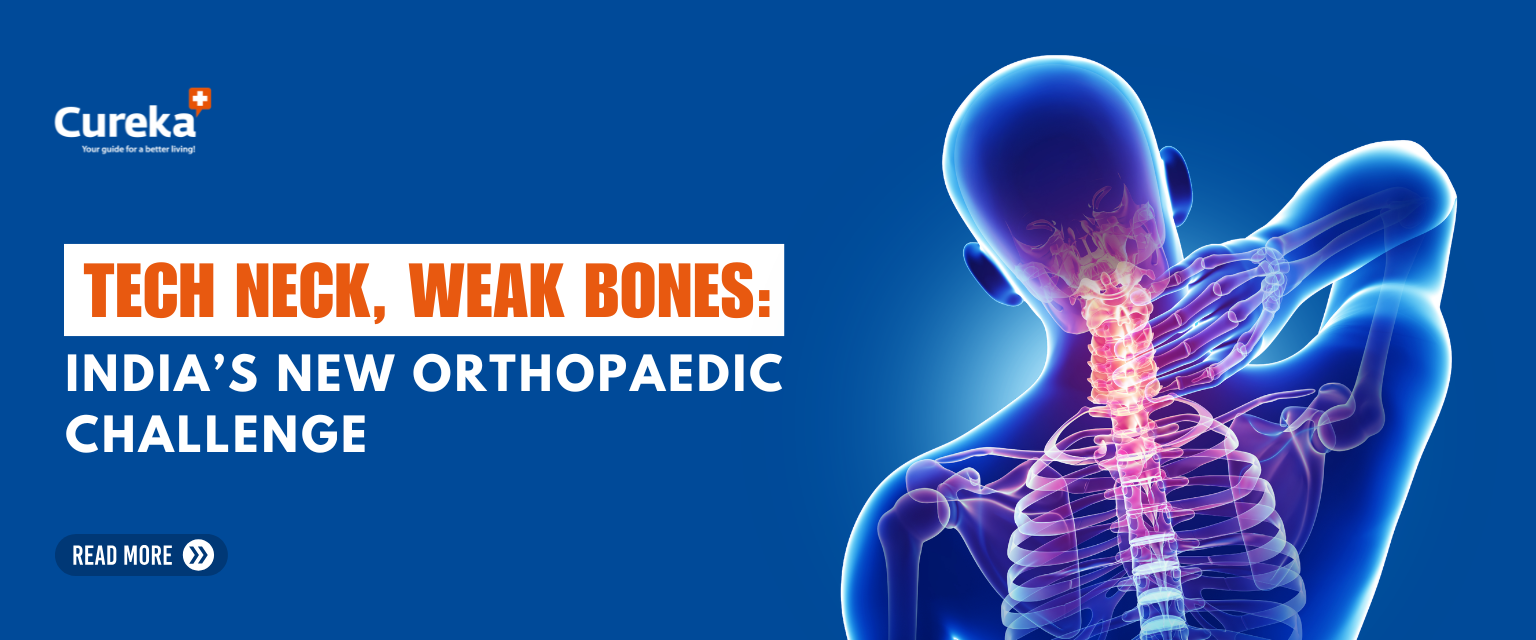
Tech Neck, Weak Bones: India’s New Orthopedic Challenge
Medically Reviewed By:
Dr. Hema Sathish M.B.B.S., D.D(UK)
Dermatologist, Founder of Cureka
In today’s digital India, our phones are always within reach—but at what cost? While technology continues to reshape our lives, it’s also silently impacting our musculoskeletal health. Two major threats are on the rise: tech neck, caused by prolonged mobile phone usage in poor posture, and weak bones, notably osteoporosis, fueled by changing diets, sedentary lifestyles, and environmental stressors.
Together, these conditions are forming a modern orthopedic crisis that affects Indians across all age groups, from school-going teens to office-bound adults and aging elders. In this blog, we explore how these seemingly separate issues are more connected than we think—and what you can do to protect your spine and bones before the damage becomes permanent.
The Rise of Tech Neck in India
“Tech neck” or “text neck” refers to the forward-leaning head posture commonly seen when people are using their smartphones or laptops. It may appear harmless at first, but this chronic misalignment significantly increases strain on the cervical spine, causes muscle imbalance, and leads to persistent neck pain.
Studies have shown that even tilting your head forward at just 60 degrees while looking at your phone increases the strain on your neck by up to 27 kg. (1) . Over time, this leads to:
- Reduced mobility of the cervical spine
- Proprioceptive disturbances
- Trigger point-related referred pain
- Weakness of deep neck flexor muscles
- Overstimulation of trapezius and extensor muscles
In India more young adults showed signs of text neck syndrome, and this syndrome is growing, especially among students and professionals spending more than 3–4 hours on screens daily.
Weak Bones and the Burden of Osteoporosis
Now, let’s talk bones. Osteoporosis, or the condition where bones become porous and brittle, is often called the “silent disease” because it progresses without symptoms—until a sudden fracture occurs.
The skeletal system needs calcium, vitamin D, and other minerals like magnesium and phosphorus to maintain strength. However, poor nutrition, urban lifestyles, indoor confinement, and pollution have made these nutrients scarce in the average Indian diet.
Key contributors to osteoporosis in India include:
- Inadequate dietary calcium and vitamin D
- Sedentary lifestyle with low physical exertion
- Excess alcohol and tobacco consumption
- High intake of processed/junk food
- Age-related decline in bone formation
- Heavy metal exposure (lead, arsenic, cadmium)
Women, particularly post-menopausal, are at higher risk due to hormonal changes that accelerate bone loss. But early signs such as osteopenia—low bone density—are now seen even in younger adults due to tech-driven sedentary habits.(2)
The Spine Connection: When Tech Neck Meets Weak Bones
Here’s where it gets more alarming: tech neck and osteoporosis are not isolated issues—they are interconnected.
1. Increased Load on the Spine
Repeated poor posture places excess mechanical stress on the cervical and thoracic vertebrae. In individuals with already weakened bones due to osteoporosis, this can accelerate microfractures, disc degeneration, and spinal deformities.
2. Reduced Bone Remodeling
Immobility reduces the mechanical stimulation required for bone remodeling—a process where old bone tissue is replaced by new. Without regular movement and resistance training, bones lose density faster.
3. Poor Posture Accelerates Bone Deterioration
Forward head posture and kyphotic curves shift the center of gravity. This not only causes neck and upper back pain, but also vertebral compression, especially in those with low bone mass.
4. Nutrient Malabsorption Due to Lifestyle
Those spending prolonged hours indoors, particularly in front of screens, are more likely to have vitamin D deficiency—a major risk factor for poor calcium absorption and osteoporosis.
Thus, neck pain is not always a muscle problem. It could be a warning sign of underlying bone weakness.
Neck Pain Relief: It’s More Than Just a Quick Fix
Most people in India resort to topical balms or painkillers for neck pain relief. While this may help temporarily, it doesn’t fix the root cause. A comprehensive strategy includes:
- Postural correction: Use ergonomic furniture, neck supports , raise phone screens to eye level, and avoid slouching.
- Neck strengthening: Incorporate exercises to activate deep neck flexors, stretch tight muscles, and realign the cervical spine.
- Physical activity: Engage in weight-bearing activities like walking, resistance bands, or yoga to stimulate bone remodeling.
- Supplements: Consider calcium, vitamin D, and magnesium supplements especially if your diet is lacking or you’re at risk for osteoporosis.
- Digital detox: Reduce daily screen time, especially among students and office workers.
The Urban Indian’s Dilemma: Screen Time vs. Spine Health
The digital transformation of India has improved access to work, education, and services—but it’s also brought with it a new wave of lifestyle diseases. A shocking study revealed that 68% of Indian students complained of musculoskeletal neck pain due to smartphone use.(3)
Worse, many remain undiagnosed until a fall or minor trauma results in a fracture—revealing underlying osteoporosis. Diagnosis of text neck or bone diseases should include:
- Posture assessment
- Pain and disability scoring (e.g., VAS, NPRS, NDI)
- Imaging to rule out serious conditions
- Bone Mineral Density (BMD) tests
- Serum levels of calcium and vitamin D
Toward a Preventive Orthopedic Approach
India needs to shift its orthopedic strategy from reactive to preventive care, especially with rising cases of tech neck and osteoporosis. Here’s how we can stay ahead of this orthopedic challenge:
Awareness Campaigns
Promote education about tech neck syndrome and bone diseases like osteoporosis in schools, colleges, and corporate workplaces. Early awareness can encourage better posture and bone-friendly habits from a young age.
Routine Screening
Encourage regular bone mineral density (BMD) testing—especially for women over 40, desk-bound professionals, and individuals with a family history of bone issues. Early diagnosis can prevent serious complications later.
Public Health Nutrition
Advocate for diets rich in calcium and vitamin D—including dairy, leafy greens, nuts, seeds, and fortified foods. Nutritional gaps are one of the leading causes of weak bones and poor musculoskeletal health in India.
Safe Tech Use
Promote ergonomic posture habits when using smartphones and laptops: raise screens to eye level, take hourly breaks, stretch regularly, and maintain good spinal alignment. Avoid slouching and prolonged static positions.
Supportive Devices for Neck Pain Relief
For those already experiencing neck strain or early signs of tech neck, using orthopedic neck supports can make a big difference.
On Website, you’ll find doctor-recommended neck braces and cervical collars designed to stabilize the neck, reduce muscle tension, and promote healing. These are especially useful during screen-heavy workdays or recovery from cervical strain. Whether you’re looking for soft foam collars for light support or adjustable braces for targeted pain relief, our collection supports your journey to better posture and spinal health.
Environmental Monitoring
Heavy metal pollution and toxic exposure are growing concerns in urban India. Lead, arsenic, and other toxins can impair bone health over time. Public policies and individual efforts must prioritize clean air, safe water, and toxin-free food sources to reduce this hidden risk.
Conclusion
Tech neck and weak bones are two sides of the same sedentary coin—and India is sitting right in the middle of it. What makes the situation more dangerous is that both often go unnoticed until they cause irreversible damage.
Neck pain is not just an IT worker’s nuisance; it might be your body’s cry for help. Similarly, a bone fracture from a simple fall may be a sign of deep-rooted osteoporosis. The time to act is now.
Strengthen your spine. Strengthen your bones. Because in the race to stay online, we shouldn’t let our health fall offline.
FAQs
1. What is tech neck and how does it affect spinal health?
Tech neck is a posture-related condition caused by looking down at phones or laptops for long hours, leading to neck pain, cervical spine strain, muscle stiffness, and poor posture.
2. Can prolonged screen time cause weak bones or osteoporosis?
Yes, excessive screen time and sedentary lifestyle reduce physical activity and sunlight exposure, increasing the risk of vitamin D deficiency, weak bones, and osteoporosis.
3. What are the common symptoms of tech neck syndrome?
Common symptoms include neck pain, shoulder stiffness, headaches, reduced neck mobility, upper back pain, and muscle tension caused by poor posture and smartphone overuse.
4. How can I prevent neck pain and improve bone health naturally?
Maintaining correct posture, doing regular exercise, eating calcium and vitamin D-rich foods, and reducing continuous screen time can help support spine and bone health.
5. Why are young adults in India facing more orthopedic problems today?
Increased smartphone usage, desk-bound work, lack of physical activity, poor nutrition, and prolonged indoor lifestyles are contributing to rising orthopedic issues among young adults in India.
References:
- Physiotherapy in Text Neck Syndrome: A Scoping Review of Current Evidence and Future Directions – 2025 Feb – https://pmc.ncbi.nlm.nih.gov/articles/PMC11856789/#:~:text=Own%20elaboration%20based%20on%20%5B4,pain%20%5B53%2C54%5D.
- Advances in Sensing Technologies for Monitoring of Bone Health – 2020 Apr – https://pmc.ncbi.nlm.nih.gov/articles/PMC7235906/#:~:text=Calcium%20is%20the%20most%20important,causing%20various%20diseases%20%5B23%5D.
- PREVALENCE OF MUSCULOSKELETAL DISORDER IN SMARTPHONE USERS: CROSS SECTIONAL STUDY – Jun- 2021- https://jmpas.com/admin/assets/article_issue/1638816270JMPAS_MAY-JUNE_2021.pdf